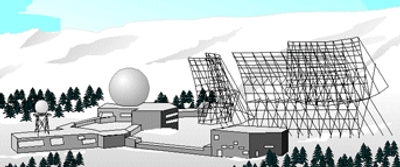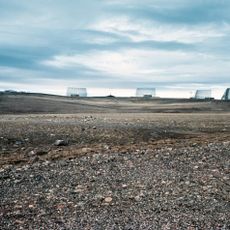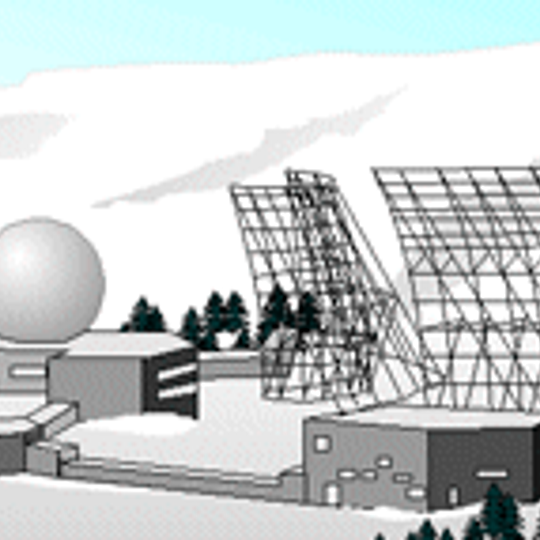
Ballistic Missile Early Warning System, Early warning radar installation at Clear Air Force Station, Alaska, United States
The Ballistic Missile Early Warning System is a radar installation at Clear Air Force Station in Alaska designed to detect missile launches headed toward North America. Multiple radar stations and satellite networks work together to identify threats and alert military commanders in real time.
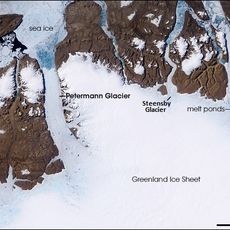
Construction of the BMEWS network began in 1958, with development work carried out on Trinidad using test missiles fired from Florida. Site I at Thule in Greenland went operational in 1960, Clear in Alaska in 1961 and Fylingdales in Britain in 1962. The system was replaced by the Solid State Phased Array Radar System in 2001.
The name BMEWS was used for a network whose three sites were operated by different countries: Thule in Greenland from 1960, Clear in Alaska from 1961 and Fylingdales in England from 1962, with radar data sent to NORAD at Colorado Springs for evaluation. In 1960 the system raised a false alarm when radar waves reflected off the Moon rising above the horizon; operators recognised the error and the settings were changed to ignore lunar reflections.
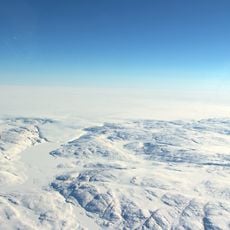
Located in remote Arctic terrain, the installation provides military commanders with 15 to 25 minutes of warning before potential missile impacts. Keep in mind this is a heavily restricted military facility in extreme isolation, so public access is not readily available.
In 1960 the system raised a false alarm when a radar beam reflected off the Moon rising above the horizon; operators recognised the error and no forces were launched, after which the settings were changed to ignore lunar reflections. The AN/FPS-50 reflector weighed 1,500 tons and scanned with two horizontally sweeping fans.
The community of curious travelers
AroundUs brings together thousands of curated places, local tips, and hidden gems, enriched daily by 94,096 contributors worldwide.