Thule Site J, Military radar station in northwestern Greenland.
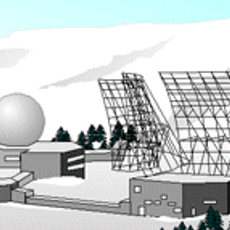
Thule Site J is a US Space Force radar station near Pituffik Space Base in northwestern Greenland. It comprises an EWR facility with a Solid State Phased Array Radar System, three of the four former AN/FPS-50 buildings, one AN/FPS-49A building, and a support site with telecommunications structures. The AN/FPS-50 reflectors rest on 25-ton foundations.
The facility began construction in May 1958 as part of the Ballistic Missile Early Warning System during the Cold War. It was established to monitor missile and spacecraft threats and became a key component of early warning defenses.
The site's name comes from its designation as Site J of the BMEWS program, and its nickname J-Site is still used. A World War II freighter operated by Burns & Roe supplied electricity and heat until a power plant was built, and water arrived from Thule Air Base through a branch line. A 1960 false alarm was caused by radar returns during moonrise while Khrushchev was in New York.
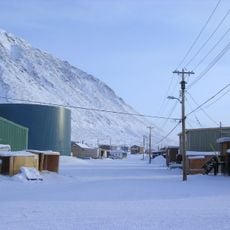
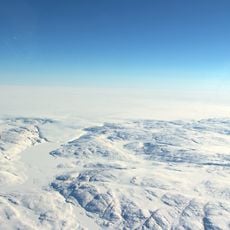
Site J is an active military installation near Pituffik Space Base and is not open to visitors; access is controlled by the US Space Force. The site lies well above the Arctic Circle, where polar night and midnight sun alternate through the year. Its water was originally piped from Thule Air Base via a branch line to the station.
The station's AN/FPS-49A radar was fitted with a radome built by Goodyear for Thule's weather; it was destroyed by fire in June 1980 and later rebuilt, then removed with its antenna in 2014. A satellite communications terminal moved here from P-Mountain in 1983.
The community of curious travelers
AroundUs brings together thousands of curated places, local tips, and hidden gems, enriched daily by 93,179 contributors worldwide.