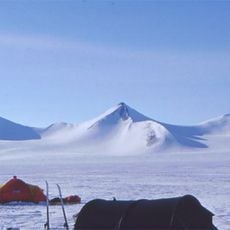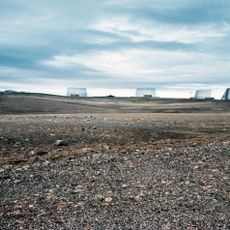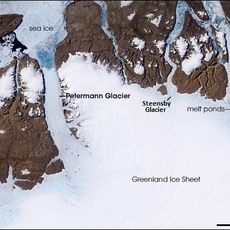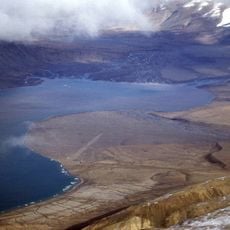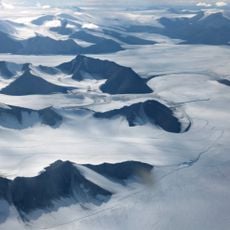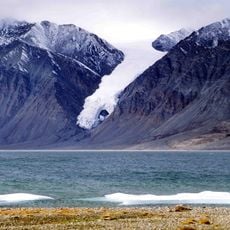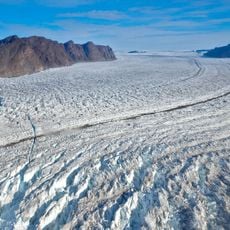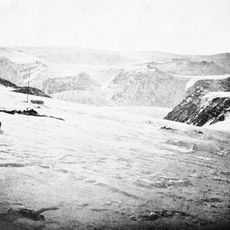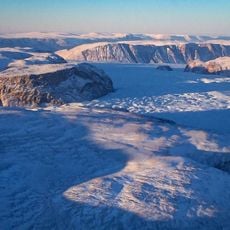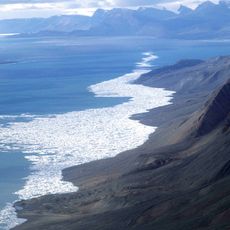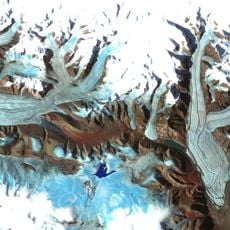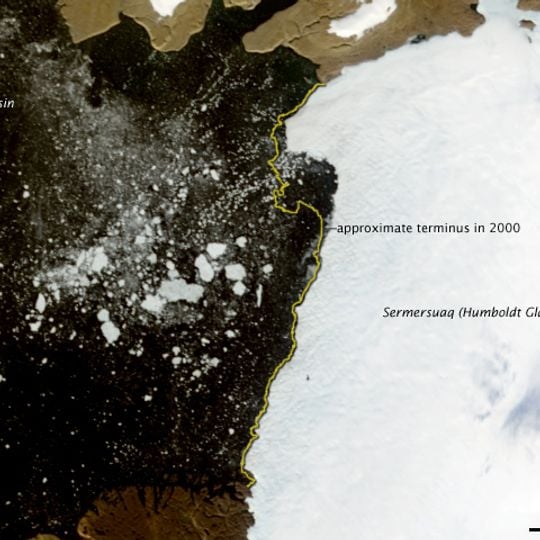
Humboldt Glacier, Tidewater glacier in northwestern Greenland.
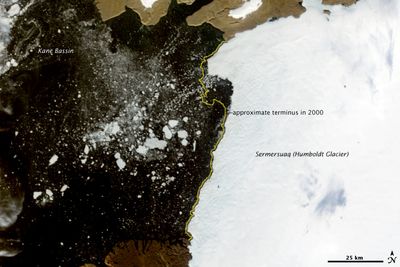
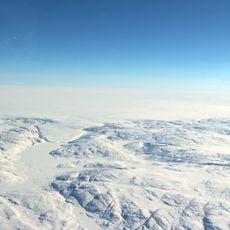
Humboldt Glacier is a tidewater glacier in northwestern Greenland that stretches across a vast span of coastline. This ice mass meets the sea directly, forming a dramatic edge where glacial ice meets open water.
American explorer Elisha Kent Kane discovered this glacier during an Arctic expedition in the mid-1800s. The finding was part of wider exploration efforts into polar regions by Western explorers of that era.
Local Greenlandic communities call this ice mass Sermersuaq, a name deeply rooted in their traditional relationship with the landscape. The ice formation shapes how people understand and describe their region.
Reaching this location requires special permissions and experienced guides, as access is extremely limited and challenging. Visits are only practical during warmer months when regional travel becomes marginally more feasible.
This glacier continuously produces enormous icebergs that drift through adjacent waterways into distant southern seas. These massive ice chunks travel thousands of kilometers and impact maritime navigation across a vast region.
The community of curious travelers
AroundUs brings together thousands of curated places, local tips, and hidden gems, enriched daily by 91,308 contributors worldwide.