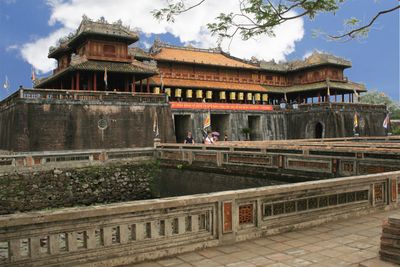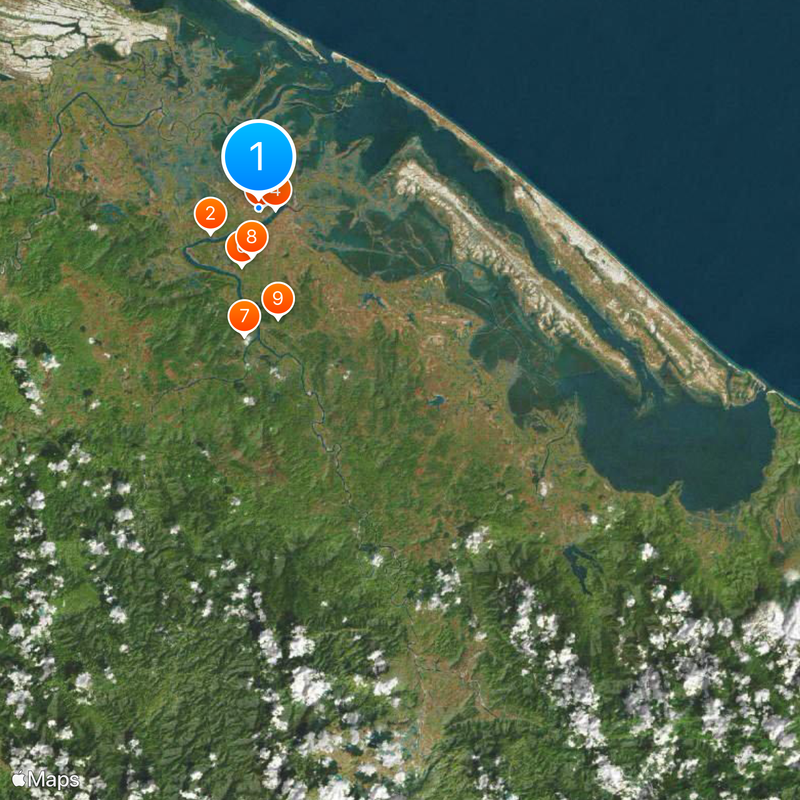
Huế citadel, UNESCO World Heritage citadel in Huế, Vietnam
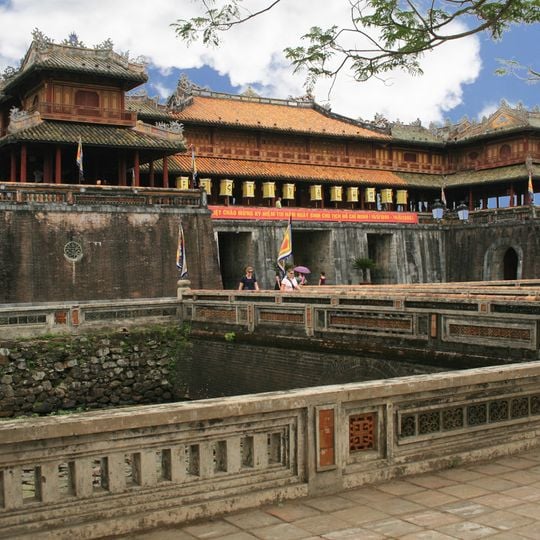
The citadel is a fortified complex in Huế, Vietnam, made up of multiple concentric walls and moats. Inside the walls lie palaces, gates and gardens connected by wide pathways and open courtyards.
Construction began in 1803 under Emperor Gia Long, who built the complex as the seat of the Nguyen Dynasty. The fortress remained the political center of the country until 1945, when imperial rule ended.
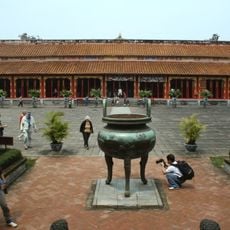
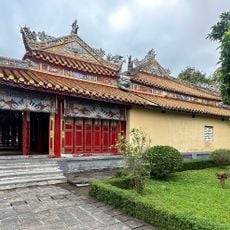
The layout follows traditional principles for palace orientation, with the main axis pointing south. Within the inner grounds, temples and courtyards served as places where the imperial family held ceremonial rituals.
Multiple gates provide access from different sides, with some being less crowded than the main entrance. The grounds cover a large area, so plan at least half a day to walk through the site.
The outer walls were originally built from packed earth and only later reinforced with brick. The fortifications were designed to channel moisture away from the nearby river.
The community of curious travelers
AroundUs brings together thousands of curated places, local tips, and hidden gems, enriched daily by 91,384 contributors worldwide.