Imperial City of Hue, Imperial palace in Huế, Vietnam
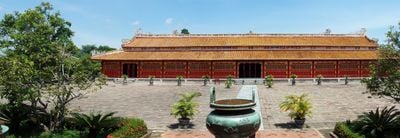
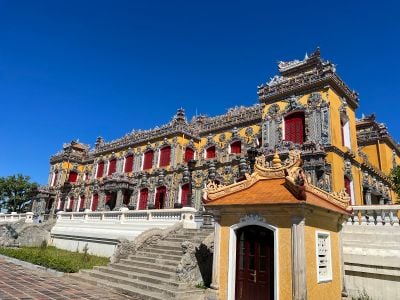
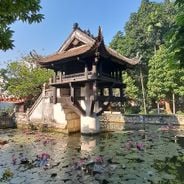
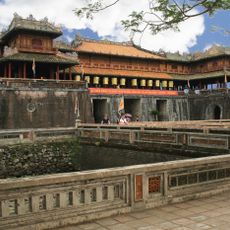
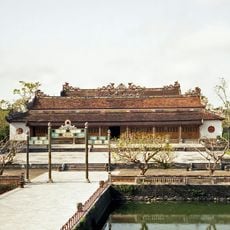
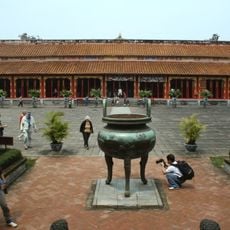
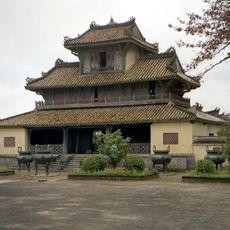
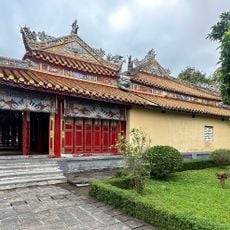
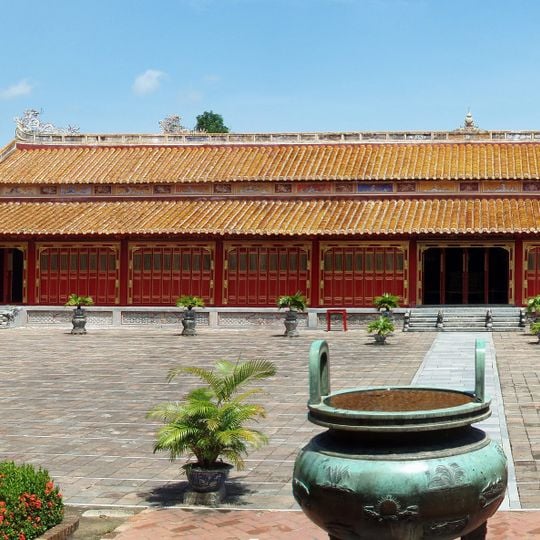
The Imperial City of Hue is a palace complex in Hue, Vietnam, enclosed by defensive walls and containing temples, administrative buildings, and royal living quarters. The grounds extend across sprawling courtyards with formal gardens where lotus ponds, dragon ornaments, and ceramic tiles showcase traditional Vietnamese craftsmanship.
Emperor Gia Long unified Vietnam under the Nguyen dynasty and began building this residence in 1802 following Chinese feng shui principles. Later rulers expanded the grounds with libraries and theaters until wars in the 20th century destroyed many structures, leaving only a portion of the original buildings standing.
The site takes its name from the Nguyen dynasty and reflects Confucian values visible in every courtyard and gate. Visitors today watch restoration work on temples and pavilions while local artisans practice traditional woodcarving and lacquer techniques using centuries-old methods.
The grounds open daily from half past seven in the morning until half past five in the evening and require around four hours for a thorough walk through all accessible areas. Visitors should wear comfortable shoes and bring water since the paths between buildings are long with few shaded spots available.
A network of underground tunnels connects several buildings and once allowed the royal family to move through the grounds unseen. These passages remain closed to the public today but were used during conflicts as shelter and for storing royal treasures.
The community of curious travelers
AroundUs brings together thousands of curated places, local tips, and hidden gems, enriched daily by 91,835 contributors worldwide.