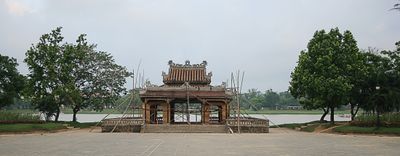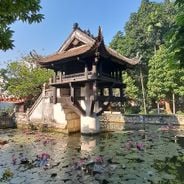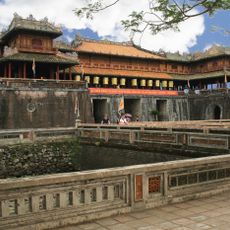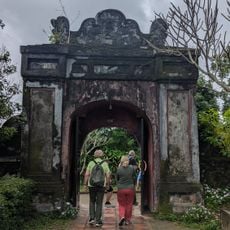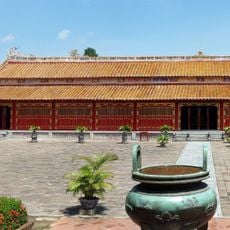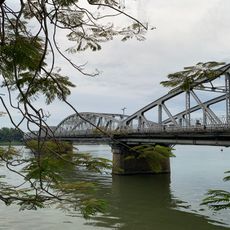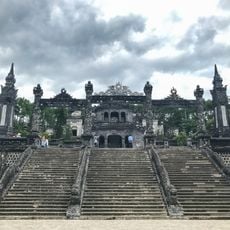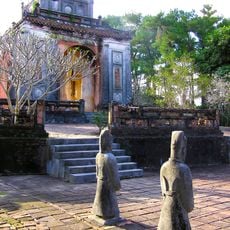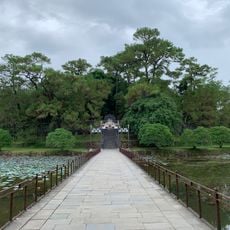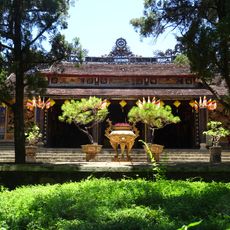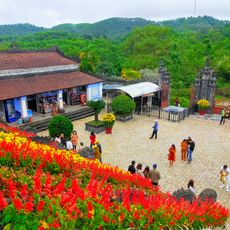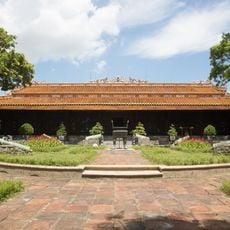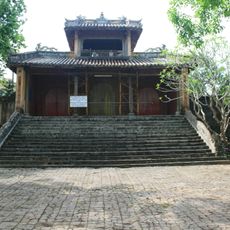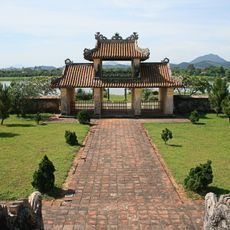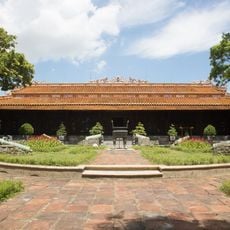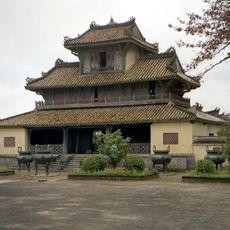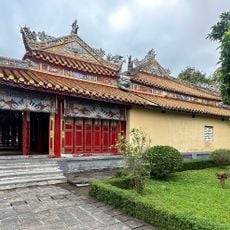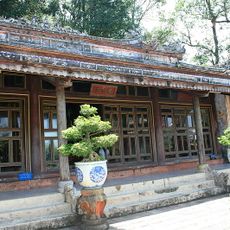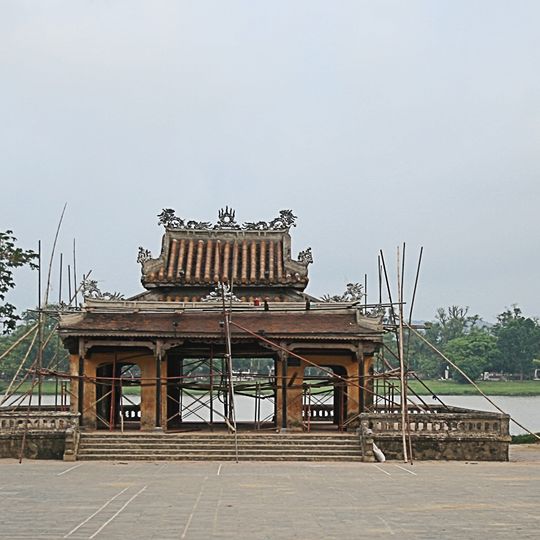
Nghênh Lương đình, Royal pavilion near Perfume River in Thuận Hòa, Vietnam.
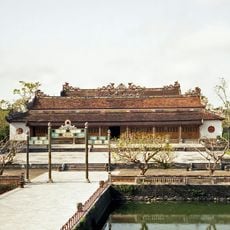
Nghênh Lương đình is a royal pavilion near the Perfume River in Thuận Hòa featuring a central room with four wings and a roof of golden glazed tiles. The structure rises on an elevated platform with stairs descending to a waterside walkway.
Construction began in 1852 under Emperor Tự Đức and the building underwent restoration work in 1903 and 1918 under later rulers. These maintenance efforts preserved it through changing times.
The name means 'Welcoming Coolness,' a place where rulers would stop to rest before boarding royal boats or escape the riverside heat.
The building sits on an elevated platform reached by thirteen steps, offering good views of the river from above. Expect stairs and wear comfortable shoes for easy navigation around the site.
The pavilion appears on Vietnamese currency notes as a symbol of national architectural heritage, though visitors often miss this connection. This recognition reflects its importance as a cultural landmark beyond its original royal function.
Location: Thuận Hòa
GPS coordinates: 16.46481,107.58139
Latest update: December 6, 2025 17:42
Vietnam retains an architectural heritage that spans several centuries. From the Confucian temples in Hanoi to the Cham towers in the country's interior, including the imperial citadels of Hué, these structures reflect influences from Hindu, Chinese, and European traditions that have shaped the land. Each building illustrates a specific period, from the 7th century with Po Nagar's towers to modern constructions of the 20th century. The Temple of Literature in Hanoi, founded in 1070, embodies the Vietnamese educational tradition with its five successive courtyards. In Hué, the Thien Mu Pagoda has stood since 1601 with its seven-story tower rising 70 feet (21 meters) over the Parfum River. The Cham towers of Binh Dinh and Nha Trang showcase the craft of this civilization through their brick ornaments and stone sculptures. The port city of Hoi An features an architectural ensemble from the 15th century, combining Chinese, Japanese, and European styles. These sites offer a tangible journey through the country's architectural and cultural evolution.
Huế citadel
669 m
Thiên Mụ Temple
4.1 km
Imperial City of Hue
580 m
Trang Tien Bridge
895 m
Tomb of Khai Dinh
7.4 km
Tomb of Tự Đức
4 km
Tomb of Emperor Minh Mang
8.7 km
Từ hiếu pogoda
3.1 km
Basilica of Our Lady of La Vang
49.2 km
Mausoleum of Emperor Khai Dinh
7.4 km
Tomb of Gia Long
11.6 km
Hall of Supreme Harmony
542 m
Bach Ma National Park
42.4 km
Esplanade of Sacrifice to the Heaven and Earth
3 km
Nine tripod cauldrons of the Nguyễn dynasty
625 m
Thanh Toan covered bridge
6.5 km
Thế Miếu
563 m
Firebase Bastogne
18.7 km
Hue Museum of Royal Fine Arts
725 m
Tomb of Emperor Thiệu Trị
5.3 km
Tomb of Đồng Khánh
4.2 km
Temple of Literature, Huế
4.7 km
Long An palace
747 m
Pavilion of Splendour
518 m
Independence Stadium
1.8 km
Huong River Opera House
761 m
Triệu Tổ miếu
596 m
Hòn Chén Temple
5.4 kmReviews
Visited this place? Tap the stars to rate it and share your experience / photos with the community! Try now! You can cancel it anytime.
Discover hidden gems everywhere you go!
From secret cafés to breathtaking viewpoints, skip the crowded tourist spots and find places that match your style. Our app makes it easy with voice search, smart filtering, route optimization, and insider tips from travelers worldwide. Download now for the complete mobile experience.
A unique approach to discovering new places❞
— Le Figaro
All the places worth exploring❞
— France Info
A tailor-made excursion in just a few clicks❞
— 20 Minutes