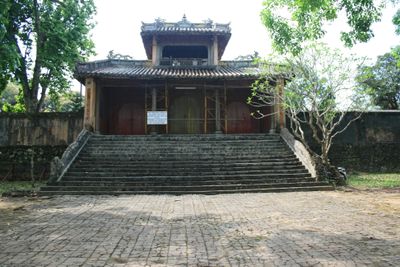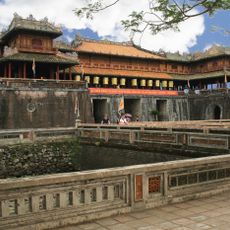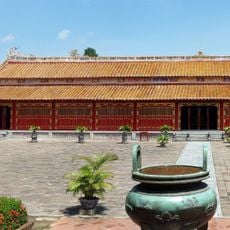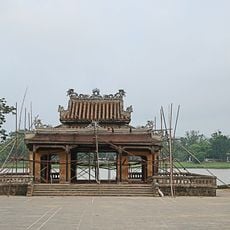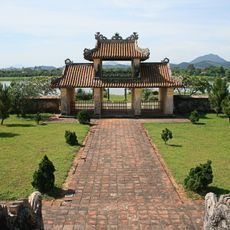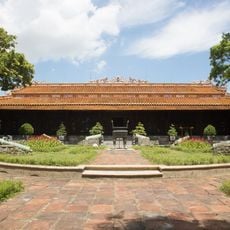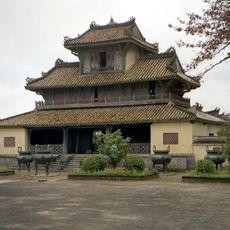
Tomb of Đồng Khánh, Royal tomb in Huế, Vietnam.
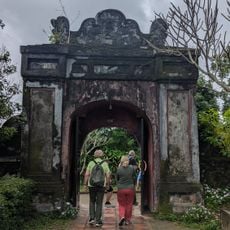
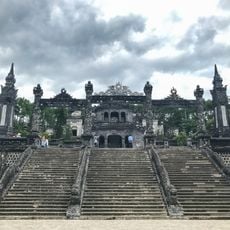
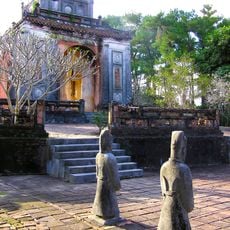
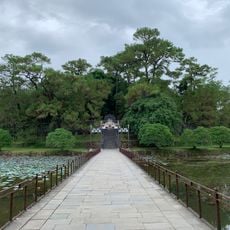
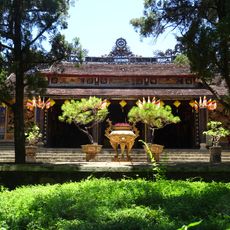
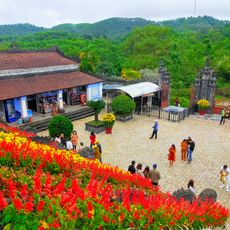
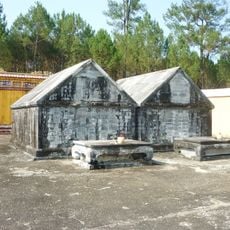
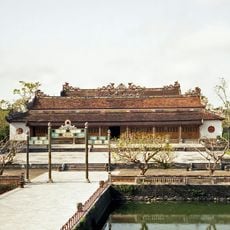
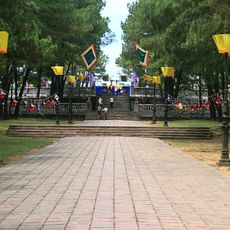
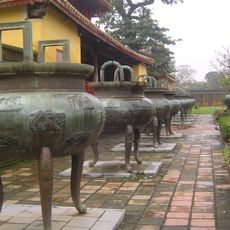
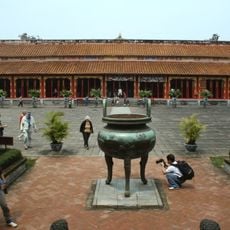
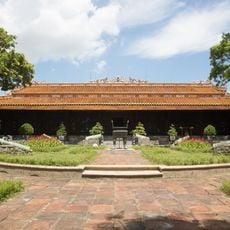
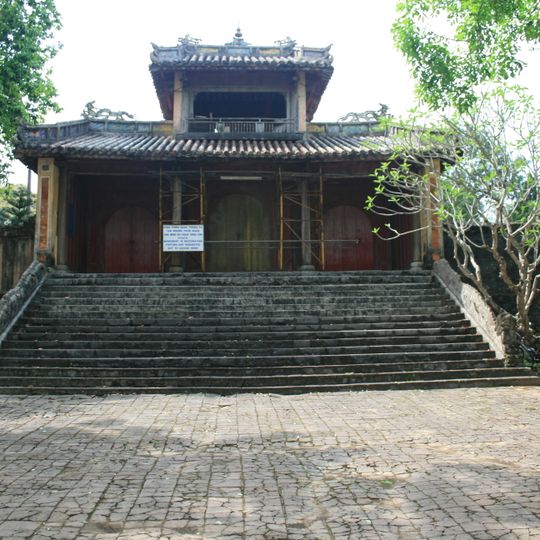
The Tomb of Đồng Khánh is a royal burial complex in Huế, Vietnam, made up of ceremonial halls, stone lotus ornaments, and a series of gates connected by garden paths. The site includes both a worship palace and a burial mound, arranged across a compact area near the Perfume River.
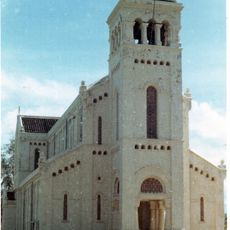
Work on the complex began after Emperor Đồng Khánh died in 1889, with a French architect involved in early planning during the colonial period. Later rulers of the Nguyen Dynasty continued adding to the site over the following decades, so the complex was not considered largely complete until the 1920s.
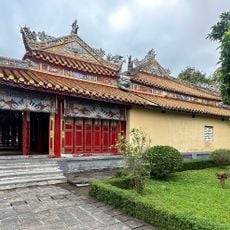
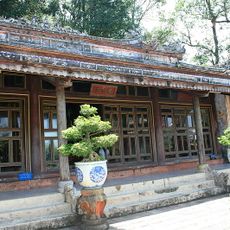
The Ngung Hy Palace inside the complex displays lacquer panels with gilded vermilion finishes and terracotta reliefs showing Vietnamese and European scenes side by side. This mix of local craftsmanship and Western motifs is visible directly on the walls and ceilings, making it easy to notice without any prior knowledge.
The site is open daily and is part of the broader group of imperial tombs in Huế, which can be visited on a combined ticket. Wear comfortable shoes, as the visit involves walking between buildings and garden paths, and plan enough time to see all sections without rushing.
Đồng Khánh reigned for only about three years, making him one of the shortest-ruling emperors of the Nguyen Dynasty, yet his tomb is among the most ornate in the entire group. The contrast between his brief reign and the elaborate complex built in his name is one of the more striking things to notice during a visit.
The community of curious travelers
AroundUs brings together thousands of curated places, local tips, and hidden gems, enriched daily by 92,382 contributors worldwide.