Hoi An Ancient Town, Ancient trading port in central Vietnam
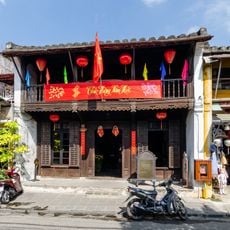
Hoi An Ancient Town is a former trading settlement on the Thu Bon River in central Vietnam, where more than a thousand timber buildings from several centuries still stand. Yellow painted facades line narrow lanes, with residences mixing alongside workshops, temple compounds, and assembly halls.
Hoi An rose as a trading port in the late 16th century under the Nguyễn lords, and by the 17th century Japanese, Chinese and Western ships called there. In 1775 the Trịnh army sacked the commercial quarter, and in the 19th century silting of the Thu Bồn and the French development of Đà Nẵng ended its role as an international port.
The name Hội An appears in Lê-era maps as Hội An phố, Hội An đàm and Hội An kiều; Westerners long called the town Faifo, a name recorded by Alexandre de Rhodes in his 1651 Vietnamese-Portuguese-Latin dictionary. Chinese residents built the assembly halls on Trần Phú Street, five of them, all with even-numbered addresses, each dedicated to a home region.
The historic area bans motorcycles and cars, so visitors must walk or cycle through the lanes. The entrance ticket allows access to five selected buildings and remains valid throughout the stay.
Cao Lau noodles are prepared only here, as the recipe requires water from specific wells dating back to the Cham era. Fishermen still use round bamboo boats introduced by Chinese settlers, which look like floating baskets on the river.
The community of curious travelers
AroundUs brings together thousands of curated places, local tips, and hidden gems, enriched daily by 94,045 contributors worldwide.