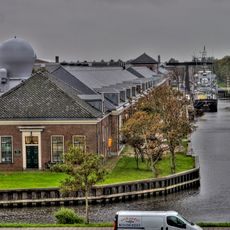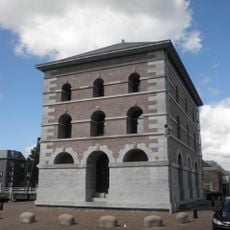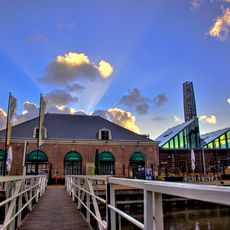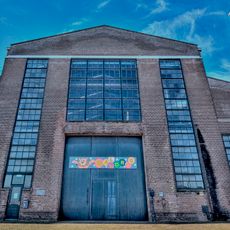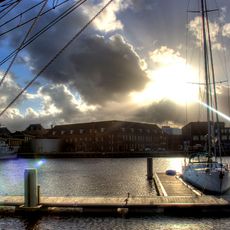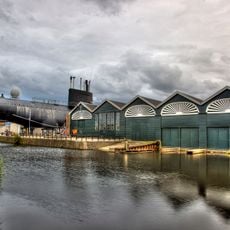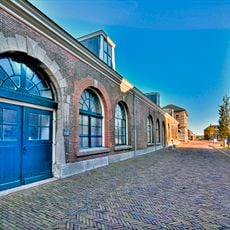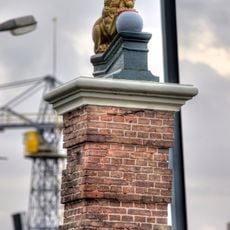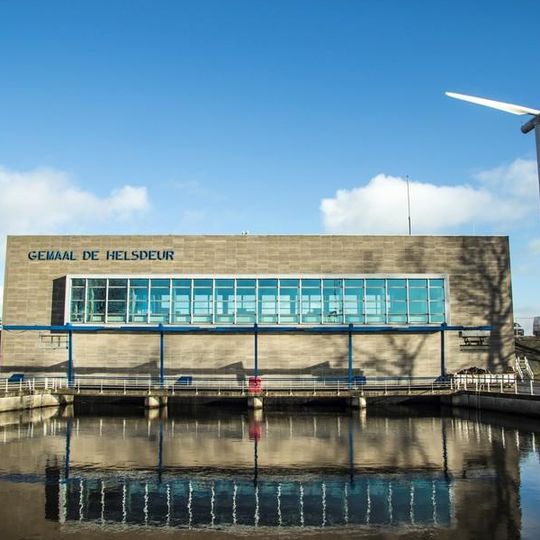
De Helsdeur, Pumping station in Den Helder, Netherlands
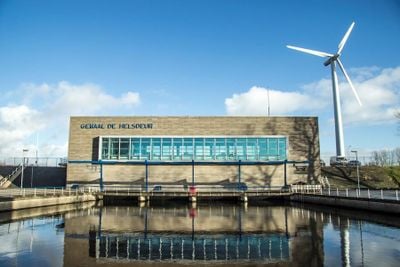
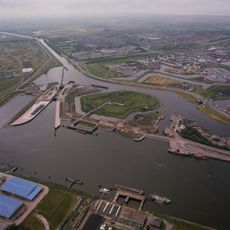
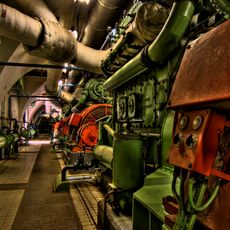
De Helsdeur is a pumping station in Den Helder that regulates water flow between Schermerboezem and Het Nieuwe Diep, which connects to the Wadden Sea. The facility uses electrical centrifugal pumps with four discharge channels to manage water circulation.
The station was designed by architect H. Postel in 1969 and began operations in 1972 to address water management challenges in North Holland. It was built in response to growing water control needs across the region.
Twenty colorful mosaics decorate the western facade, showing emblems from the province and former water districts created by Nel Bouwhuys-Klaassen. These artworks give the building a distinctive visual character rooted in local identity.
Access to the site is limited since it operates as an active technical facility not open to tourists. You can view the exterior facade and mosaics from outside while walking near the waterfront area.
The name De Helsdeur refers to the deepest point of the Marsdiep strait, underscoring its critical role in Dutch water management. This geographic connection shows how the facility is woven into the natural features of its surroundings.
The community of curious travelers
AroundUs brings together thousands of curated places, local tips, and hidden gems, enriched daily by 91,981 contributors worldwide.