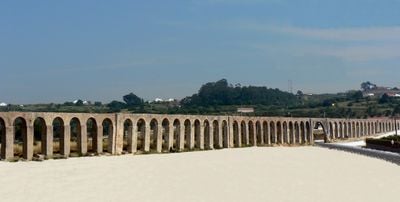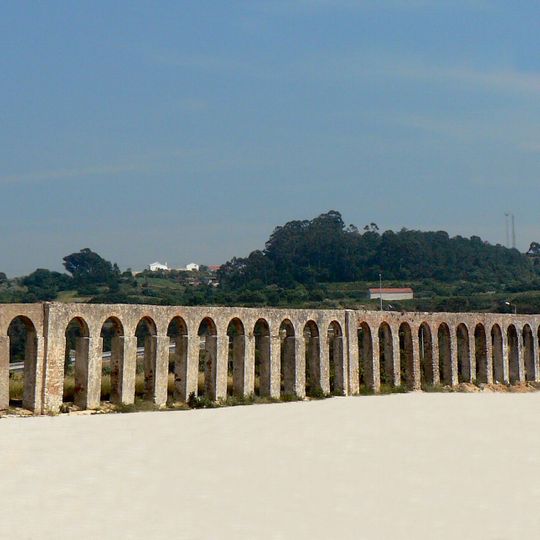
Óbidos Aqueduct, 16th-century stone aqueduct in Usseira, Portugal.
Óbidos Aqueduct is a stone water-supply structure that extends for approximately three kilometers across the landscape through a series of arches. The construction reaches heights of about 20 meters in places and includes underground tunnels to transport water from natural springs near Usseira village.
The aqueduct was built between 1571 and 1575 on the orders of Catherine of Austria, who sold her own lands to finance the water-supply project for Óbidos town. This investment reflects how crucial water infrastructure was for the region's development.
The structure demonstrates Renaissance craftsmanship, with limestone blocks precisely fitted together without mortar. Visitors can observe this technique directly in the arrangement of the stones along the path.
Visitors can explore accessible sections of the aqueduct on foot or by bicycle, with the path running through partly natural terrain. Comfortable footwear is advisable, as the ground surface varies along the route.
The aqueduct passes through the fortified walls of Óbidos and continues to supply water to the town after four centuries. This makes it one of the few historical structures still performing its original function.
The community of curious travelers
AroundUs brings together thousands of curated places, local tips, and hidden gems, enriched daily by 91,167 contributors worldwide.