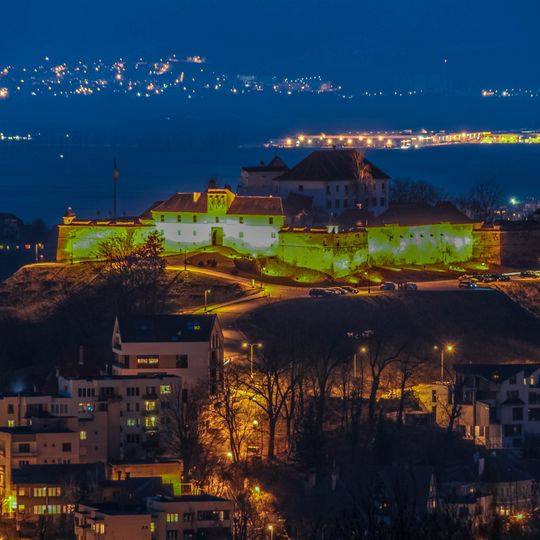
Brașov Fortress, Medieval fortress on Mount Strajă in Brașov, Romania.
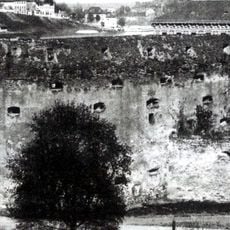
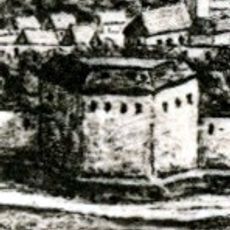
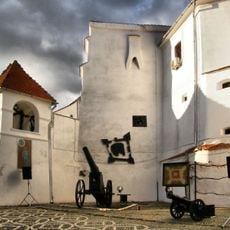
Brașov Fortress is a fortification on the 64-metre-high Martinsberg (Strajă Hill) north of the old town, covering roughly 80 by 100 metres. Its oldest part is a horseshoe-shaped tower raised in 1524, later joined by three small bastion-like towers. The outer wall, built in 1630–1631, forms a slightly irregular quadrilateral with four Italian bastions facing the cardinal directions and a single gate that could be closed with a drawbridge.
The horseshoe-shaped tower on Márton Hill was built in 1524, not of wood; the wooden fort burned by Petru Rareș stood on nearby Fortyogó Hill. Between 1552 and 1553 three small artillery towers were added under plans attributed to Alessandro da Urbino. In 1611 an earth rampart and water ditch were added, and the outer walls with four Italian bastions and a drawbridge gate were completed in 1631. Habsburg troops took over the fortress after 1688, and in 1849 it saw its last defensive action during the revolution.
The hill takes its Romanian name, Dealul Plăieșilor (Hill of the Border Guards), from the fortress's later use as a barracks for plăieși, the frontier guards. In the 19th century the fortress also became an excursion spot for Brașov's residents, who ran a popular beer hall within its walls.
A marked trail from the city center leads up to the fortress, and the climb is steep enough that sturdy footwear is a good idea. The path can get slippery in wet weather, so checking conditions before setting out helps.
The fortress's only gate was closed by a drawbridge, and the 25-metre well dug in 1623 was later deepened to 81 metres to supply water during a siege. In 1849, two hundred Hungarian honvéd defenders held the fort against a Russian army of tens of thousands.
The community of curious travelers
AroundUs brings together thousands of curated places, local tips, and hidden gems, enriched daily by 94,551 contributors worldwide.