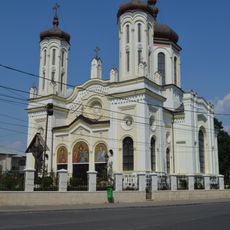
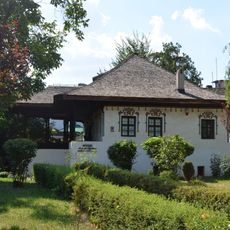
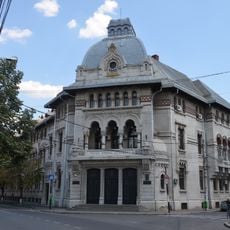
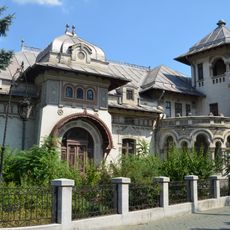
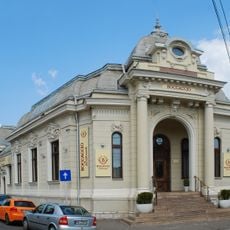
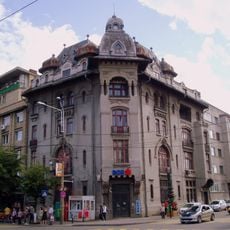
Clock Museum in Ploiești, Historical clock collection in Ploiești, Romania.
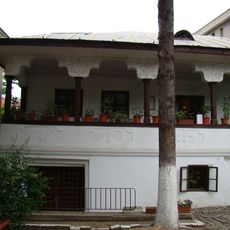
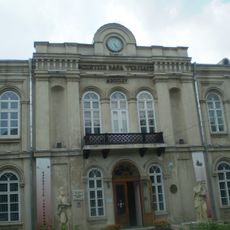
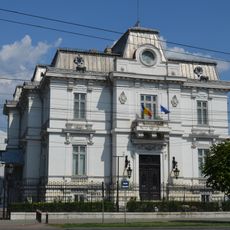
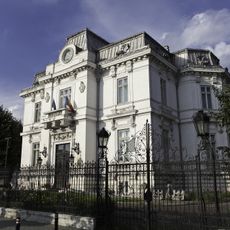
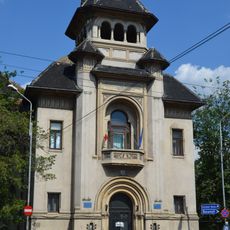
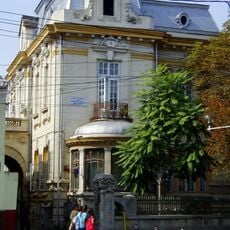
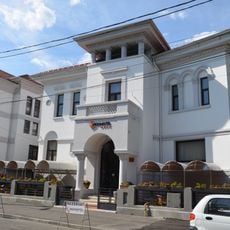
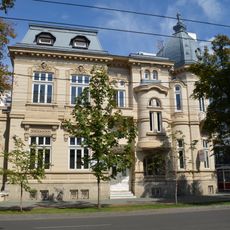
The Clock Museum "Nicolae Simache" occupies Casa Luca Elefterescu, an 1890 late-19th-century building in Ploiești that keeps its original romantic-style decoration, with the first owner's initials set in the ironwork of the entrance doors. Its roughly 1,000 pieces, only partly displayed, follow a chronological sequence: sundials, hourglasses, sand glasses, furniture, mantel, wall, pocket and travel clocks.
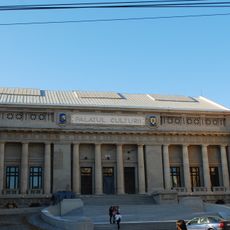
Professor Nicolae Simache founded the museum in 1963 as a section of the History Museum, first housed in a hall of the Palace of Culture. The growing collection required its own building, so the Casa Luca Elefterescu, an 1890 house of magistrate Luca Elefterescu, was adapted; work finished in 1971 and the museum opened in January 1972.
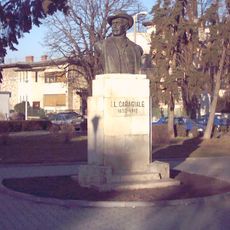
Several exhibits are watches owned by historical figures: Constantin Brâncoveanu, Alexandru Ioan Cuza, Mihail Kogălniceanu, Cezar Bolliac, B. P. Hasdeu, Theodor Aman, I. L. Caragiale and Duiliu Zamfirescu. Others are playful automata — the miller, the blacksmith, the barber, the tomcat — and musical clocks that play "La Marseillaise", "Deșteaptă-te, române!" and Strauss waltzes.
The museum occupies Casa Luca Elefterescu, a late 19th-century building adapted for the collection in 1971. The exhibition follows a chronological sequence of timekeeping devices, from sundials and clepsydras to pocket watches. The original initials of Luca Elefterescu remain visible in the ironwork of the entrance doors.
The oldest clocks in the collection are two astronomical pieces from 1544 and 1562, made by Jakob Acustodia in the Netherlands and Jeremias Metzker in Augsburg. A sundial signed Butterfield of Paris dates to 1690, and a water clock built by Charles Rayner in London in 1654 still shows how time was measured before pendulums.
The community of curious travelers
AroundUs brings together thousands of curated places, local tips, and hidden gems, enriched daily by 94,036 contributors worldwide.