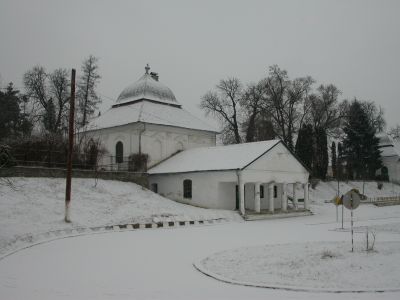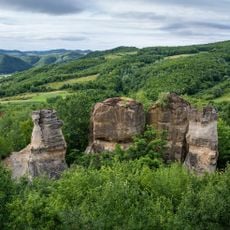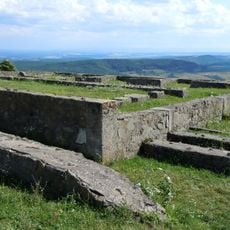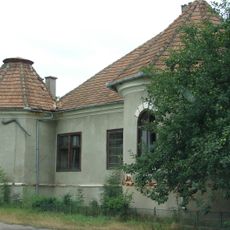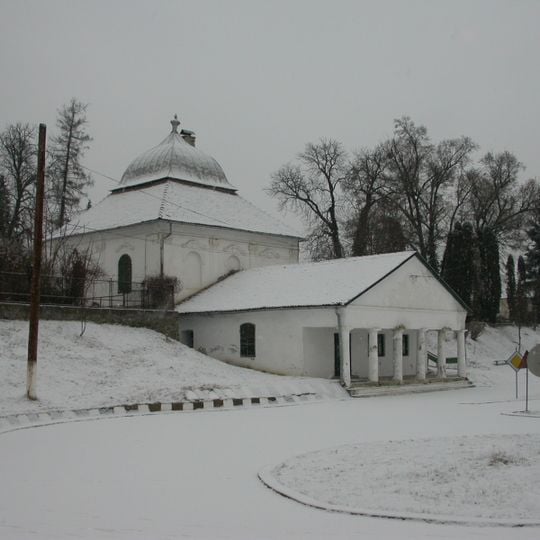
Wesselenyi castle in Jibou, Historic monument in Jibou, Romania.
Wesselenyi Castle is a baroque palace complex with stone walls, large windows, and a central courtyard located on Wesselenyi Miklos Street 18. The surrounding grounds function as a botanical garden with educational spaces and recreational areas integrated into the property.
Construction of the palace began in 1778 for Baron Miklós Wesselényi and his wife Ilona Cserei. After Wesselényi attacked his neighbour Johann Haller with over 500 armed men in 1781, the emperor imprisoned him at Kufstein and work stalled until 1796, when the Czech architect Franz Wrabetz arrived. Interiors were finished in 1800 and the whole complex in 1810.
The castle's interiors were painted by Franz Neuhauser and Johann Martin Stock, with hunting scenes of Baron Wesselényi and views of the castle itself. Neuhauser was found working here in 1805 by Kazinczy Ferenc. The countess's portrait from Jibou is now kept at the Art Museum in Cluj-Napoca.
The castle stands in Jibou, Sălaj County; the complex also includes a park, a manege, a stable, a greenhouse, a barn and a crypt on a nearby hill. The park holds a botanical exhibition. The Wesselényi crypt near the castle is almost gone, and some of its funerary stones are kept in the Reformed church of Jibou.
The stable's commemorative inscription, long hidden under plaster, was rediscovered when part of the coating fell away; above it sits a partly damaged stone horse attributed to Johannes Nachtigall. A second, similar stone horse once stood over the manege plaque of 1771 and is attributed to Anton Schuchbauer.
The community of curious travelers
AroundUs brings together thousands of curated places, local tips, and hidden gems, enriched daily by 94,583 contributors worldwide.