Novi Sad Synagogue, Art Nouveau synagogue in Novi Sad, Serbia.
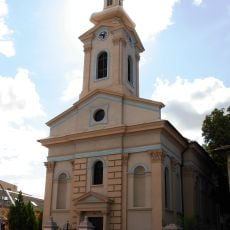
Novi Sad Synagogue is a former Neolog synagogue completed in 1909, designed by Hungarian architect Lipót Baumhorn in an eclectic Hungarian Secession and Art Nouveau style. The three-aisled sanctuary is covered by a 40-metre Renaissance-inspired dome with stained glass in its cupola. Two towers flank the entrance façade, which has a large rose window under an arch.
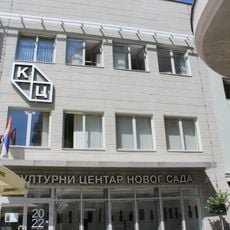
Four synagogues stood on this site from 1749; the fourth was destroyed in the 1849 bombing of the city. The present building, the fifth, was begun in 1905 and completed in 1909 to Lipót Baumhorn's design, flanked by a Jewish school and community offices. From 1941 Jews of Novi Sad were held here before deportation, and the building stored their abandoned belongings. It served as a synagogue until about 1966 and has been a cultural venue since 2012.
The building once served as a gathering place for the Jewish community during religious services and holidays that shaped local identity. Today concerts and Jewish celebrations here keep these traditions alive for visitors and residents alike.
The former synagogue stands at Jevrejska Street 11 in central Novi Sad, a short walk from the main squares. It is a national heritage site of great importance, protected since 1983. As of 2023 the building was in need of significant repairs, so visitors should expect scaffolding or restricted access.
During World War II the building served as a detention facility for Jewish residents and stored their personal belongings before forced deportation. This dark chapter remains part of the building's complex history.
The community of curious travelers
AroundUs brings together thousands of curated places, local tips, and hidden gems, enriched daily by 94,031 contributors worldwide.