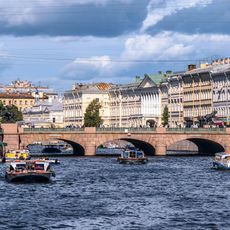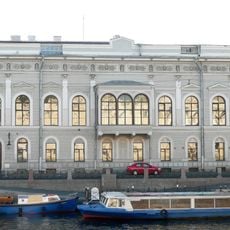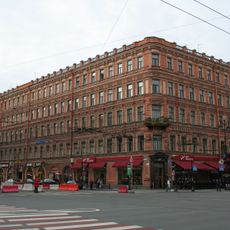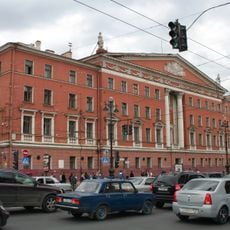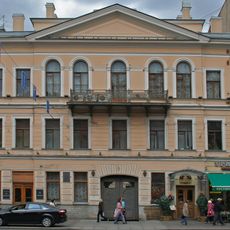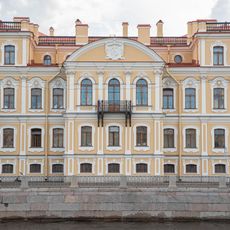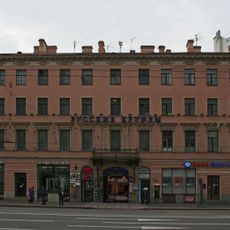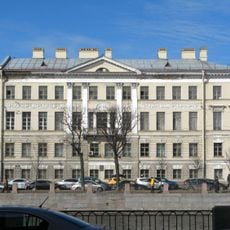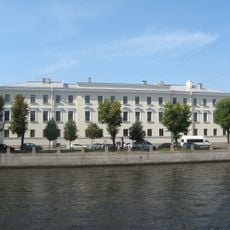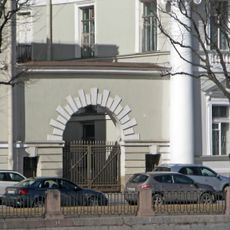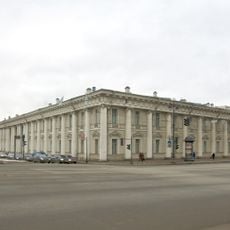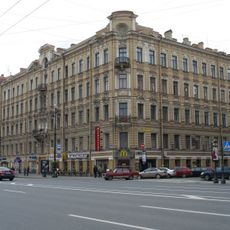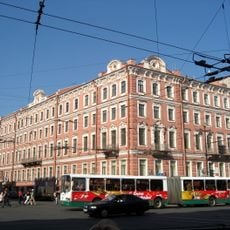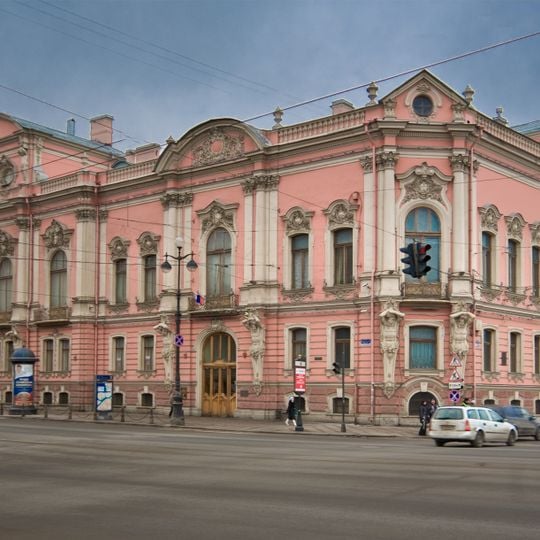
Beloselsky-Belozersky Palace, Palace at Nevsky Prospect, Saint Petersburg, Russia
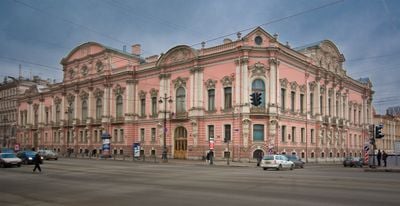
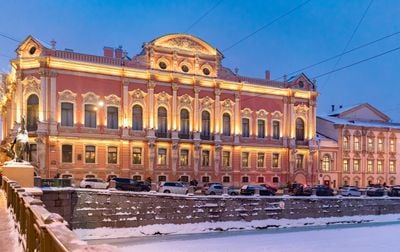
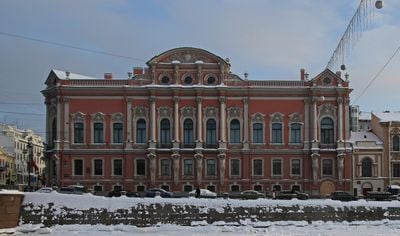
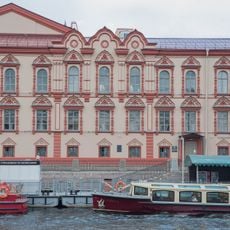
The Beloselsky-Belozersky Palace stands at the corner of Nevsky Prospect and the Fontanka River, its pale pink facade with white detailing in baroque revival style. Round-arched windows with white surrounds fill the upper storey, and a segmental pediment with relief ornament tops the roofline. Sculptor David Jensen provided models for the atlantes and caryatids that ornament the front.
The palace was built between 1847 and 1848 by architect Andrei Stackenschneider on the site of a smaller house the Beloselskaya family had acquired in 1797. It reflects the expansion of grand family estates in Saint Petersburg during the 1800s.
The double name Beloselsky-Belozersky dates from 1800, when Paul I allowed Prince Alexander Beloselsky to add the Belozersky title. Under Elena Pavlovna the palace became a venue for balls and concerts, and the hosts spoke Russian with a light English accent, fashionable in the 1880s.
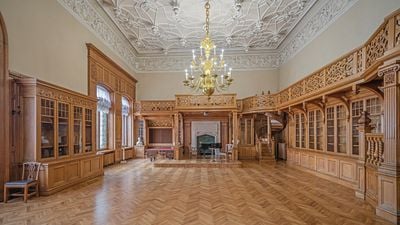
The palace now functions as a cultural center with a concert hall that hosts regular performances and is easily reached from Nevsky Prospect. Note that most rooms are accessible only during events or scheduled guided tours.
The palace's last private owner before the revolution was Grand Duke Dmitry Pavlovich, a nephew of Grand Duke Sergei Alexandrovich. A horseman who led the Russian equestrian team at the 1912 Stockholm Olympics and a racing driver, he took part in the 1916 killing of Grigory Rasputin and was then exiled to Persia. The palace later housed the district party committee until 1991.
The community of curious travelers
AroundUs brings together thousands of curated places, local tips, and hidden gems, enriched daily by 94,149 contributors worldwide.