Kesene Mausoleum, 14th–16th-century mausoleum in Varna District, Chelyabinsk Oblast, Russia
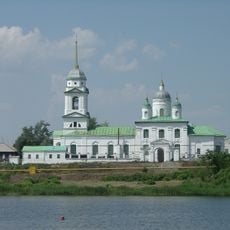
The Kesene Mausoleum is a 17-meter-high brick structure on the shore of the overgrown Bolshoye Kesene lake, 3 km east of Varna in Chelyabinsk Oblast. It is a domed portal mausoleum of the Khorezm and Khorasan architectural school, erected over a woman's burial. Its bricks were made with red clay, wild bird eggs and camel milk, and a path of large cobblestones leads to the entrance.
The first written account came from Captain P. I. Rychkov in 1762, who believed the tower marked the grave of an unknown people's king. In 1889 Professor E. Yu. Petri excavated the crypt and found a woman's burial wrapped in bast, with silk fabric, two gold rings bearing arabesques and two question-mark-shaped earrings. The building was restored in the early 1980s, work completed by 1985.
Bashkir speakers call it Kül Kәshәnәhe, while the Kazakh word kesene simply means mausoleum, so the Russian name repeats itself. Legends tie the tower to Timur's beloved daughter, who was killed by a tiger near the lake; guards are said to have passed bricks hand to hand from the Uy River. The 1889 dig found a woman buried in bast matting with silk, two gold rings and earrings shaped like question marks.
The mausoleum is located about 3 kilometers east of Varna village and is easily reached from the lake side. The best time to visit is during warmer months when the access roads are passable.
Local residents often call the structure the Tower of Tamerlane, connecting it to the Turkic ruler who influenced Russian history in the 14th century. This link to the Mongol conquest remains deeply rooted in local memory.
The community of curious travelers
AroundUs brings together thousands of curated places, local tips, and hidden gems, enriched daily by 93,898 contributors worldwide.