Спасский храм, Orthodox temple in Tula, Russia
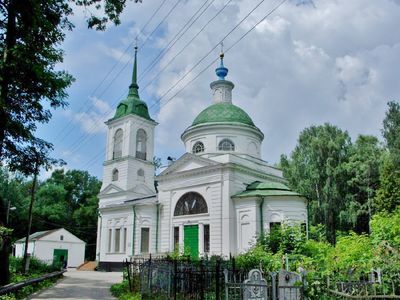
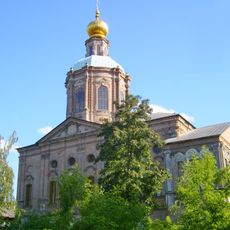
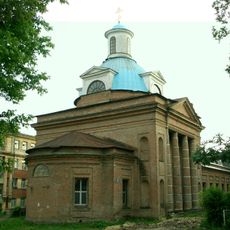
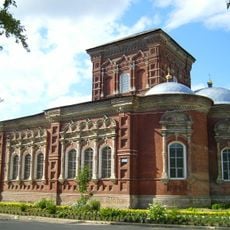
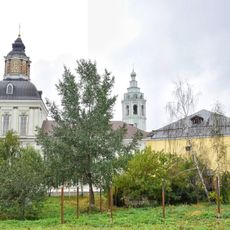
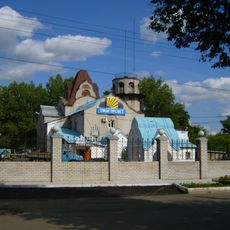
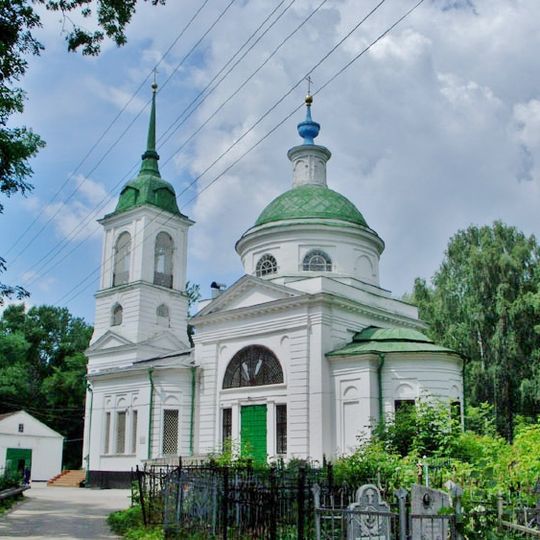
Spassky Temple sits on a sandy hill, built with white stone walls and featuring two side chapels connected to the main building by a narrow passage. The structure includes spaces used for services and community gatherings.
The temple's origin lies in the 1771 plague epidemic, after which the Senate ordered burials moved outside cities. In 1772 a site on a sandy hill by the Uzhovka road was chosen for the Oruzheynaya settlement's cemetery, and a wooden church was consecrated in 1773. The stone church, built in 1807 on the same spot, was funded by the samovar makers Fyodor and Ivan Lisitsyn; the old wooden church was sold in 1809 for 350 rubles, and the money went toward gilding the new iconostasis.
The hilltop site gave its name to the Gorskaya bride fair, held each 29 August (new style) after the liturgy on the feast of the Image of Christ Not Made by Hand. Young women lined up in two rows while young men walked between them choosing brides, and a fair with sweets ran in the cemetery until dusk. The custom faded by the 1910s and ended with the First World War.
The temple is regularly open to visitors interested in its architecture and religious practices. It is helpful to check opening times beforehand, as they may vary depending on services.
In 1941, during the defence of Tula, the northern line of the city's defences ran through the Spasskoye cemetery. For several months the church became a firing position: a machine gun was mounted on its bell tower and a military unit was quartered in the building.
The community of curious travelers
AroundUs brings together thousands of curated places, local tips, and hidden gems, enriched daily by 94,605 contributors worldwide.