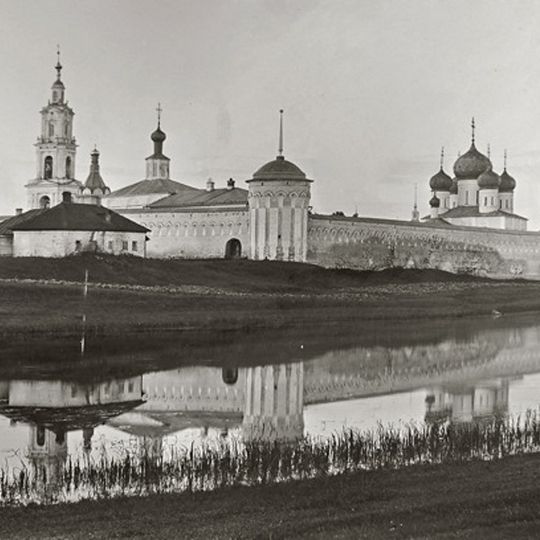
Troitsky Makariev Monastery, Orthodox monastery in Kalyazin, Russia
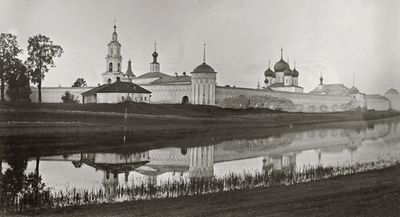
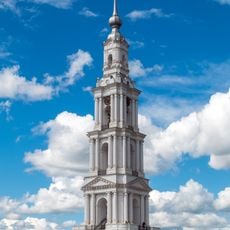
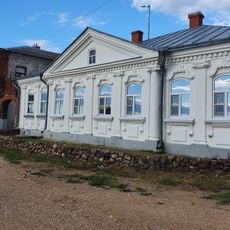
The Troitsky Makariev Monastery is an Orthodox monastery in Kalyazin, sitting on the bank of the Volga River and made up of stone buildings with traditional domed churches and an enclosing wall. The surviving structures stand on a narrow strip of land surrounded by water, as part of the original grounds was flooded when the Uglich Reservoir was created.
The monastery was founded in the 15th century and grew over the following centuries into an important religious center for the Tver region. In the early 1940s, part of it was submerged when the Uglich Reservoir was built, leaving only a portion of the original complex above the waterline.
The monastery is named after Makary Kalyazinsky, a monk from a noble Kashin family who founded it on the Volga's left bank. His relics, uncovered in 1521 and canonized in 1547, drew pilgrims including Ivan the Terrible, Boris Godunov and Peter I. In the 17th century the monks were mocked in the satirical "Kalyazin Petition", a complaint by lazy brethren against a strict abbot.
The monastery no longer stands on the Volga bank: it was submerged in the 1940s under the Uglich Reservoir, and only two islets called the monastic islands remain at its site. In the 2000s the south-western tower was rebuilt in red brick on its historic foundations to house a chapel of Macarius of Kalyazin. The site is viewed from the water or the shore, not entered.
The monastery was closed in the early 1920s and submerged in the 1940s with the old part of Kalyazin. Two islets called the monastic islands mark the site, and in the 2000s the south-western tower was rebuilt in red brick on its historic foundations to house a chapel of Macarius of Kalyazin.
The community of curious travelers
AroundUs brings together thousands of curated places, local tips, and hidden gems, enriched daily by 93,642 contributors worldwide.