Philip Johnson designed buildings that brought together modernism and classical references, shaping how architecture developed through the 20th century. His work includes glass pavilions, office towers, public spaces, and cultural institutions. His designs show an interest in clean lines, reflective surfaces, and the relationship between interior spaces and their surroundings. The collection features the Glass House in New Canaan, a transparent residence set within the landscape, the Seagram Building in New York, a bronze tower on Park Avenue, and the Puerta de Europa in Madrid, two leaning towers along Paseo de la Castellana. Other examples include the AT&T Building with its distinctive pediment, PPG Place in Pittsburgh with its glass towers inspired by Gothic forms, the IDS Center in Minneapolis, and Pennzoil Place in Houston. The collection also covers the Fort Worth Water Gardens, an urban park with pools and cascades, the Crystal Cathedral in California, a glass and steel worship space, along with the Amon Carter Museum in Fort Worth and the Kreeger Museum in Washington. These places show different sides of Johnson's practice and his ability to adapt buildings to urban and natural settings.
Philip Johnson designed buildings that brought together modernism and classical references, shaping how architecture developed through the 20th century. His work includes glass pavilions, office towers, public spaces, and cultural institutions. His designs show an interest in clean lines, reflective surfaces, and the relationship between interior spaces and their surroundings. The collection features the Glass House in New Canaan, a transparent residence set within the landscape, the Seagram Building in New York, a bronze tower on Park Avenue, and the Puerta de Europa in Madrid, two leaning towers along Paseo de la Castellana. Other examples include the AT&T Building with its distinctive pediment, PPG Place in Pittsburgh with its glass towers inspired by Gothic forms, the IDS Center in Minneapolis, and Pennzoil Place in Houston. The collection also covers the Fort Worth Water Gardens, an urban park with pools and cascades, the Crystal Cathedral in California, a glass and steel worship space, along with the Amon Carter Museum in Fort Worth and the Kreeger Museum in Washington. These places show different sides of Johnson's practice and his ability to adapt buildings to urban and natural settings.
In this article
21 places to discover — Don't miss the last!
New Canaan, United States
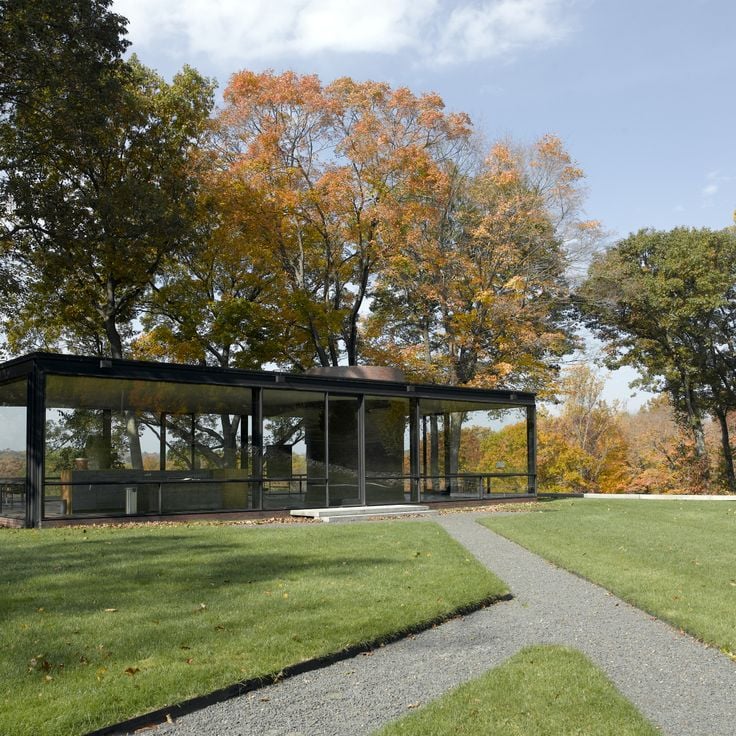
This 1949 residence sits on a property in New Canaan and demonstrates Philip Johnson's approach to modernism. The walls are made of transparent glass held by black steel beams. The building opens to a landscaped garden that includes lawns, trees, and small ponds. Inside, there are few walls, so the living area merges with the surroundings. The structure rests on a brick base and has a flat roof. A cylindrical brick core stands in the center and contains the bathroom and fireplace. The house was designed as Johnson's private residence and is now considered an example of transparent postwar architecture.
New York City, United States
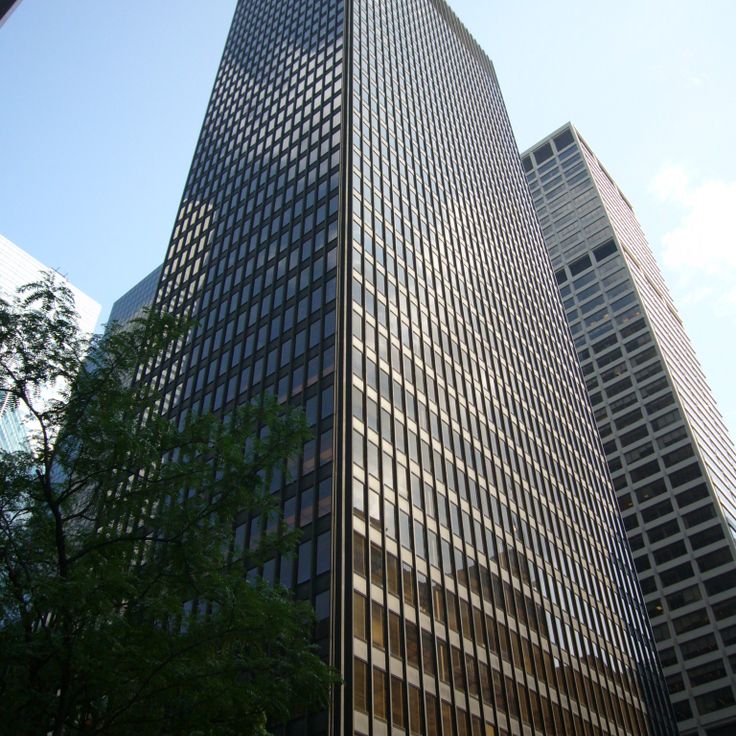
This 38-story office tower stands on Park Avenue and was completed in the late 1950s. Philip Johnson worked with Mies van der Rohe to create a building that combines glass and bronze. The facade shows an even grid of dark window bands. In front of the entrance lies an open plaza with shallow water pools that reflect light. The building is among the most important examples of postwar architecture in New York and influenced office construction worldwide. The clean lines and the setback position from the street changed the way skyscrapers fit into the city.
New York City, United States
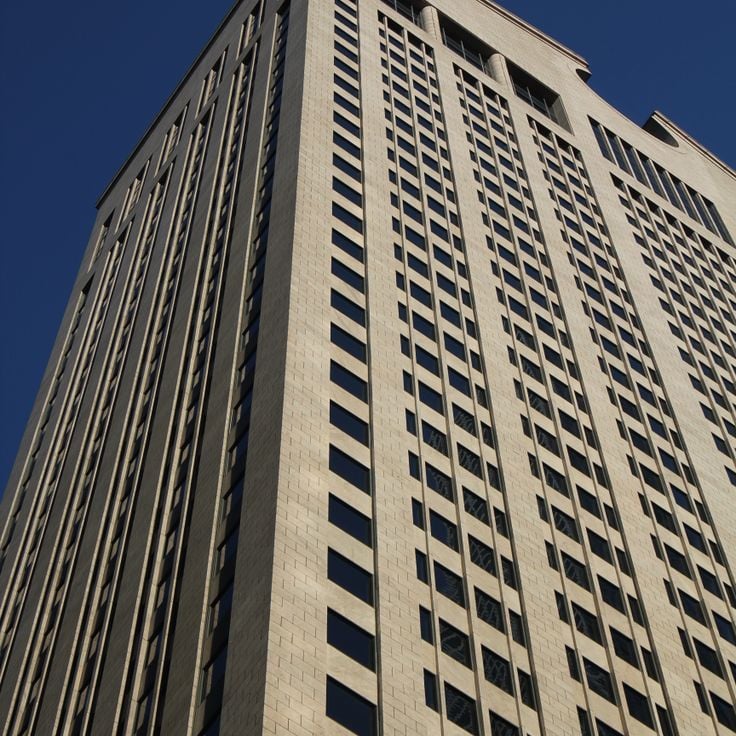
This office tower from 1984 stands in Manhattan and is one of Philip Johnson's most important works. The facade is made of granite, while a decorative pediment recalls historical furniture. The design combines modernist forms with classical elements and stands apart from the neighboring high-rises. The base includes space for retail and a public arcade. The building is part of New York's architectural history and shows Johnson's interest in historical references.
New York City, United States
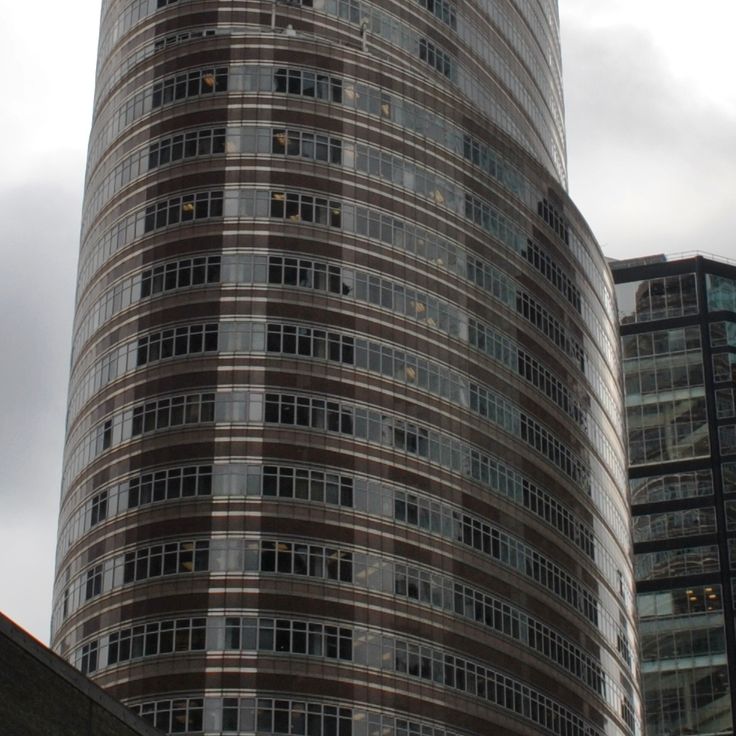
This office tower was completed in 1986 and shows Philip Johnson's shift from the International Style toward postmodern forms. It earned its nickname from its oval shape and red granite facade. The three tiers are staggered so that each level has a different diameter. This structure stands apart from the rectangular towers around it and fits into Johnson's experiments with geometry and color in the urban landscape.
Pittsburgh, United States
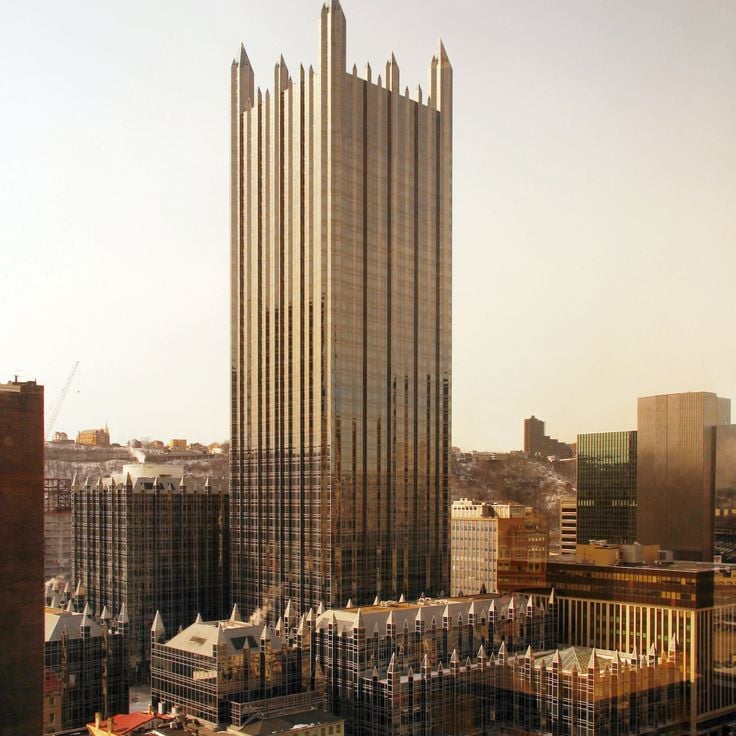
This building complex is part of the work Philip Johnson created in the United States. The six towers with their glass facades draw on medieval models and form an ensemble that shapes the city skyline. The architecture combines modern construction methods with historical forms and joins the body of work that also includes the Glass House in New Canaan and the Seagram Building in New York.
California, United States
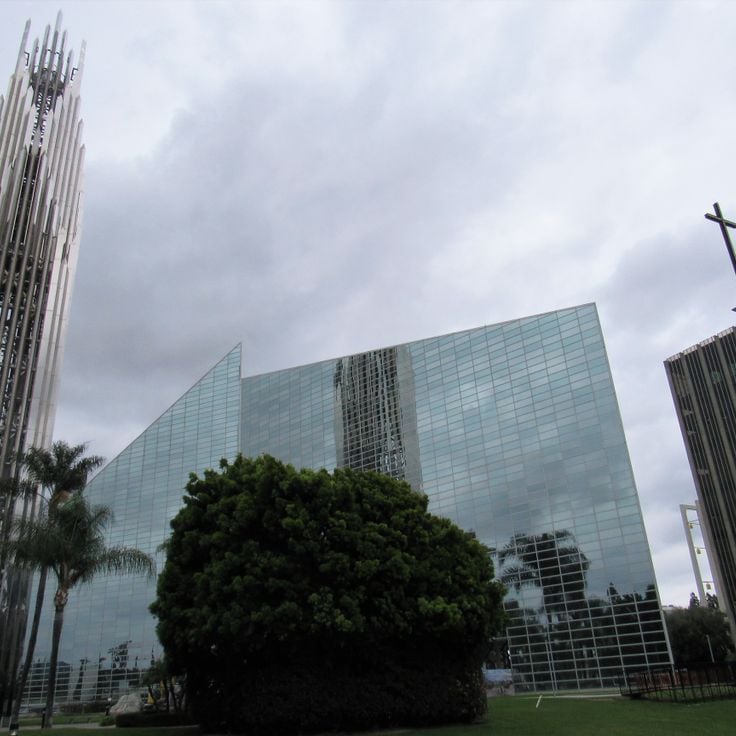
This building for religious gatherings shows Philip Johnson's approach to combining glass construction with Christian architecture. The facade consists of thousands of glass panes arranged in a star-shaped floor plan, allowing daylight to enter the interior space. The steel and glass construction emerged in the late seventies, connecting modernist principles with religious function.
Houston, United States
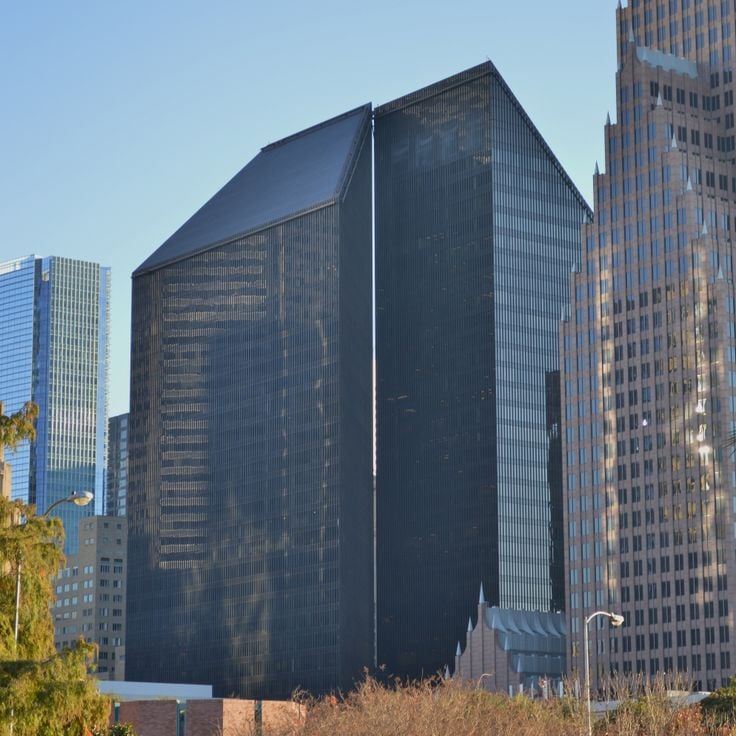
Pennzoil Place consists of two 36-story towers that demonstrate Philip Johnson's approach to modernist forms and geometry. The two buildings have slanted roofs and facades covered in bronze-tinted glass. They stand close together, creating a narrow gap between them that widens as it rises. This arrangement changes appearance depending on where you view it from. The complex belongs to Johnson's body of work in Houston and shows his influence on the city's architecture.

Fort Worth, United States
The museum building uses Texas shellstone and displays tall columns with large window fronts. Philip Johnson designed this museum as part of his modernist work across the United States. The facade connects classical forms with clean lines and reflects Johnson's approach to bringing traditional elements into contemporary architecture.
Washington, D.C., United States
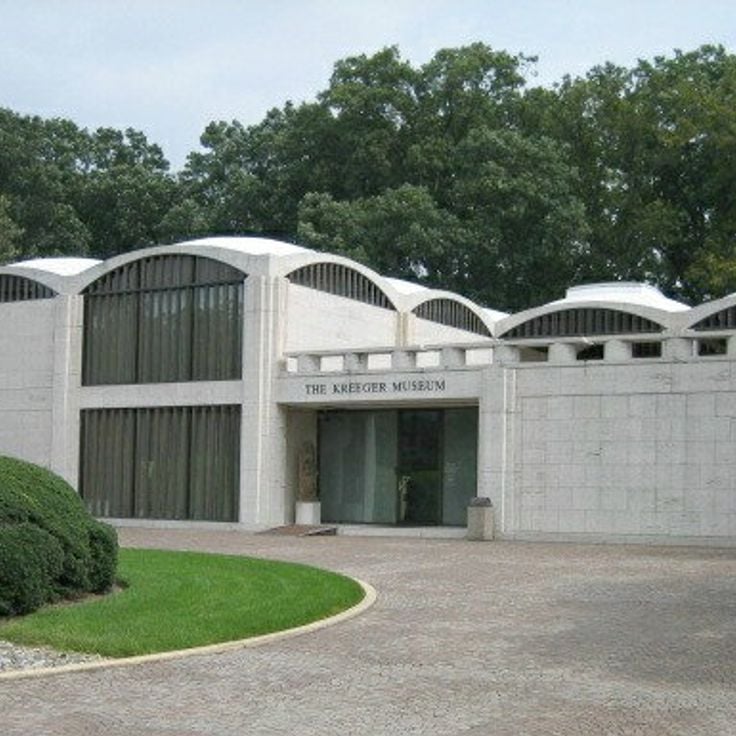
This 1963 building combines a private residence with exhibition spaces for modern art and sculptures in modernist style. The Kreeger Museum shows how Johnson merged living and display functions into a single structure, part of his work combining modernism with classical elements and creating buildings across the United States and Europe.
Fort Worth, United States
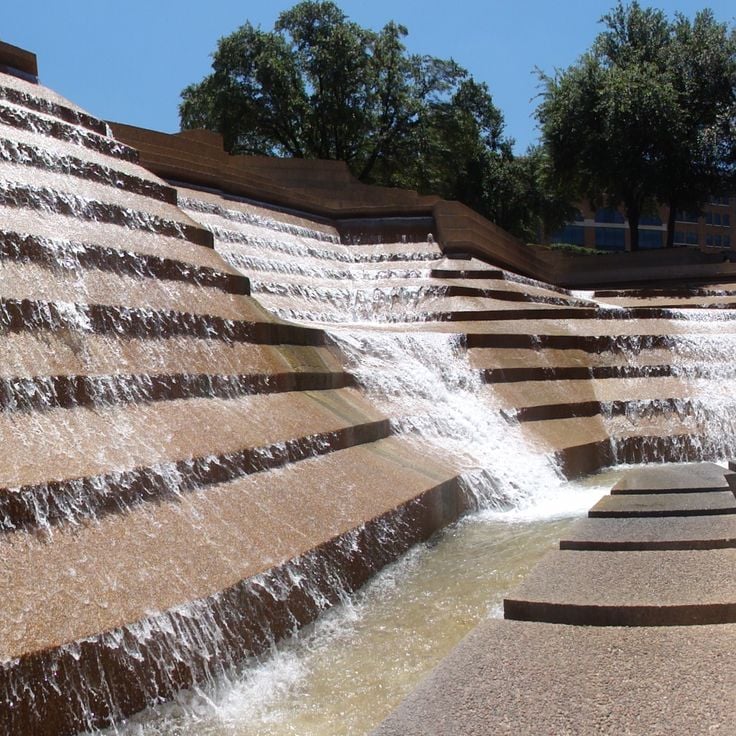
This city park from 1974 presents three large basins with waterfalls and concrete structures. Water flows over stepped surfaces and forms quiet pools. Visitors walk between the concrete walls and listen to the sound of the cascades. The park offers a cool retreat in the middle of the city and belongs to the modernist works of Philip Johnson across the United States.

Minneapolis, United States
This 1972 tower rises 57 floors and carries the clean lines of modernism in Johnson's work. The facade consists of glass with around 8000 windows that catch daylight and change the surface appearance as light shifts throughout the day. Inside, there are offices, shops, and a hotel, so people work, shop, or stay overnight here. The building shapes part of the Minneapolis skyline and shows how Johnson combined function with clear design.
Madrid, Spain
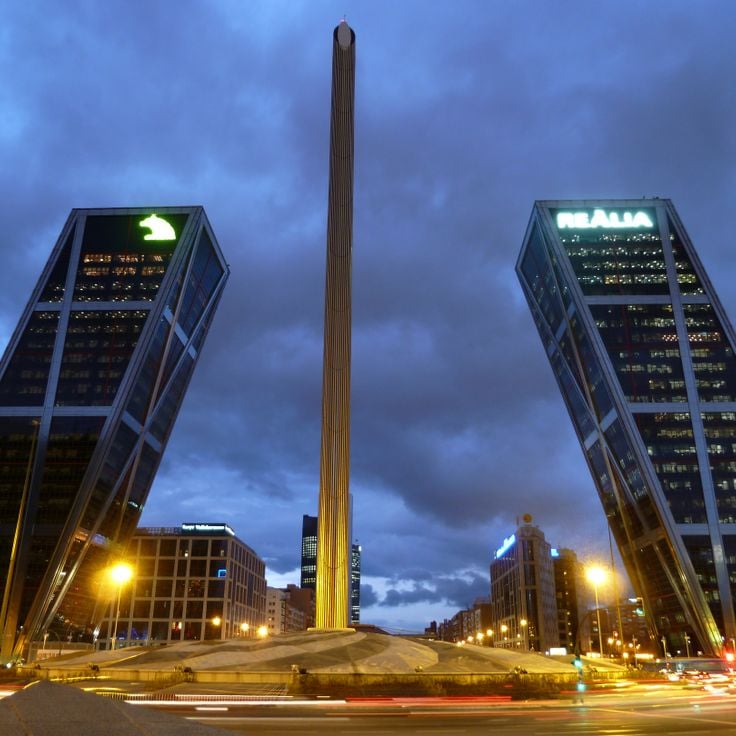
The two towers built in 1996 rise 115 meters (377 feet) and tilt 15 degrees toward Plaza de Castilla. Philip Johnson designed the Puerta de Europa as one of his significant works in Europe. The twin structures stand in Madrid and mark an important gateway into the city. Their slanted form sets them apart from other buildings in the area and reflects Johnson's interest in geometric clarity and modern expression. Today they form a recognizable part of the Madrid skyline.
Dallas, United States
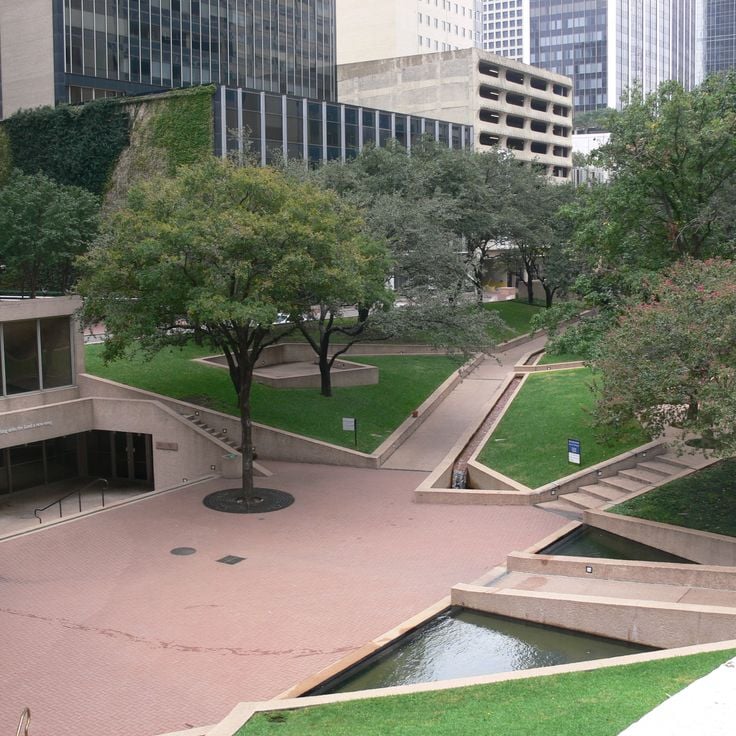
This complex in the heart of Dallas brings together a garden, a bell tower holding 49 bronze bells, and a chapel whose spiral roof curves upward. Philip Johnson designed the space as a place of quiet within the city. The chapel welcomes visitors with stained glass windows that soften the light into gentle colors. The garden offers a break from the traffic and tall buildings nearby. The tower rings on special occasions, adding a ceremonial note to the neighborhood. The shape of the chapel stands apart from the right angles of surrounding buildings, contributing an organic line to the Dallas skyline.
Houston, United States
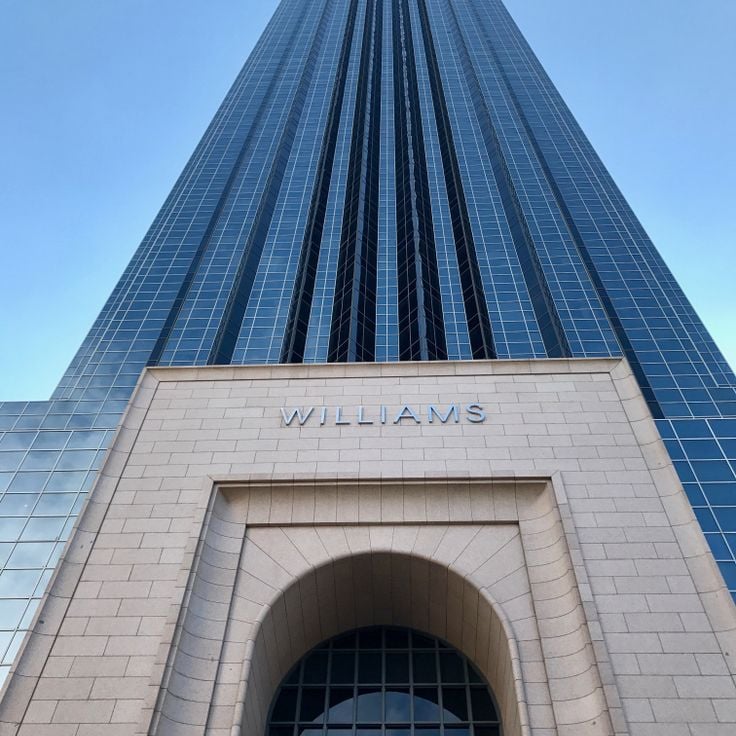
This office tower in Houston rises 902 feet across 64 floors. The glass facade reflects daylight and changes appearance with the weather and time of day. At the top, a vertical light beam shines across the city at night. Philip Johnson designed the building as a defining element of the skyline, combining classical proportions with modernist building materials. The tower stands in a large park with landscaped gardens and water features that create a quiet zone within the business district.
New York City, United States
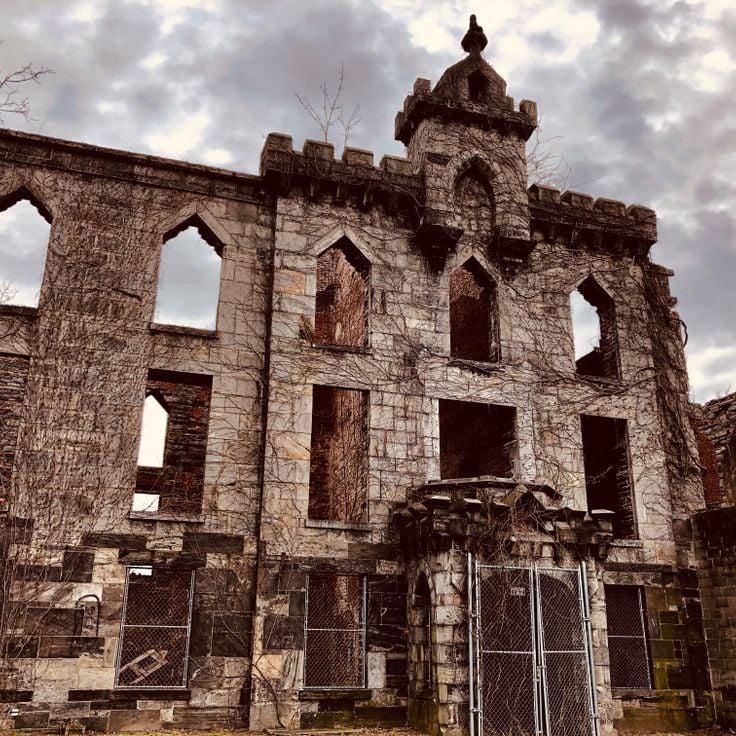
This ruin stands on Roosevelt Island in New York and was once a hospital for smallpox patients. James Renwick Jr. designed the building in 1856 using Gothic Revival forms. Philip Johnson later worked on stabilizing the decaying walls and added steel supports to preserve the structure. The gray stone facade still shows the original window openings and arches. The building stands open to the sky, without a roof or interior spaces. Its location on the eastern edge of the island offers views of the East River and the Manhattan skyline.
Atlanta, United States
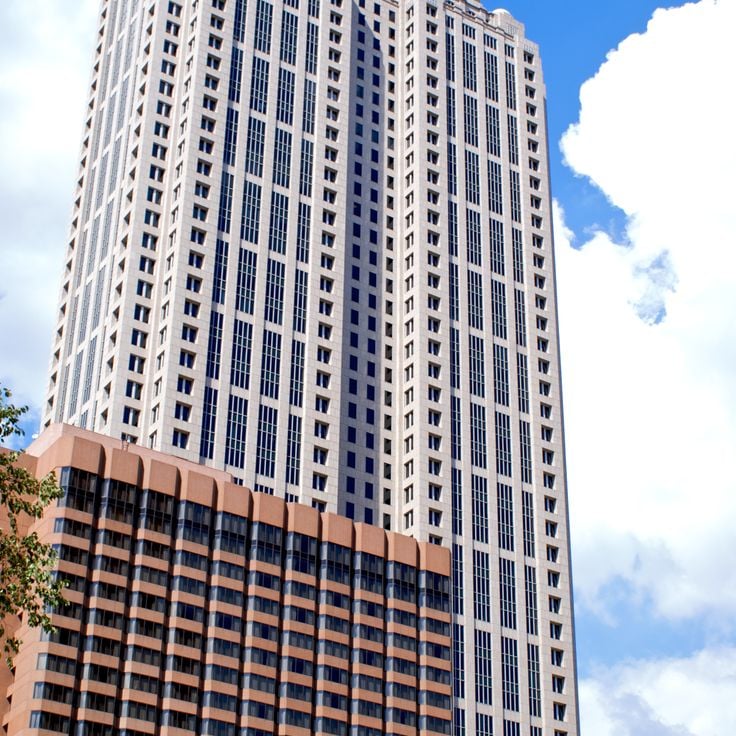
The 191 Peachtree Tower is an office building in downtown Atlanta. The tower was completed in the late 1980s and stands on Peachtree Street, one of the main thoroughfares in the city. The facade combines reflective glass with vertical bands of light-colored stone, and the profile of the building tapers toward the top. Philip Johnson's design shows geometric clarity and a connection to the street front, with the base marked by an arched opening. Inside, there are office floors, and the ground level opens to the street. The surrounding area is characterized by other high-rises, and the 191 Peachtree Tower contributes to the Atlanta skyline.
New York, United States
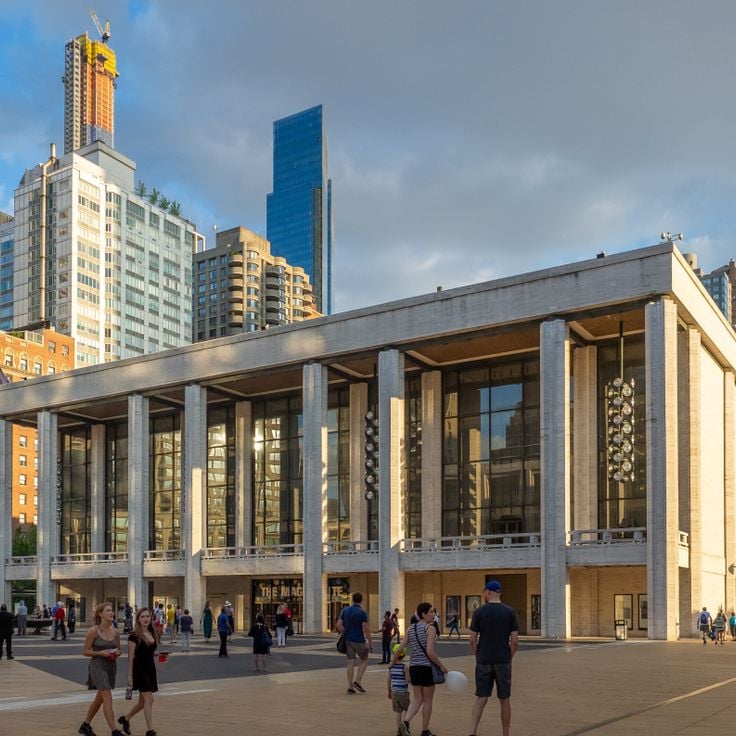
The David H. Koch Theater is an opera house at Lincoln Center in Manhattan. The facade shows tall glass windows that reveal the stairs and foyers inside. The auditorium offers several balconies and an open ceiling with gold circles. Philip Johnson designed the building in the sixties. The architecture uses clean lines and wide glass surfaces that connect the theater with the surrounding plazas of the cultural center. The house serves as a main stage for ballet and opera in New York. In the evening lights illuminate the facade and make the theater visible from the street.
Utica, United States
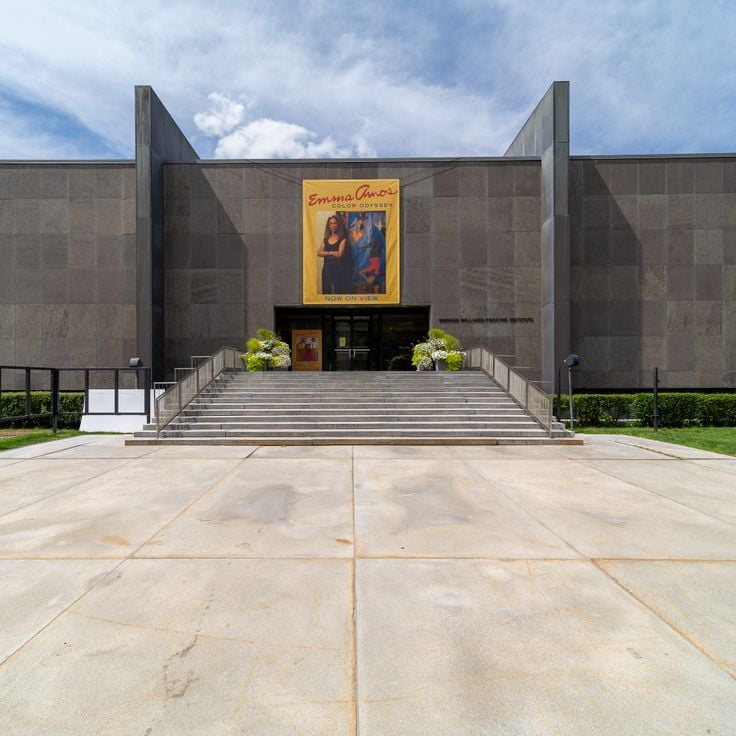
The Munson-Williams-Proctor Arts Institute is a museum and cultural center in Utica. Philip Johnson designed the museum's north wing in 1960, a building made of pale limestone with rectangular forms and clear proportions. The facade shows strict geometric patterns and large glass surfaces that bring daylight into the exhibition rooms. Inside, the galleries are arranged around a central atrium that connects several floors. The surfaces feel calm, the lines are plain. This building is part of a larger complex that also includes art schools and historic architecture. Johnson combined modernist principles with functional requirements for a museum. The house stands slightly back from the street, surrounded by lawns and low hedges.
Lincoln, United States
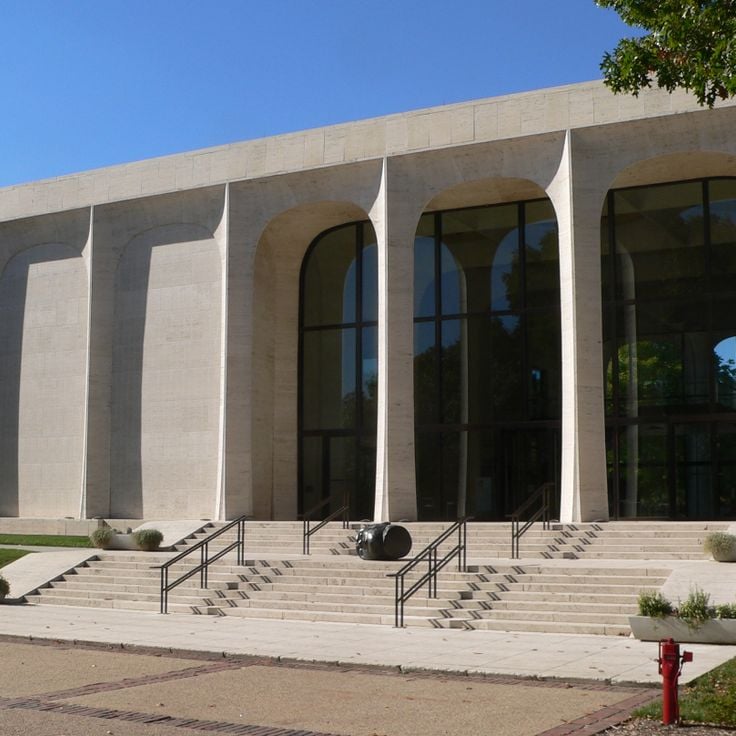
The Sheldon Museum of Art was designed as a museum building for the University of Nebraska and houses works of American art. The facade is made of travertine, a pale stone that reflects light and gives the building a calm, monumental appearance. The structure rests on piers that create the impression the building floats slightly above the ground. Large windows allow natural light into the exhibition rooms. The interior is open, with clean lines and an arrangement that directs the eye toward the artworks. The architecture connects modernist principles with classical proportions. The museum sits on the campus in Lincoln, surrounded by lawns and walkways. Visitors enter the building by a wide staircase leading to the main entrance.
Houston, United States
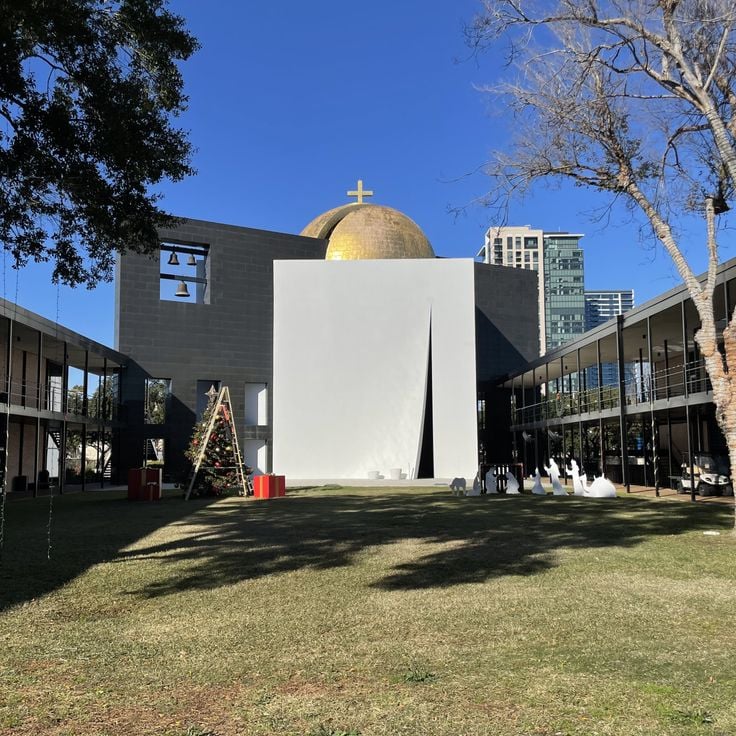
The Chapel of St. Basil sits on the campus of the University of Houston and features a brick structure with a cubic body and a gilded dome. The design brings together Romanesque arches and modern geometric planes, creating a space for worship and reflection. The interior receives natural light through the dome, casting patterns of shadow and brightness on the walls. Surrounded by lawns and university buildings, the chapel serves as a religious meeting point for students and visitors.
Houston, United States
This park in the Uptown District holds a semicircular water wall that rises over 60 feet (about 18 meters) into the air. Water flows down the outer surface of the structure and collects in a shallow pool, where visitors gather and listen to the sound of falling water. The shape of the wall encloses an open area, creating a quiet space amid the surrounding office towers. The park draws residents and visitors who pause here or walk through during warm weather. The structure was designed in the 1980s as part of a larger complex and serves as a public gathering spot in this business district of Houston.
In this article
21 places to discover — Don't miss the last!
New Canaan, United States
This 1949 residence sits on a property in New Canaan and demonstrates Philip Johnson's approach to modernism. The walls are made of transparent glass held by black steel beams. The building opens to a landscaped garden that includes lawns, trees, and small ponds. Inside, there are few walls, so the living area merges with the surroundings. The structure rests on a brick base and has a flat roof. A cylindrical brick core stands in the center and contains the bathroom and fireplace. The house was designed as Johnson's private residence and is now considered an example of transparent postwar architecture.
New York City, United States
This 38-story office tower stands on Park Avenue and was completed in the late 1950s. Philip Johnson worked with Mies van der Rohe to create a building that combines glass and bronze. The facade shows an even grid of dark window bands. In front of the entrance lies an open plaza with shallow water pools that reflect light. The building is among the most important examples of postwar architecture in New York and influenced office construction worldwide. The clean lines and the setback position from the street changed the way skyscrapers fit into the city.
New York City, United States
This office tower from 1984 stands in Manhattan and is one of Philip Johnson's most important works. The facade is made of granite, while a decorative pediment recalls historical furniture. The design combines modernist forms with classical elements and stands apart from the neighboring high-rises. The base includes space for retail and a public arcade. The building is part of New York's architectural history and shows Johnson's interest in historical references.
New York City, United States
This office tower was completed in 1986 and shows Philip Johnson's shift from the International Style toward postmodern forms. It earned its nickname from its oval shape and red granite facade. The three tiers are staggered so that each level has a different diameter. This structure stands apart from the rectangular towers around it and fits into Johnson's experiments with geometry and color in the urban landscape.
Pittsburgh, United States
This building complex is part of the work Philip Johnson created in the United States. The six towers with their glass facades draw on medieval models and form an ensemble that shapes the city skyline. The architecture combines modern construction methods with historical forms and joins the body of work that also includes the Glass House in New Canaan and the Seagram Building in New York.
California, United States
This building for religious gatherings shows Philip Johnson's approach to combining glass construction with Christian architecture. The facade consists of thousands of glass panes arranged in a star-shaped floor plan, allowing daylight to enter the interior space. The steel and glass construction emerged in the late seventies, connecting modernist principles with religious function.
Houston, United States
Pennzoil Place consists of two 36-story towers that demonstrate Philip Johnson's approach to modernist forms and geometry. The two buildings have slanted roofs and facades covered in bronze-tinted glass. They stand close together, creating a narrow gap between them that widens as it rises. This arrangement changes appearance depending on where you view it from. The complex belongs to Johnson's body of work in Houston and shows his influence on the city's architecture.
Fort Worth, United States
The museum building uses Texas shellstone and displays tall columns with large window fronts. Philip Johnson designed this museum as part of his modernist work across the United States. The facade connects classical forms with clean lines and reflects Johnson's approach to bringing traditional elements into contemporary architecture.
Washington, D.C., United States
This 1963 building combines a private residence with exhibition spaces for modern art and sculptures in modernist style. The Kreeger Museum shows how Johnson merged living and display functions into a single structure, part of his work combining modernism with classical elements and creating buildings across the United States and Europe.
Fort Worth, United States
This city park from 1974 presents three large basins with waterfalls and concrete structures. Water flows over stepped surfaces and forms quiet pools. Visitors walk between the concrete walls and listen to the sound of the cascades. The park offers a cool retreat in the middle of the city and belongs to the modernist works of Philip Johnson across the United States.
Minneapolis, United States
This 1972 tower rises 57 floors and carries the clean lines of modernism in Johnson's work. The facade consists of glass with around 8000 windows that catch daylight and change the surface appearance as light shifts throughout the day. Inside, there are offices, shops, and a hotel, so people work, shop, or stay overnight here. The building shapes part of the Minneapolis skyline and shows how Johnson combined function with clear design.
Madrid, Spain
The two towers built in 1996 rise 115 meters (377 feet) and tilt 15 degrees toward Plaza de Castilla. Philip Johnson designed the Puerta de Europa as one of his significant works in Europe. The twin structures stand in Madrid and mark an important gateway into the city. Their slanted form sets them apart from other buildings in the area and reflects Johnson's interest in geometric clarity and modern expression. Today they form a recognizable part of the Madrid skyline.
Dallas, United States
This complex in the heart of Dallas brings together a garden, a bell tower holding 49 bronze bells, and a chapel whose spiral roof curves upward. Philip Johnson designed the space as a place of quiet within the city. The chapel welcomes visitors with stained glass windows that soften the light into gentle colors. The garden offers a break from the traffic and tall buildings nearby. The tower rings on special occasions, adding a ceremonial note to the neighborhood. The shape of the chapel stands apart from the right angles of surrounding buildings, contributing an organic line to the Dallas skyline.
Houston, United States
This office tower in Houston rises 902 feet across 64 floors. The glass facade reflects daylight and changes appearance with the weather and time of day. At the top, a vertical light beam shines across the city at night. Philip Johnson designed the building as a defining element of the skyline, combining classical proportions with modernist building materials. The tower stands in a large park with landscaped gardens and water features that create a quiet zone within the business district.
New York City, United States
This ruin stands on Roosevelt Island in New York and was once a hospital for smallpox patients. James Renwick Jr. designed the building in 1856 using Gothic Revival forms. Philip Johnson later worked on stabilizing the decaying walls and added steel supports to preserve the structure. The gray stone facade still shows the original window openings and arches. The building stands open to the sky, without a roof or interior spaces. Its location on the eastern edge of the island offers views of the East River and the Manhattan skyline.
Atlanta, United States
The 191 Peachtree Tower is an office building in downtown Atlanta. The tower was completed in the late 1980s and stands on Peachtree Street, one of the main thoroughfares in the city. The facade combines reflective glass with vertical bands of light-colored stone, and the profile of the building tapers toward the top. Philip Johnson's design shows geometric clarity and a connection to the street front, with the base marked by an arched opening. Inside, there are office floors, and the ground level opens to the street. The surrounding area is characterized by other high-rises, and the 191 Peachtree Tower contributes to the Atlanta skyline.
New York, United States
The David H. Koch Theater is an opera house at Lincoln Center in Manhattan. The facade shows tall glass windows that reveal the stairs and foyers inside. The auditorium offers several balconies and an open ceiling with gold circles. Philip Johnson designed the building in the sixties. The architecture uses clean lines and wide glass surfaces that connect the theater with the surrounding plazas of the cultural center. The house serves as a main stage for ballet and opera in New York. In the evening lights illuminate the facade and make the theater visible from the street.
Utica, United States
The Munson-Williams-Proctor Arts Institute is a museum and cultural center in Utica. Philip Johnson designed the museum's north wing in 1960, a building made of pale limestone with rectangular forms and clear proportions. The facade shows strict geometric patterns and large glass surfaces that bring daylight into the exhibition rooms. Inside, the galleries are arranged around a central atrium that connects several floors. The surfaces feel calm, the lines are plain. This building is part of a larger complex that also includes art schools and historic architecture. Johnson combined modernist principles with functional requirements for a museum. The house stands slightly back from the street, surrounded by lawns and low hedges.
Lincoln, United States
The Sheldon Museum of Art was designed as a museum building for the University of Nebraska and houses works of American art. The facade is made of travertine, a pale stone that reflects light and gives the building a calm, monumental appearance. The structure rests on piers that create the impression the building floats slightly above the ground. Large windows allow natural light into the exhibition rooms. The interior is open, with clean lines and an arrangement that directs the eye toward the artworks. The architecture connects modernist principles with classical proportions. The museum sits on the campus in Lincoln, surrounded by lawns and walkways. Visitors enter the building by a wide staircase leading to the main entrance.
Houston, United States
The Chapel of St. Basil sits on the campus of the University of Houston and features a brick structure with a cubic body and a gilded dome. The design brings together Romanesque arches and modern geometric planes, creating a space for worship and reflection. The interior receives natural light through the dome, casting patterns of shadow and brightness on the walls. Surrounded by lawns and university buildings, the chapel serves as a religious meeting point for students and visitors.
Houston, United States
This park in the Uptown District holds a semicircular water wall that rises over 60 feet (about 18 meters) into the air. Water flows down the outer surface of the structure and collects in a shallow pool, where visitors gather and listen to the sound of falling water. The shape of the wall encloses an open area, creating a quiet space amid the surrounding office towers. The park draws residents and visitors who pause here or walk through during warm weather. The structure was designed in the 1980s as part of a larger complex and serves as a public gathering spot in this business district of Houston.