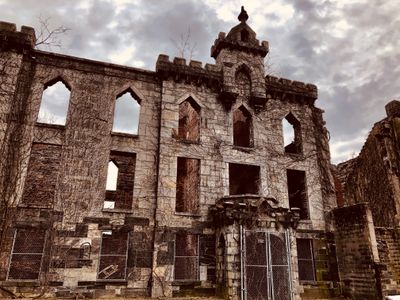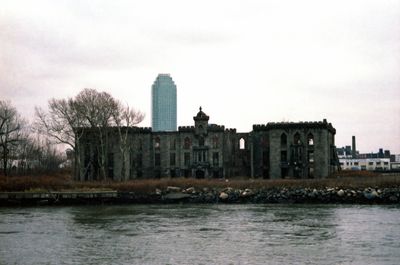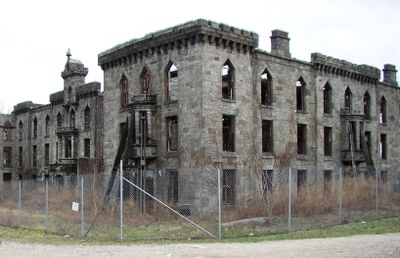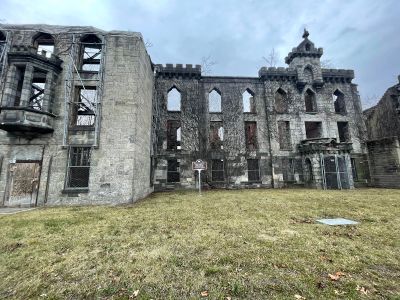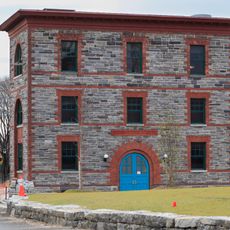
Smallpox Hospital, Gothic Revival hospital ruins at Roosevelt Island, United States.
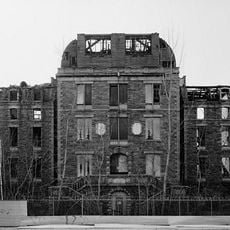
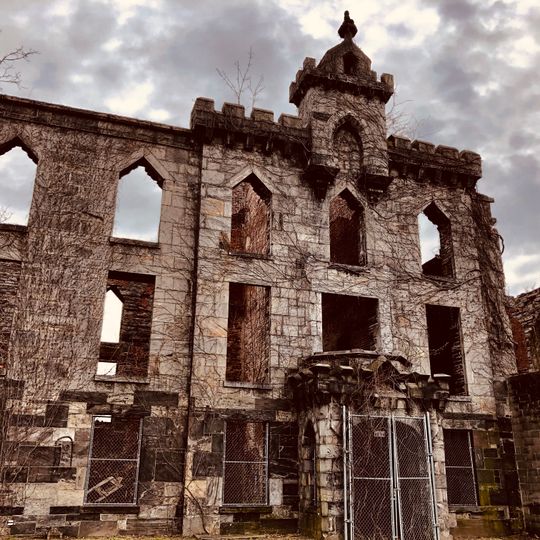
The Smallpox Hospital is a hospital ruin on Roosevelt Island in the United States. The granite facade shows pointed arches and crenellated walls, while the side walls still reveal the positions of former rooms.
Architect James Renwick Jr designed the building, which opened in 1856 and was the first facility of its kind in the country. After the hospital closed, the building fell into decay during the 20th century and later received landmark protection.
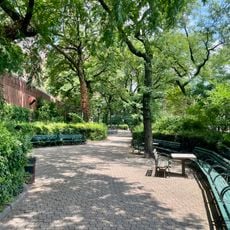
The ruin carries the memory of an era when the island served as a place for treating contagious diseases. Today visitors walk past the weathered walls during their stroll along the riverside path.
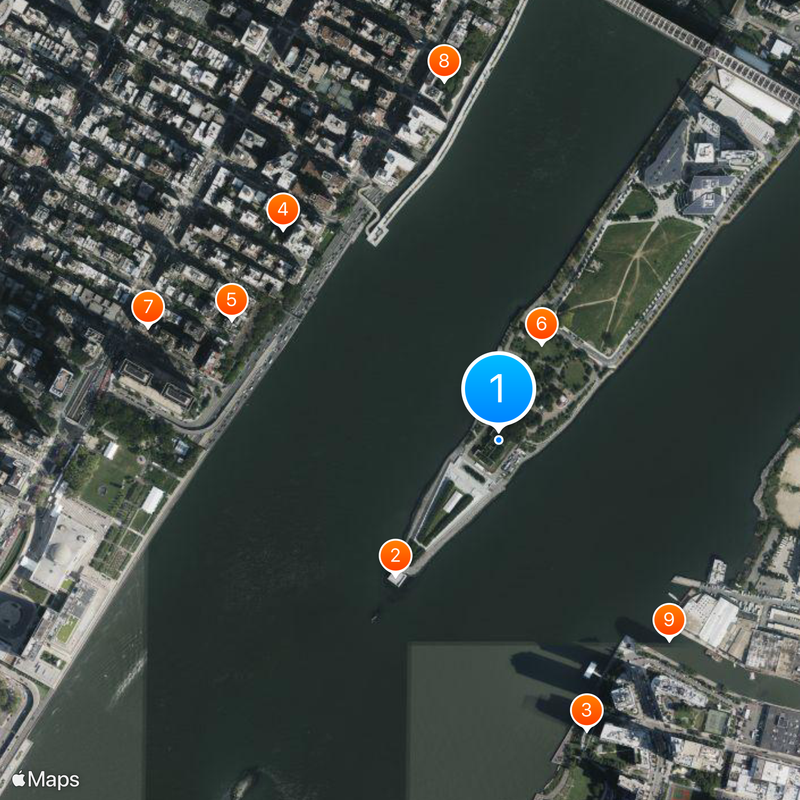
The ruin stands at the southern end of the island and can be reached on foot from the northern end in about 20 minutes. A fence surrounds the structure, but visitors can view and photograph it from outside.
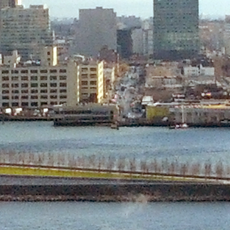
The building is the only official ruin in New York City protected as a landmark. At night the granite facade is illuminated and casts a marked shadow against the Manhattan skyline.
Location: Manhattan
Inception: 1856
Architects: James Renwick Jr.
Architectural style: Gothic Revival
Address: E Rd, New York, NY 10044, USA
Opening Hours: Monday 09:00-19:00; Wednesday-Sunday 09:00-19:00
Website: https://theruin.org
GPS coordinates: 40.75167,-73.95944
Latest update: December 4, 2025 13:21
Philip Johnson designed buildings that brought together modernism and classical references, shaping how architecture developed through the 20th century. His work includes glass pavilions, office towers, public spaces, and cultural institutions. His designs show an interest in clean lines, reflective surfaces, and the relationship between interior spaces and their surroundings. The collection features the Glass House in New Canaan, a transparent residence set within the landscape, the Seagram Building in New York, a bronze tower on Park Avenue, and the Puerta de Europa in Madrid, two leaning towers along Paseo de la Castellana. Other examples include the AT&T Building with its distinctive pediment, PPG Place in Pittsburgh with its glass towers inspired by Gothic forms, the IDS Center in Minneapolis, and Pennzoil Place in Houston. The collection also covers the Fort Worth Water Gardens, an urban park with pools and cascades, the Crystal Cathedral in California, a glass and steel worship space, along with the Amon Carter Museum in Fort Worth and the Kreeger Museum in Washington. These places show different sides of Johnson's practice and his ability to adapt buildings to urban and natural settings.
This collection brings together former psychiatric hospitals and sanatoriums that carry difficult histories and reputations as places where the past seems to linger. Many of these buildings stand empty or have been converted to new purposes, but they all share a common thread: they once treated patients under conditions that were often experimental and sometimes cruel. Over the years, accounts of mistreatment, strange occurrences, and unexplained presences have drawn historians, urban explorers, and visitors curious about the darker chapters of medical history. From the northeastern United States to isolated corners of Europe, Asia, and other regions, each site tells its own story of suffering and change. The collection includes places like Willard Asylum in New York, where patients spent entire lifetimes behind its walls, and the Gothic Revival ruin of the Smallpox Hospital on Roosevelt Island, now visible only from a distance. In Italy, the Ospedale Psichiatrico di Volterra grew from a medieval hospice into a sprawling complex, while Severalls Hospital in Essex treated patients for more than a century using methods that ranged from electroshock to lobotomy. Rockhaven Sanitarium in California offered a gentler approach for women, yet its empty cottages now evoke a sense of time standing still. Whether exploring the overgrown pathways of Letchworth Village or walking the silent corridors of Creedmoor Psychiatric Center, visitors encounter buildings that witnessed decades of human struggle and transformation.
Franklin D. Roosevelt Four Freedoms Park
272 m
Pepsi-Cola sign
485 m
River House (New York City)
483 m
23 Beekman Place
468 m
City Hospital
170 m
Beekman Tower
590 m
One Sutton Place South
581 m
Anable Basin
420 m
Strecker Memorial Laboratory
116 m
Peter Detmold Park
418 m
Mother and Child
596 m
Peace Monument
604 m
Roots and Ties for Peace
538 m
Treasure Tripod Dedicated to the 21st Century
596 m
Let Us Beat Swords Into Ploughshares
590 m
The Sleeping Elephant
624 m
Arrival
570 m
Porcellino
605 m
Title Reaching for the Skies
600 m
Motherboard Meditation
515 m
Kusikawsay
614 m
Consciousness
555 m
Replica of Commemorative Stone in Honour of the Victims of Extreme Poverty
580 m
Trophy of Civil Rights
584 m
Work of art, sculpture
450 m
Work of art, sculpture
613 m
Scenic viewpoint
353 m
Scenic viewpoint
272 mReviews
Visited this place? Tap the stars to rate it and share your experience / photos with the community! Try now! You can cancel it anytime.
Discover hidden gems everywhere you go!
From secret cafés to breathtaking viewpoints, skip the crowded tourist spots and find places that match your style. Our app makes it easy with voice search, smart filtering, route optimization, and insider tips from travelers worldwide. Download now for the complete mobile experience.
A unique approach to discovering new places❞
— Le Figaro
All the places worth exploring❞
— France Info
A tailor-made excursion in just a few clicks❞
— 20 Minutes