Pennzoil Place, Postmodern skyscraper in Downtown Houston, United States.
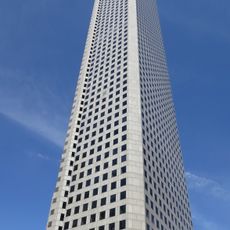
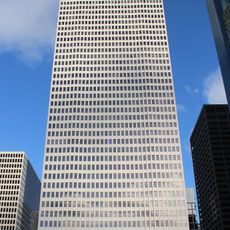
Pennzoil Place consists of two 36-story trapezoidal towers, 495 feet tall, placed ten feet apart and sheathed in dark bronze glass and aluminum. The towers are mirror images of each other, with slanted rooflines that angle down from the outer edge to a lower inner side, giving the top a notched peak. The street-level plaza joining them is enclosed in a 115-foot glass pyramid-shaped atrium.
The building opened in 1975 as the vision of developer Gerald D. Hines, departing from the rectangular designs that dominated American office towers at that time. Its completion influenced how architects approached commercial skyscraper design in the following years.
The name comes from Pennzoil, the oil company that commissioned the towers. The New York Times critic Ada Louise Huxtable named Pennzoil Place "Building of the Decade" in 1975 for the silhouette it added to the Houston skyline. Philip Johnson received the 1978 AIA Gold Medal and in 1979 became the first Pritzker Prize laureate, recognition tied to this work.
The complex connects directly to Houston's underground tunnel system, providing easy pedestrian access to nearby restaurants and shops without going outside. This makes visiting comfortable in any season, especially during hot or rainy weather.
The trapezoidal shape of the towers creates optical illusions as you walk around the building from different angles. Each viewpoint reveals a different profile, making the structure appear to transform throughout your visit.
The community of curious travelers
AroundUs brings together thousands of curated places, local tips, and hidden gems, enriched daily by 92,834 contributors worldwide.