See the monuments around you in AROpen chests in the app
Around Us is built for your phone — point your camera at the streets and discover the monuments and places around you in augmented reality.Around Us is built for your phone — chests unlock when you walk, explore and capture nearby places.
Paris has reshaped its architectural landscape over recent decades by constructing distinctly contemporary buildings. La Défense's Grande Arche extends the city's historic axis, while Frank Gehry's Louis Vuitton Foundation unfurls its glass sails in Bois de Boulogne. The François Mitterrand Library rises with four towers shaped like open books along the Seine, symbolizing a confident embrace of modernity.
However, Paris architecture is not limited to recent constructions. The city has reinvented old structures: La Samaritaine, a department store in Art Nouveau and Art Deco styles, was restored to its former glory after a lengthy renovation. The former Bercy wine warehouses have become a lively shopping district, the Viaduc des Arts hosts artisan workshops beneath its 19th-century arches, and the Centquatre turned a municipal funeral home into a cultural center. These renovations demonstrate how Paris combines heritage preservation with adaptation to contemporary functions.
Paris has reshaped its architectural landscape over recent decades by constructing distinctly contemporary buildings. La Défense's Grande Arche extends the city's historic axis, while Frank Gehry's Louis Vuitton Foundation unfurls its glass sails in Bois de Boulogne. The François Mitterrand Library rises with four towers shaped like open books along the Seine, symbolizing a confident embrace of modernity.
However, Paris architecture is not limited to recent constructions. The city has reinvented old structures: La Samaritaine, a department store in Art Nouveau and Art Deco styles, was restored to its former glory after a lengthy renovation. The former Bercy wine warehouses have become a lively shopping district, the Viaduc des Arts hosts artisan workshops beneath its 19th-century arches, and the Centquatre turned a municipal funeral home into a cultural center. These renovations demonstrate how Paris combines heritage preservation with adaptation to contemporary functions.
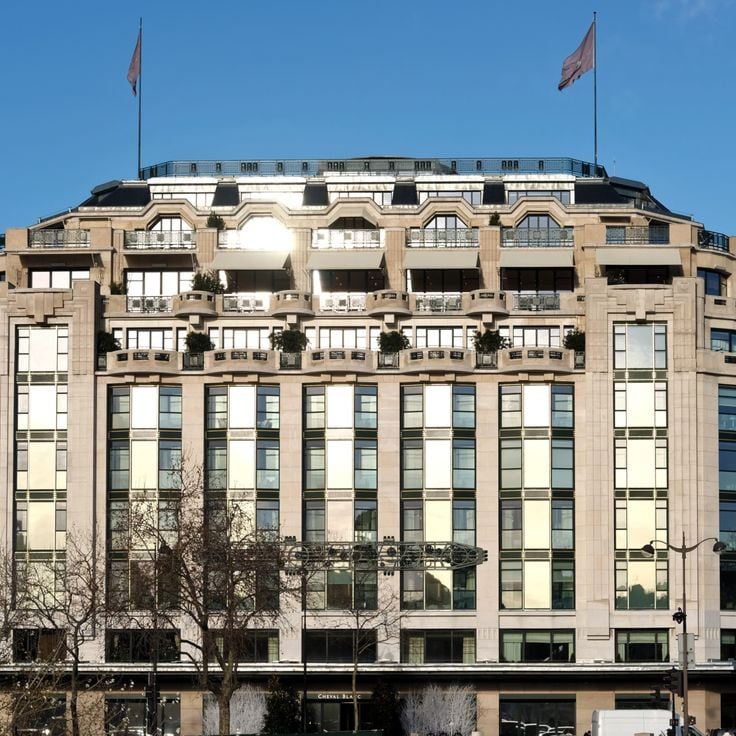
This landmark department store, established in 1870, combines two architectural movements within a single complex. The older section displays an original Art Nouveau facade designed by Frantz Jourdain between 1905 and 1910, featuring wrought iron detailing and colored ceramic tiles. The second section, completed from 1926 to 1928, follows the cleaner lines of Art Deco design. After a comprehensive renovation completed in 2021, La Samaritaine has restored its historic details, including the grand glass canopy over the central atrium. The restoration preserved the original structure while integrating modern retail spaces, offices and a hotel. The building stands between Pont Neuf and Rue de Rivoli in the first arrondissement.
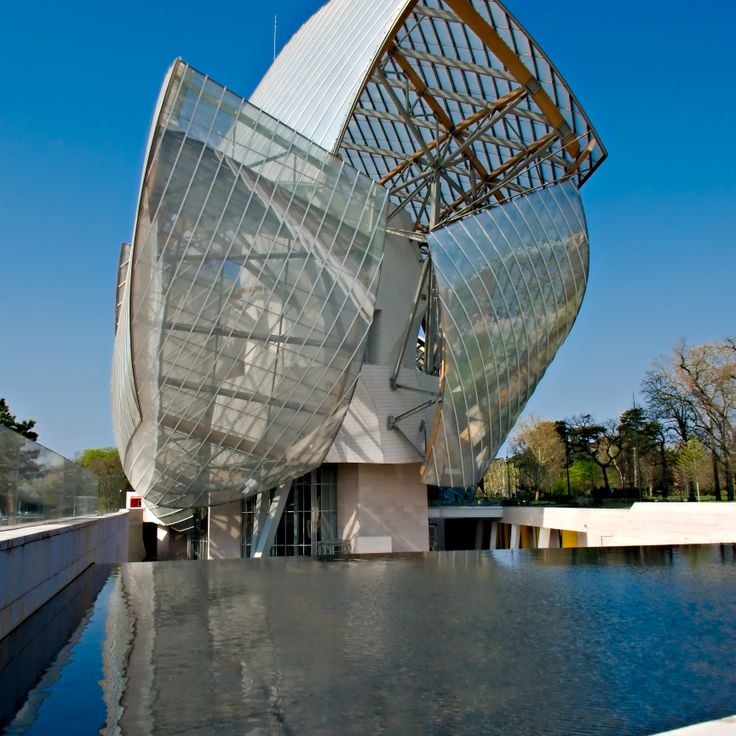
The Fondation Louis Vuitton is an art museum and cultural center in the Bois de Boulogne, designed by American architect Frank Gehry. Opened in 2014, the building features twelve curved glass panels that evoke sails or transparent clouds, enveloping a structure spanning over 118,000 square feet (11,000 square meters). The institution presents contemporary art and modern collections through rotating exhibitions as well as permanent works from the LVMH collection. Located in a public park, the building offers views across surrounding treetops and the Parisian skyline from its terraces.
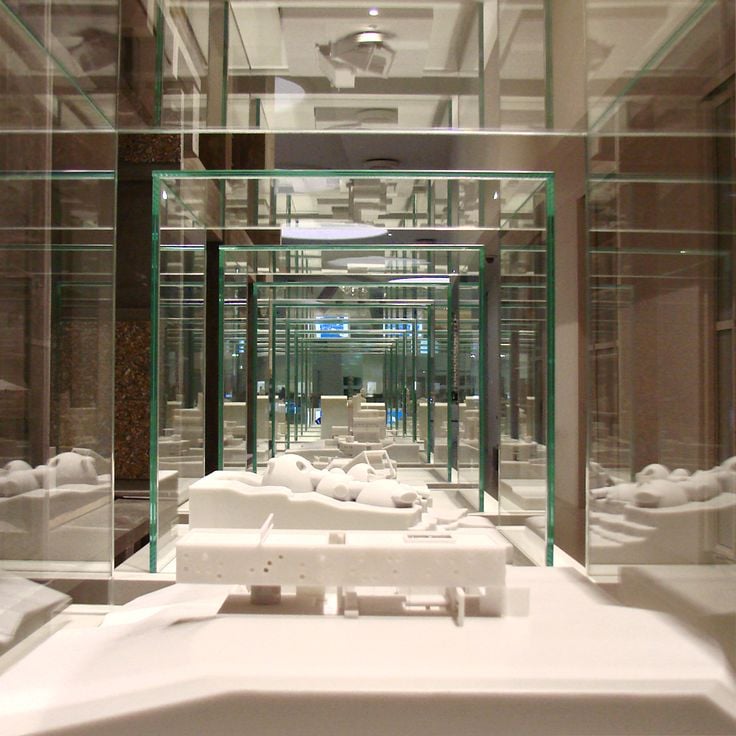
This institution housed in the Palais de Chaillot documents French architecture from the Middle Ages to the present day. The collections at the Cité de l'Architecture et du Patrimoine include plaster casts of Romanesque and Gothic portals, wall paintings from medieval churches, and models of significant buildings. One section focuses on modern and contemporary architecture through plans, photographs, and architectural fragments. The museum shows how French building traditions evolved and which technical innovations shaped architectural practice.
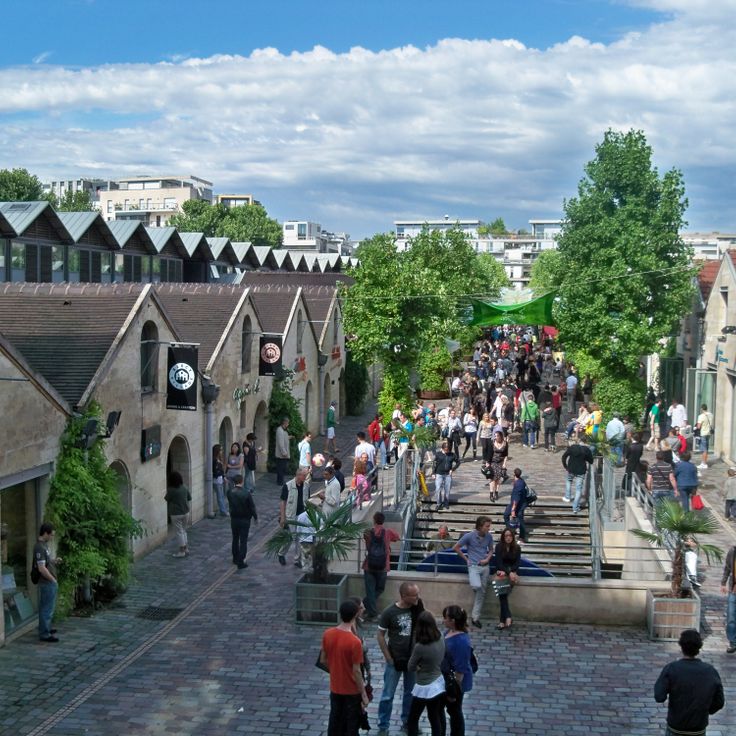
Bercy Village occupies former wine warehouses built between 1812 and 1890, when this part of Paris served as the world's largest wine trading center. The low stone buildings with their interior courtyards were converted in the 1990s into a shopping and entertainment district while preserving the original architecture. Today, the restored warehouses house around forty shops, restaurants and cafés distributed along cobblestone pedestrian lanes. The district sits next to Parc de Bercy and near the AccorHotels Arena, making it a busy area that combines historic industrial architecture with contemporary leisure facilities.
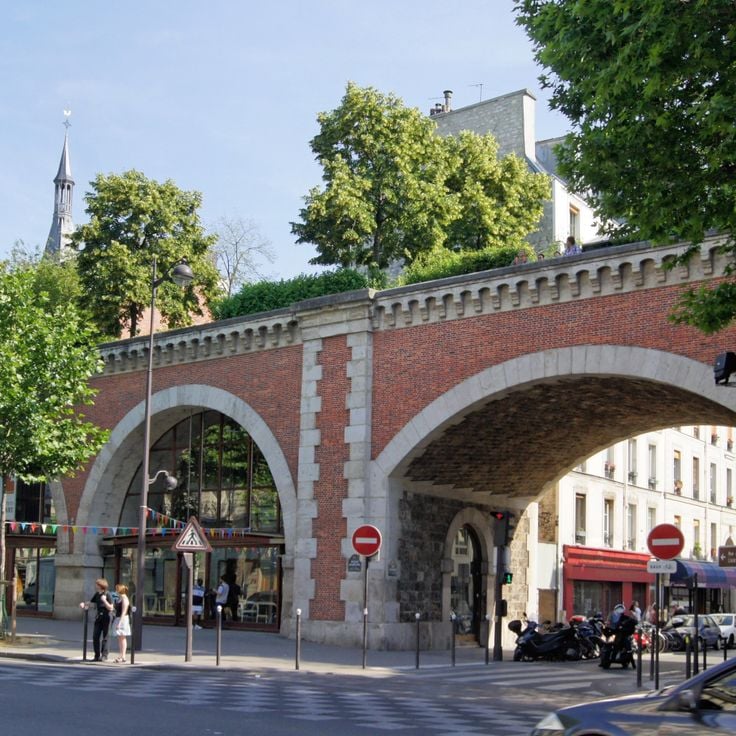
This 19th-century viaduct has been converted into a series of workshops and galleries where artisans and designers present their work. The stone arches stretch for more than a mile and now house studios for furniture restoration, jewelry making, violin crafting and other traditional trades. Above the viaduct runs the Promenade Plantée, an elevated garden walkway built on the former railway line. The Viaduc des Arts combines the preservation of an industrial structure with the promotion of contemporary craftsmanship.
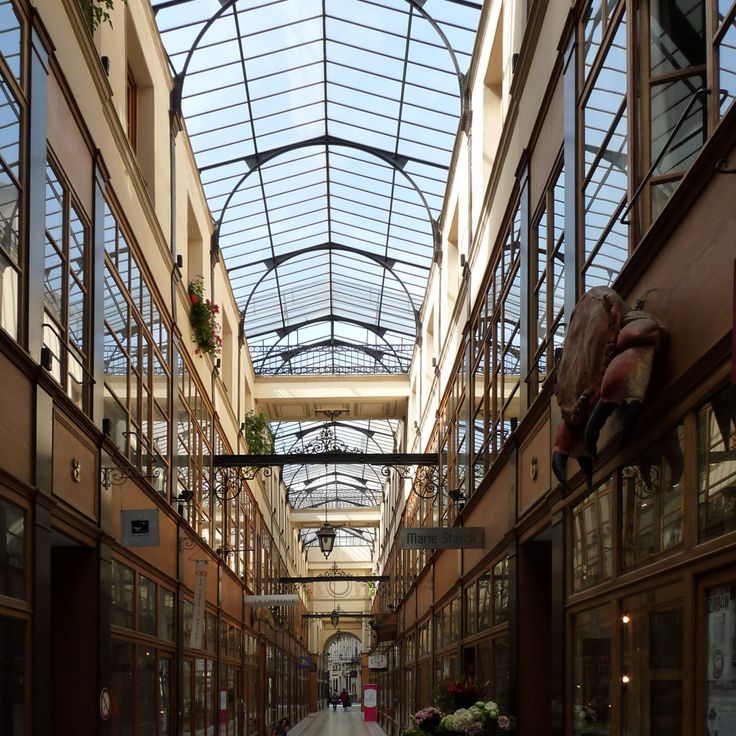
The Passage du Grand Cerf opened in 1825 and ranks among the earliest covered passages in the French capital. This thoroughfare connects Rue Saint-Denis to Rue Dussoubs and extends 384 feet (117 meters) in length. The glass canopy reaches a height of 40 feet (12 meters), allowing daylight to filter into the passage. Today the three-story buildings along this passage house workshops, craft shops and design boutiques that benefit from the early 19th-century architectural framework.
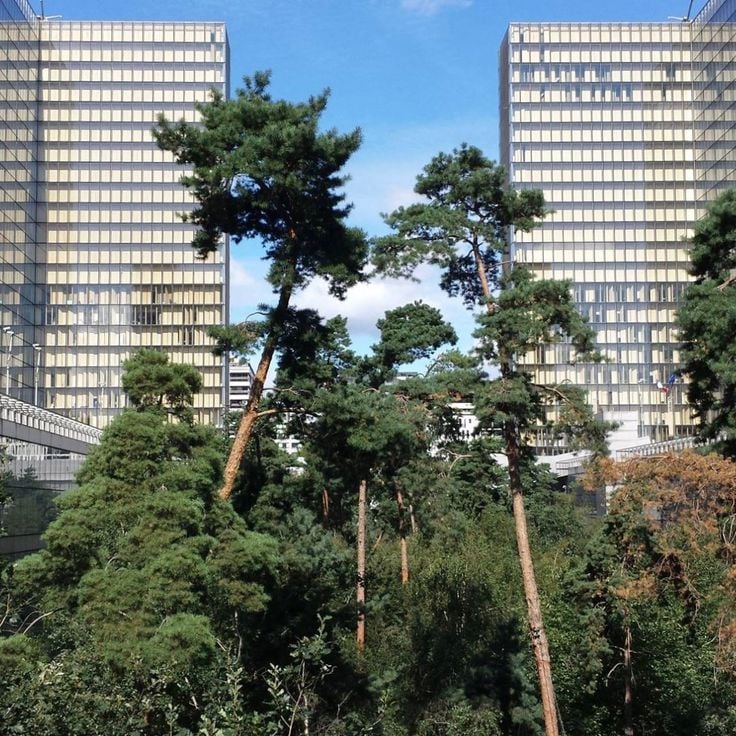
The Bibliothèque François Mitterrand stands on the left bank of the Seine as one of Europe's largest library buildings. Architect Dominique Perrault designed four glass towers, each rising 260 feet (79 meters) and positioned at the corners of a rectangular courtyard. These towers, resembling open books, frame a planted garden of pines and other tree species accessible only to readers. The library opened in 1995 and houses over 14 million documents in its reading rooms and storage areas. The architecture combines functionality with a clear geometric form that has become a landmark of contemporary Paris.
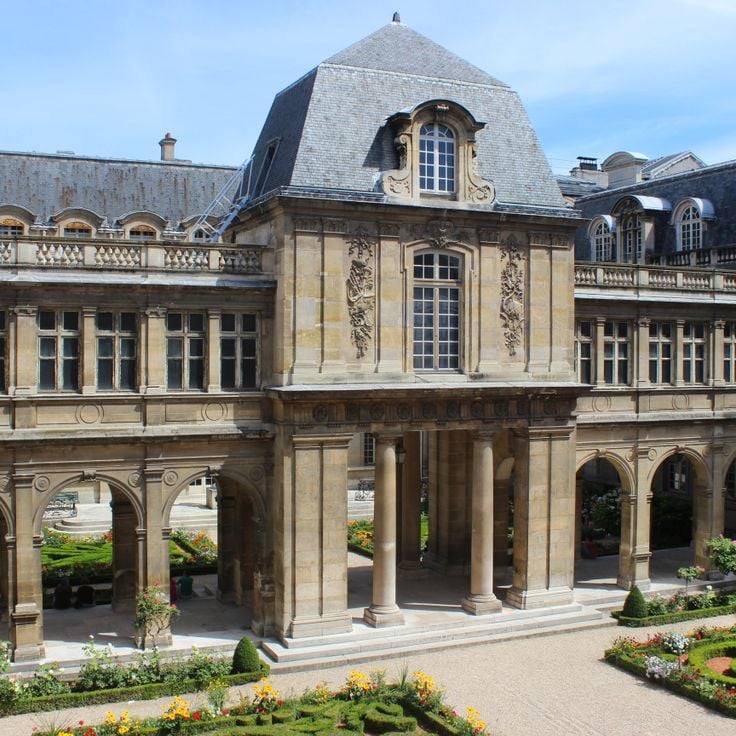
The Musée Carnavalet documents the history of Paris from the Middle Ages to the present day, housed in two adjoining private mansions dating from the 16th and 17th centuries. The museum displays archaeological finds from the Gallo-Roman period, reconstructed period rooms from various centuries, and an extensive collection related to the French Revolution. The exhibition includes paintings, furniture, decorative objects, and historical documents that trace the urban and social development of the capital. Following several years of renovation, the museum presents its collections in modernized exhibition spaces that work in harmony with the historical structures of both buildings.
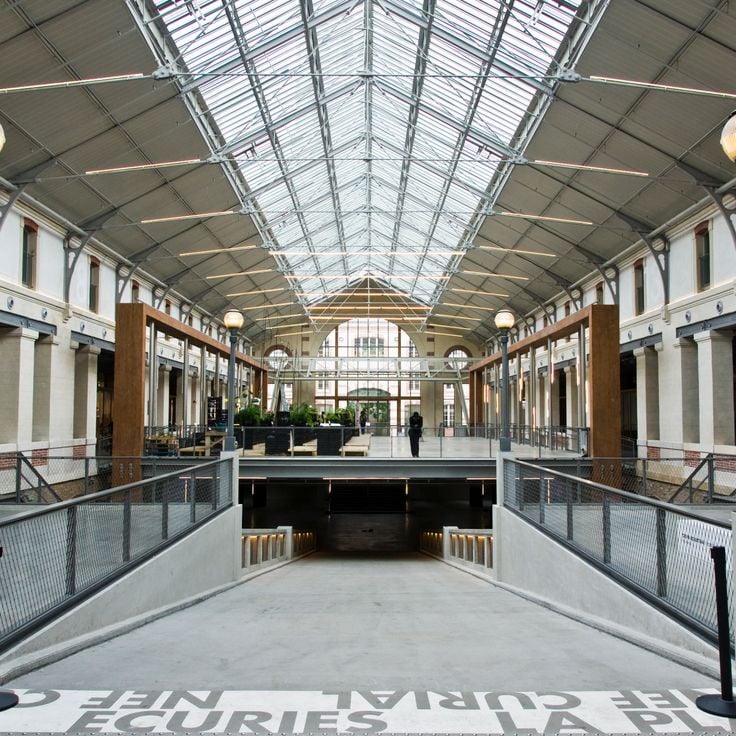
The Centquatre-Paris occupies a former 19th-century municipal funeral facility now housing art galleries, studios and event spaces. The building served as a mortuary until the 1990s before its conversion into a cultural center in 2008, preserving its industrial architecture with high ceilings and glass roofs. The complex spans approximately 430,000 square feet (39,000 square meters) in the 19th arrondissement and functions as a workplace for artists and a venue for exhibitions, theater performances and workshops. The transformation demonstrates how Paris repurposes historic industrial structures for contemporary cultural use.
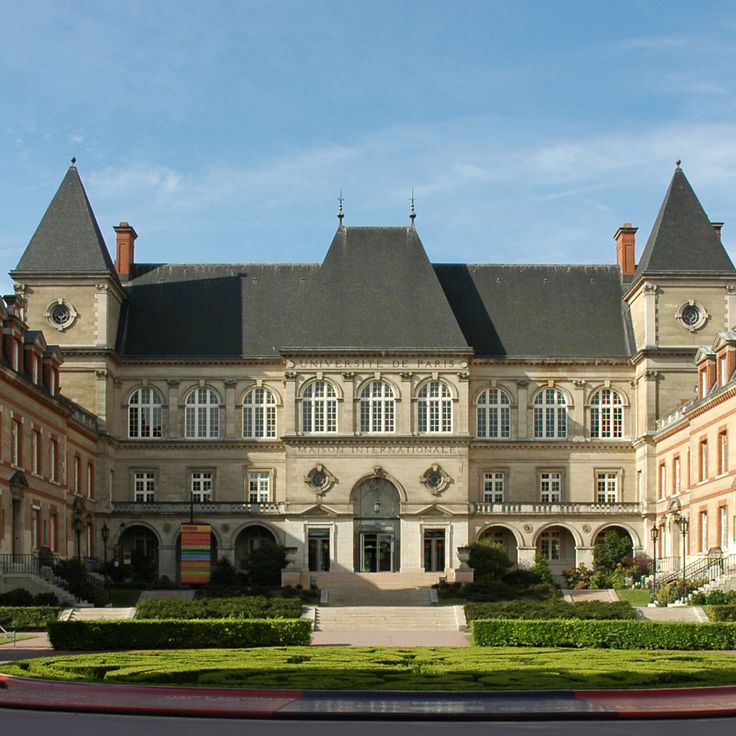
The Cité Internationale Universitaire de Paris brings together 40 student residences on its grounds, each reflecting the building traditions of different countries. Founded in the 1920s, the campus has attracted nations to construct individual pavilions, from Le Corbusier's Maison de la Suisse to the Maison du Japon. The campus covers 84 acres (34 hectares) in southern Paris and houses students from more than 140 countries. Each building was designed according to the architectural principles of its country of origin, creating an unusual ensemble of international building styles across the site.
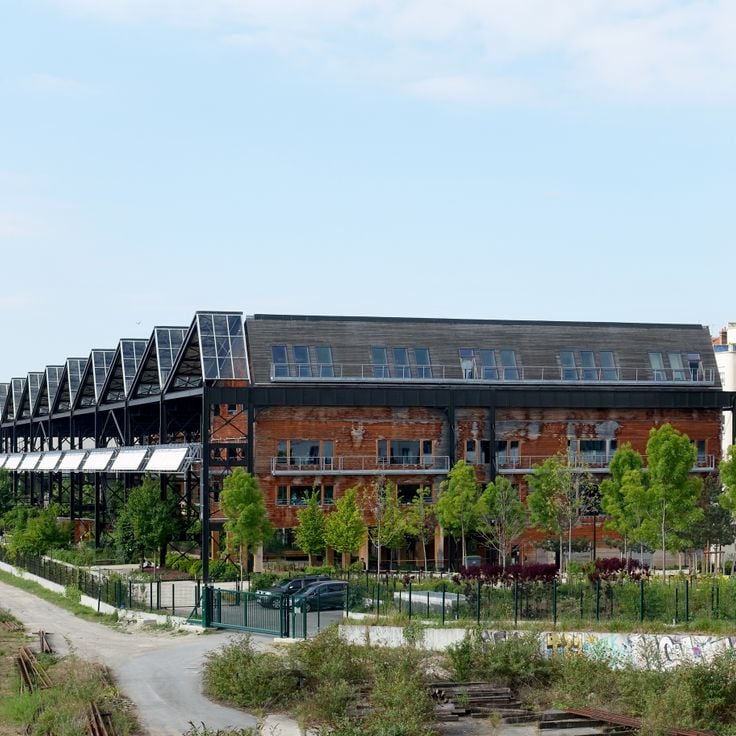
This former railway facility from 1927 was redesigned as a climate-conscious urban center. Solar panels cover the roof and provide renewable energy for the building, which contains a public library, retail spaces, a youth hostel, and an events venue. The renovation preserved the industrial architecture of the hall while incorporating contemporary elements. The project transforms a derelict railway building in the 18th arrondissement into a functioning community space.
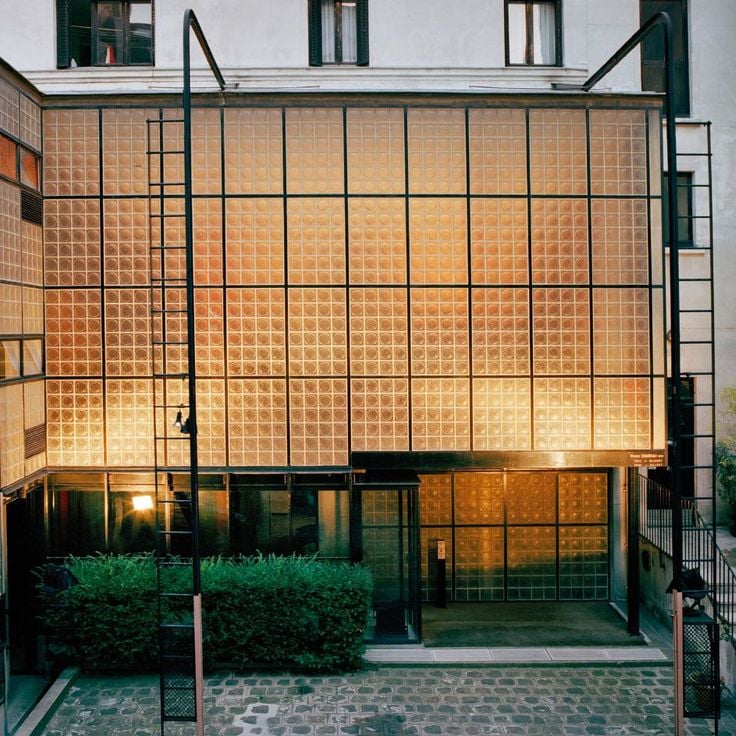
This residential building completed in 1932 uses industrial materials such as steel and glass blocks for its construction. The Maison de Verre resulted from collaboration between architect Pierre Chareau and metalworker Louis Dalbet. The building sits in a courtyard in the 6th arrondissement and demonstrates early modern principles in French architecture. The translucent glass blocks of the facade allow light to enter while maintaining privacy. The movable partitions and technical details reflect functionalist ideas of the interwar period.
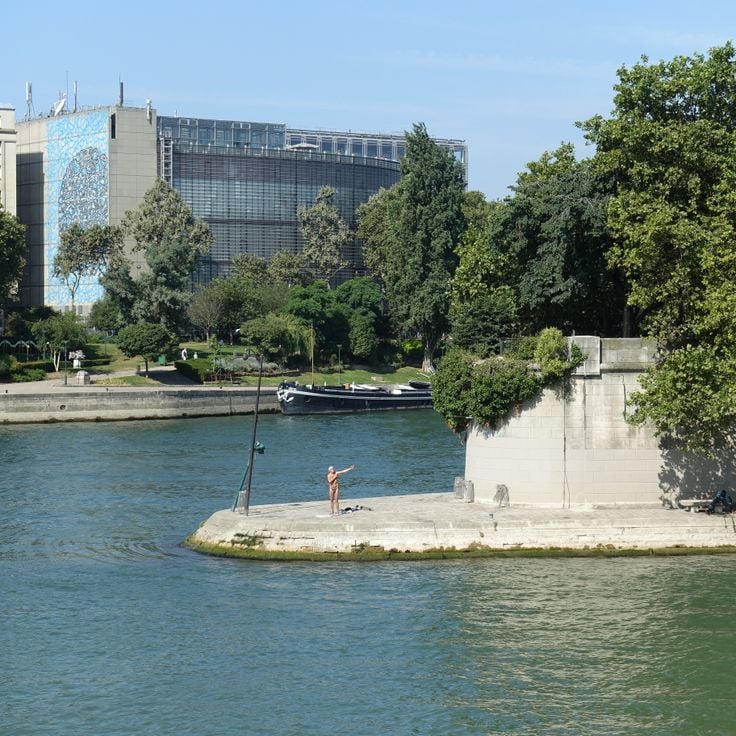
The Institut du Monde Arabe building emerged in the 1980s as an architectural experiment in dialogue between French modernism and Arab tradition. The south facade of this cultural center consists of 240 motorized metal screens that automatically adjust to sunlight, recalling traditional mashrabiyas. Architect Jean Nouvel combined technological innovation with cultural references, creating a building that serves both functional requirements and symbolic aspirations. The light-sensitive screens regulate light entering the exhibition spaces while forming a kinetic ornament on the facade. The institute stands in the fifth arrondissement along the left bank of the Seine, bringing together cultural mediation and technical precision in its architecture.
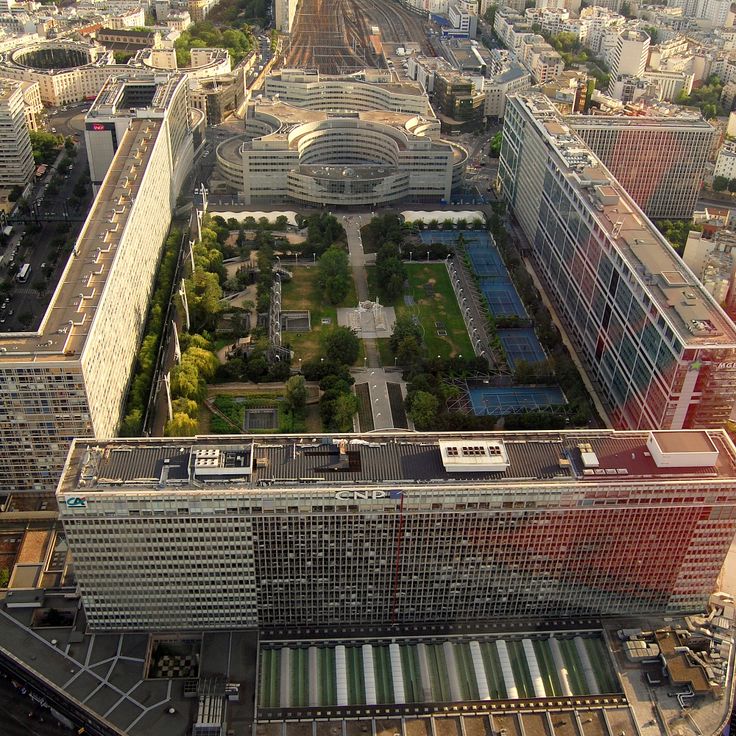
This 8.5-acre garden sits on the roof of Montparnasse station and opened in 1994 as one of Europe's first elevated parks. The design references the Atlantic coastal routes served by the station below, featuring plant species from western France's maritime regions. Several yards beneath the garden surface, rail tracks handle the station's daily traffic, while walkways lead through themed sections with water features, wooden boardwalks and protected planting areas. The Jardin Atlantique demonstrates how Paris has since the nineties combined transportation infrastructure with public green space, activating previously unused urban areas.
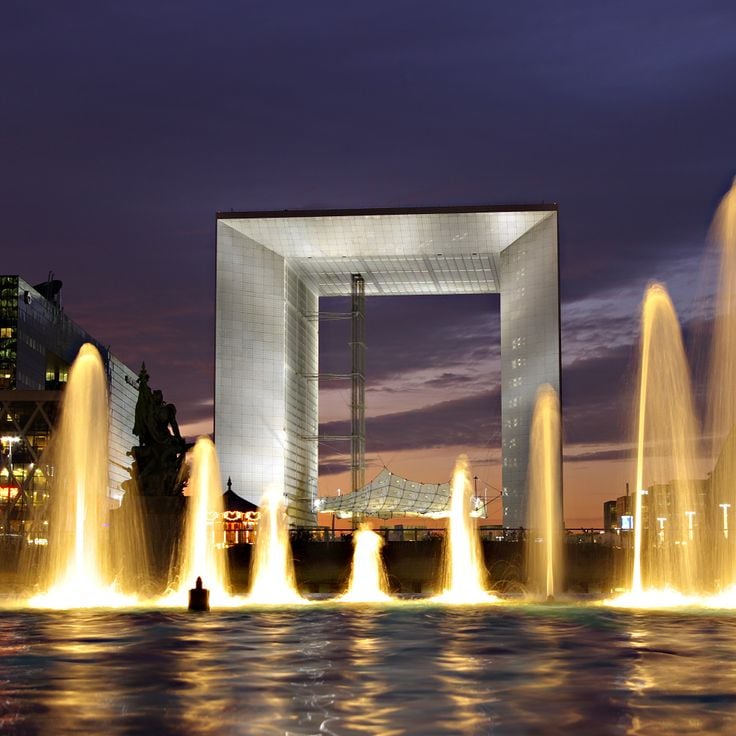
The Grande Arche rises 360 feet (110 meters) above the Esplanade de La Défense, completing the western extension of the historic axis of Paris that runs from the Louvre Pyramid through the Arc de Triomphe. Danish architect Johan Otto von Spreckelsen designed this hollow marble cube, inaugurated in 1989 for the bicentennial of the French Revolution. The structure houses offices for the Ministry of Environment and Transportation as well as exhibition spaces. Visitors can take the glass elevator to the rooftop terrace for unobstructed views across the business district and back toward the historic city center.
This landmark department store, established in 1870, combines two architectural movements within a single complex. The older section displays an original Art Nouveau facade designed by Frantz Jourdain between 1905 and 1910, featuring wrought iron detailing and colored ceramic tiles. The second section, completed from 1926 to 1928, follows the cleaner lines of Art Deco design. After a comprehensive renovation completed in 2021, La Samaritaine has restored its historic details, including the grand glass canopy over the central atrium. The restoration preserved the original structure while integrating modern retail spaces, offices and a hotel. The building stands between Pont Neuf and Rue de Rivoli in the first arrondissement.
The Fondation Louis Vuitton is an art museum and cultural center in the Bois de Boulogne, designed by American architect Frank Gehry. Opened in 2014, the building features twelve curved glass panels that evoke sails or transparent clouds, enveloping a structure spanning over 118,000 square feet (11,000 square meters). The institution presents contemporary art and modern collections through rotating exhibitions as well as permanent works from the LVMH collection. Located in a public park, the building offers views across surrounding treetops and the Parisian skyline from its terraces.
This institution housed in the Palais de Chaillot documents French architecture from the Middle Ages to the present day. The collections at the Cité de l'Architecture et du Patrimoine include plaster casts of Romanesque and Gothic portals, wall paintings from medieval churches, and models of significant buildings. One section focuses on modern and contemporary architecture through plans, photographs, and architectural fragments. The museum shows how French building traditions evolved and which technical innovations shaped architectural practice.
Bercy Village occupies former wine warehouses built between 1812 and 1890, when this part of Paris served as the world's largest wine trading center. The low stone buildings with their interior courtyards were converted in the 1990s into a shopping and entertainment district while preserving the original architecture. Today, the restored warehouses house around forty shops, restaurants and cafés distributed along cobblestone pedestrian lanes. The district sits next to Parc de Bercy and near the AccorHotels Arena, making it a busy area that combines historic industrial architecture with contemporary leisure facilities.
This 19th-century viaduct has been converted into a series of workshops and galleries where artisans and designers present their work. The stone arches stretch for more than a mile and now house studios for furniture restoration, jewelry making, violin crafting and other traditional trades. Above the viaduct runs the Promenade Plantée, an elevated garden walkway built on the former railway line. The Viaduc des Arts combines the preservation of an industrial structure with the promotion of contemporary craftsmanship.
The Passage du Grand Cerf opened in 1825 and ranks among the earliest covered passages in the French capital. This thoroughfare connects Rue Saint-Denis to Rue Dussoubs and extends 384 feet (117 meters) in length. The glass canopy reaches a height of 40 feet (12 meters), allowing daylight to filter into the passage. Today the three-story buildings along this passage house workshops, craft shops and design boutiques that benefit from the early 19th-century architectural framework.
The Bibliothèque François Mitterrand stands on the left bank of the Seine as one of Europe's largest library buildings. Architect Dominique Perrault designed four glass towers, each rising 260 feet (79 meters) and positioned at the corners of a rectangular courtyard. These towers, resembling open books, frame a planted garden of pines and other tree species accessible only to readers. The library opened in 1995 and houses over 14 million documents in its reading rooms and storage areas. The architecture combines functionality with a clear geometric form that has become a landmark of contemporary Paris.
The Musée Carnavalet documents the history of Paris from the Middle Ages to the present day, housed in two adjoining private mansions dating from the 16th and 17th centuries. The museum displays archaeological finds from the Gallo-Roman period, reconstructed period rooms from various centuries, and an extensive collection related to the French Revolution. The exhibition includes paintings, furniture, decorative objects, and historical documents that trace the urban and social development of the capital. Following several years of renovation, the museum presents its collections in modernized exhibition spaces that work in harmony with the historical structures of both buildings.
The Centquatre-Paris occupies a former 19th-century municipal funeral facility now housing art galleries, studios and event spaces. The building served as a mortuary until the 1990s before its conversion into a cultural center in 2008, preserving its industrial architecture with high ceilings and glass roofs. The complex spans approximately 430,000 square feet (39,000 square meters) in the 19th arrondissement and functions as a workplace for artists and a venue for exhibitions, theater performances and workshops. The transformation demonstrates how Paris repurposes historic industrial structures for contemporary cultural use.
The Cité Internationale Universitaire de Paris brings together 40 student residences on its grounds, each reflecting the building traditions of different countries. Founded in the 1920s, the campus has attracted nations to construct individual pavilions, from Le Corbusier's Maison de la Suisse to the Maison du Japon. The campus covers 84 acres (34 hectares) in southern Paris and houses students from more than 140 countries. Each building was designed according to the architectural principles of its country of origin, creating an unusual ensemble of international building styles across the site.
This former railway facility from 1927 was redesigned as a climate-conscious urban center. Solar panels cover the roof and provide renewable energy for the building, which contains a public library, retail spaces, a youth hostel, and an events venue. The renovation preserved the industrial architecture of the hall while incorporating contemporary elements. The project transforms a derelict railway building in the 18th arrondissement into a functioning community space.
This residential building completed in 1932 uses industrial materials such as steel and glass blocks for its construction. The Maison de Verre resulted from collaboration between architect Pierre Chareau and metalworker Louis Dalbet. The building sits in a courtyard in the 6th arrondissement and demonstrates early modern principles in French architecture. The translucent glass blocks of the facade allow light to enter while maintaining privacy. The movable partitions and technical details reflect functionalist ideas of the interwar period.
The Institut du Monde Arabe building emerged in the 1980s as an architectural experiment in dialogue between French modernism and Arab tradition. The south facade of this cultural center consists of 240 motorized metal screens that automatically adjust to sunlight, recalling traditional mashrabiyas. Architect Jean Nouvel combined technological innovation with cultural references, creating a building that serves both functional requirements and symbolic aspirations. The light-sensitive screens regulate light entering the exhibition spaces while forming a kinetic ornament on the facade. The institute stands in the fifth arrondissement along the left bank of the Seine, bringing together cultural mediation and technical precision in its architecture.
This 8.5-acre garden sits on the roof of Montparnasse station and opened in 1994 as one of Europe's first elevated parks. The design references the Atlantic coastal routes served by the station below, featuring plant species from western France's maritime regions. Several yards beneath the garden surface, rail tracks handle the station's daily traffic, while walkways lead through themed sections with water features, wooden boardwalks and protected planting areas. The Jardin Atlantique demonstrates how Paris has since the nineties combined transportation infrastructure with public green space, activating previously unused urban areas.
The Grande Arche rises 360 feet (110 meters) above the Esplanade de La Défense, completing the western extension of the historic axis of Paris that runs from the Louvre Pyramid through the Arc de Triomphe. Danish architect Johan Otto von Spreckelsen designed this hollow marble cube, inaugurated in 1989 for the bicentennial of the French Revolution. The structure houses offices for the Ministry of Environment and Transportation as well as exhibition spaces. Visitors can take the glass elevator to the rooftop terrace for unobstructed views across the business district and back toward the historic city center.
This landmark department store, established in 1870, combines two architectural movements within a single complex. The older section displays an original Art Nouveau facade designed by Frantz Jourdain between 1905 and 1910, featuring wrought iron detailing and colored ceramic tiles. The second section, completed from 1926 to 1928, follows the cleaner lines of Art Deco design. After a comprehensive renovation completed in 2021, La Samaritaine has restored its historic details, including the grand glass canopy over the central atrium. The restoration preserved the original structure while integrating modern retail spaces, offices and a hotel. The building stands between Pont Neuf and Rue de Rivoli in the first arrondissement.
The Fondation Louis Vuitton is an art museum and cultural center in the Bois de Boulogne, designed by American architect Frank Gehry. Opened in 2014, the building features twelve curved glass panels that evoke sails or transparent clouds, enveloping a structure spanning over 118,000 square feet (11,000 square meters). The institution presents contemporary art and modern collections through rotating exhibitions as well as permanent works from the LVMH collection. Located in a public park, the building offers views across surrounding treetops and the Parisian skyline from its terraces.
This institution housed in the Palais de Chaillot documents French architecture from the Middle Ages to the present day. The collections at the Cité de l'Architecture et du Patrimoine include plaster casts of Romanesque and Gothic portals, wall paintings from medieval churches, and models of significant buildings. One section focuses on modern and contemporary architecture through plans, photographs, and architectural fragments. The museum shows how French building traditions evolved and which technical innovations shaped architectural practice.
Bercy Village occupies former wine warehouses built between 1812 and 1890, when this part of Paris served as the world's largest wine trading center. The low stone buildings with their interior courtyards were converted in the 1990s into a shopping and entertainment district while preserving the original architecture. Today, the restored warehouses house around forty shops, restaurants and cafés distributed along cobblestone pedestrian lanes. The district sits next to Parc de Bercy and near the AccorHotels Arena, making it a busy area that combines historic industrial architecture with contemporary leisure facilities.
This 19th-century viaduct has been converted into a series of workshops and galleries where artisans and designers present their work. The stone arches stretch for more than a mile and now house studios for furniture restoration, jewelry making, violin crafting and other traditional trades. Above the viaduct runs the Promenade Plantée, an elevated garden walkway built on the former railway line. The Viaduc des Arts combines the preservation of an industrial structure with the promotion of contemporary craftsmanship.
The Passage du Grand Cerf opened in 1825 and ranks among the earliest covered passages in the French capital. This thoroughfare connects Rue Saint-Denis to Rue Dussoubs and extends 384 feet (117 meters) in length. The glass canopy reaches a height of 40 feet (12 meters), allowing daylight to filter into the passage. Today the three-story buildings along this passage house workshops, craft shops and design boutiques that benefit from the early 19th-century architectural framework.
The Bibliothèque François Mitterrand stands on the left bank of the Seine as one of Europe's largest library buildings. Architect Dominique Perrault designed four glass towers, each rising 260 feet (79 meters) and positioned at the corners of a rectangular courtyard. These towers, resembling open books, frame a planted garden of pines and other tree species accessible only to readers. The library opened in 1995 and houses over 14 million documents in its reading rooms and storage areas. The architecture combines functionality with a clear geometric form that has become a landmark of contemporary Paris.
The Musée Carnavalet documents the history of Paris from the Middle Ages to the present day, housed in two adjoining private mansions dating from the 16th and 17th centuries. The museum displays archaeological finds from the Gallo-Roman period, reconstructed period rooms from various centuries, and an extensive collection related to the French Revolution. The exhibition includes paintings, furniture, decorative objects, and historical documents that trace the urban and social development of the capital. Following several years of renovation, the museum presents its collections in modernized exhibition spaces that work in harmony with the historical structures of both buildings.
The Centquatre-Paris occupies a former 19th-century municipal funeral facility now housing art galleries, studios and event spaces. The building served as a mortuary until the 1990s before its conversion into a cultural center in 2008, preserving its industrial architecture with high ceilings and glass roofs. The complex spans approximately 430,000 square feet (39,000 square meters) in the 19th arrondissement and functions as a workplace for artists and a venue for exhibitions, theater performances and workshops. The transformation demonstrates how Paris repurposes historic industrial structures for contemporary cultural use.
The Cité Internationale Universitaire de Paris brings together 40 student residences on its grounds, each reflecting the building traditions of different countries. Founded in the 1920s, the campus has attracted nations to construct individual pavilions, from Le Corbusier's Maison de la Suisse to the Maison du Japon. The campus covers 84 acres (34 hectares) in southern Paris and houses students from more than 140 countries. Each building was designed according to the architectural principles of its country of origin, creating an unusual ensemble of international building styles across the site.
This former railway facility from 1927 was redesigned as a climate-conscious urban center. Solar panels cover the roof and provide renewable energy for the building, which contains a public library, retail spaces, a youth hostel, and an events venue. The renovation preserved the industrial architecture of the hall while incorporating contemporary elements. The project transforms a derelict railway building in the 18th arrondissement into a functioning community space.
This residential building completed in 1932 uses industrial materials such as steel and glass blocks for its construction. The Maison de Verre resulted from collaboration between architect Pierre Chareau and metalworker Louis Dalbet. The building sits in a courtyard in the 6th arrondissement and demonstrates early modern principles in French architecture. The translucent glass blocks of the facade allow light to enter while maintaining privacy. The movable partitions and technical details reflect functionalist ideas of the interwar period.
The Institut du Monde Arabe building emerged in the 1980s as an architectural experiment in dialogue between French modernism and Arab tradition. The south facade of this cultural center consists of 240 motorized metal screens that automatically adjust to sunlight, recalling traditional mashrabiyas. Architect Jean Nouvel combined technological innovation with cultural references, creating a building that serves both functional requirements and symbolic aspirations. The light-sensitive screens regulate light entering the exhibition spaces while forming a kinetic ornament on the facade. The institute stands in the fifth arrondissement along the left bank of the Seine, bringing together cultural mediation and technical precision in its architecture.
This 8.5-acre garden sits on the roof of Montparnasse station and opened in 1994 as one of Europe's first elevated parks. The design references the Atlantic coastal routes served by the station below, featuring plant species from western France's maritime regions. Several yards beneath the garden surface, rail tracks handle the station's daily traffic, while walkways lead through themed sections with water features, wooden boardwalks and protected planting areas. The Jardin Atlantique demonstrates how Paris has since the nineties combined transportation infrastructure with public green space, activating previously unused urban areas.
The Grande Arche rises 360 feet (110 meters) above the Esplanade de La Défense, completing the western extension of the historic axis of Paris that runs from the Louvre Pyramid through the Arc de Triomphe. Danish architect Johan Otto von Spreckelsen designed this hollow marble cube, inaugurated in 1989 for the bicentennial of the French Revolution. The structure houses offices for the Ministry of Environment and Transportation as well as exhibition spaces. Visitors can take the glass elevator to the rooftop terrace for unobstructed views across the business district and back toward the historic city center.