See the monuments around you in AROpen chests in the app
Around Us is built for your phone — point your camera at the streets and discover the monuments and places around you in augmented reality.Around Us is built for your phone — chests unlock when you walk, explore and capture nearby places.
Through its building style and its new cultural spaces, Lausanne shows how it keeps changing.
Lausanne is a city that reads like an open book, where each space tells part of its story. In the city center, the medieval area winds around the Notre-Dame Cathedral with its cobbled streets and old houses. Further down, along Lake Geneva, the quays offer walks and views that stretch toward the Alps. Between these two worlds, neighborhoods like the Flon show how Lausanne keeps changing, while top museums display collections from ancient times to modern design.
This selection guides you through the places that make Lausanne special. You will see historic monuments, museums about different topics like photography and the Olympics, parks where you can walk and relax, and neighborhoods to explore. From Sauvabelin Tower, which offers a view of the entire lake basin, to Roman remains in Vidy, each place shows a different part of the city. Whether you like walking through old streets, sitting by the water, or exploring art collections, this collection gives a complete picture of Lausanne and its life.
Through its building style and its new cultural spaces, Lausanne shows how it keeps changing.
Lausanne is a city that reads like an open book, where each space tells part of its story. In the city center, the medieval area winds around the Notre-Dame Cathedral with its cobbled streets and old houses. Further down, along Lake Geneva, the quays offer walks and views that stretch toward the Alps. Between these two worlds, neighborhoods like the Flon show how Lausanne keeps changing, while top museums display collections from ancient times to modern design.
This selection guides you through the places that make Lausanne special. You will see historic monuments, museums about different topics like photography and the Olympics, parks where you can walk and relax, and neighborhoods to explore. From Sauvabelin Tower, which offers a view of the entire lake basin, to Roman remains in Vidy, each place shows a different part of the city. Whether you like walking through old streets, sitting by the water, or exploring art collections, this collection gives a complete picture of Lausanne and its life.
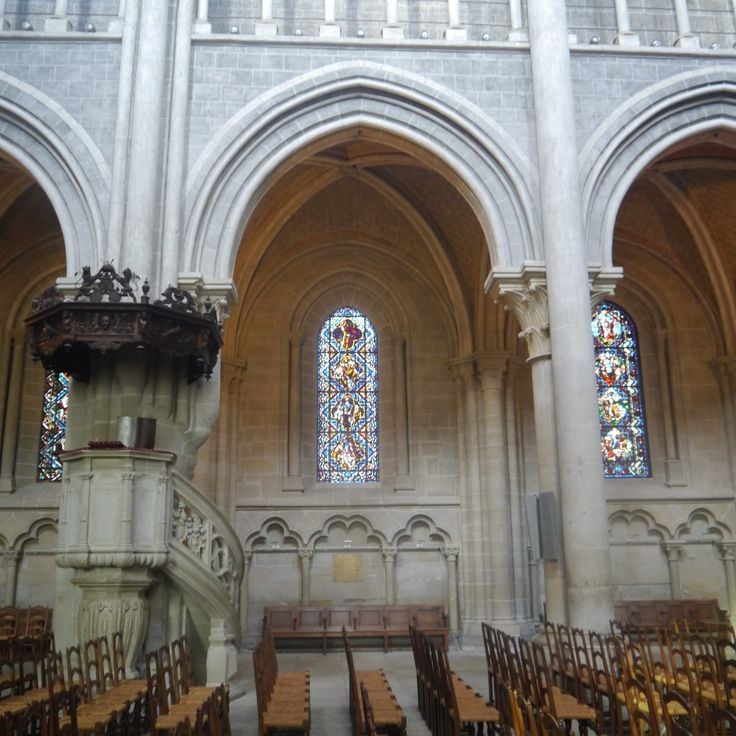
The Lausanne Cathedral is a Gothic cathedral from the 13th century, rising on a hill at the heart of the old town. Its towers stand above the rooftops of the city. Inside, stained glass windows draw in the light, while the stone walls give the space a sober tone. From the outer platform, you can see across the rooftops all the way to Lake Geneva and the Alps beyond. It is the oldest and largest Gothic building in Switzerland.
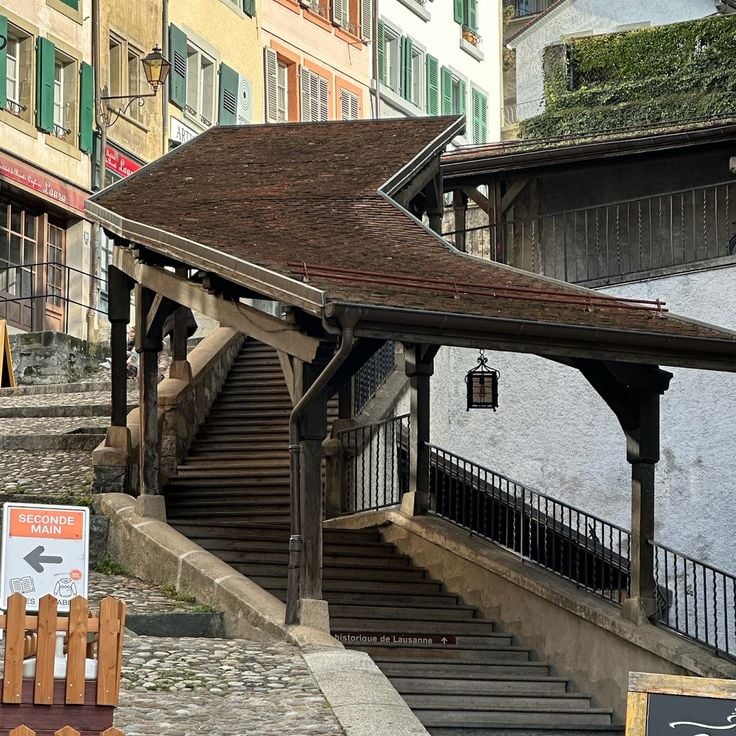
The Escaliers du Marché are a covered wooden stairway that links the Place de la Palud to the cathedral district. The steps climb through a long timber gallery that runs above the old city rooftops. The wood is dark with age, and the passage feels like it belongs to another century. It is one of the most direct walking routes through the medieval heart of Lausanne.
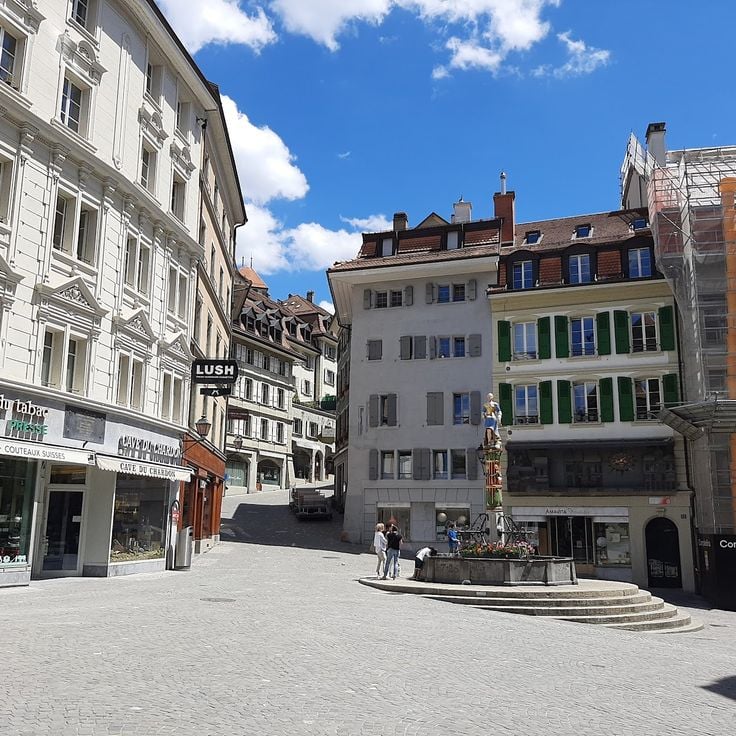
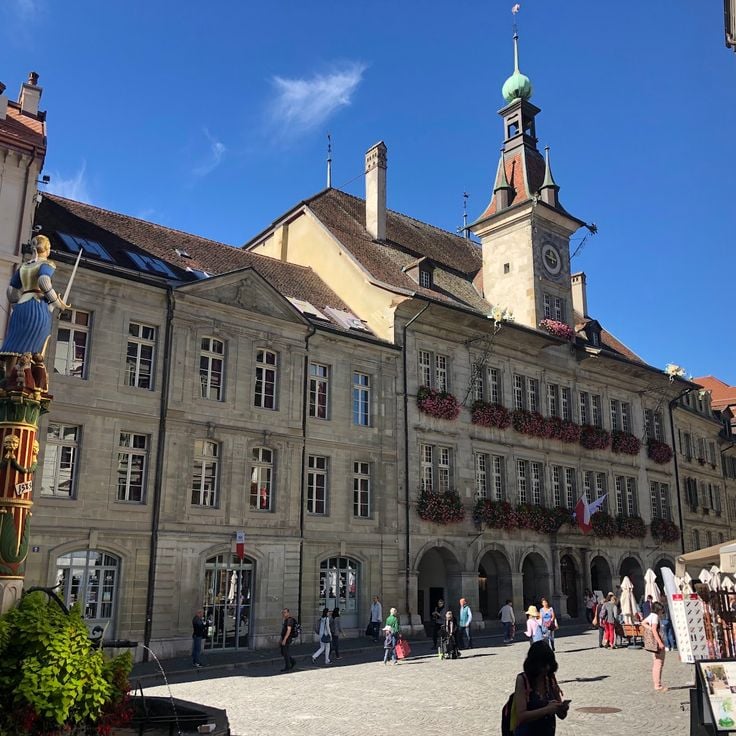
The Place de la Palud sits at the heart of Lausanne's old town and has been a gathering spot for residents for centuries. The square is lined with old facades, cafes, and small shops. At its center stands an old fountain, and the arcaded town hall closes off one side of the square. People come here to shop, have coffee, and simply spend time. On market days, the square fills with stalls, and the daily rhythm of city life plays out naturally around it.
The Lausanne City Hall stands on the Place de la Palud, one of the oldest squares in the city. The building dates back to the 17th century and features a steep, traditional roof and an arcade at street level. The square around it has a fountain and hosts a market twice a week. It sits right in the heart of the old town, and most walks through the medieval center pass by it naturally.
The Musée historique Lausanne sits near the cathedral and traces how the city has changed over the centuries, from its earliest days to the present. The collections walk you through different periods of the city's history and help make sense of the streets and buildings you see outside.
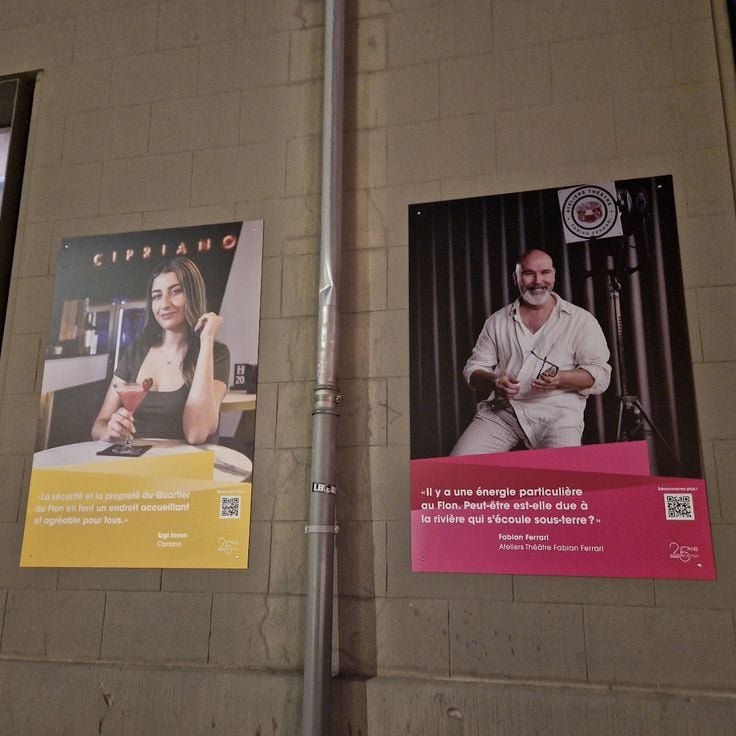
The Flon district in Lausanne was once a warehouse and industrial area. It has since been transformed into a place where people come to eat, shop, and go out at night. The old building structures are still visible, giving the neighborhood a raw, urban feel. It is one of the parts of the city that shows how Lausanne has changed over the past few decades.
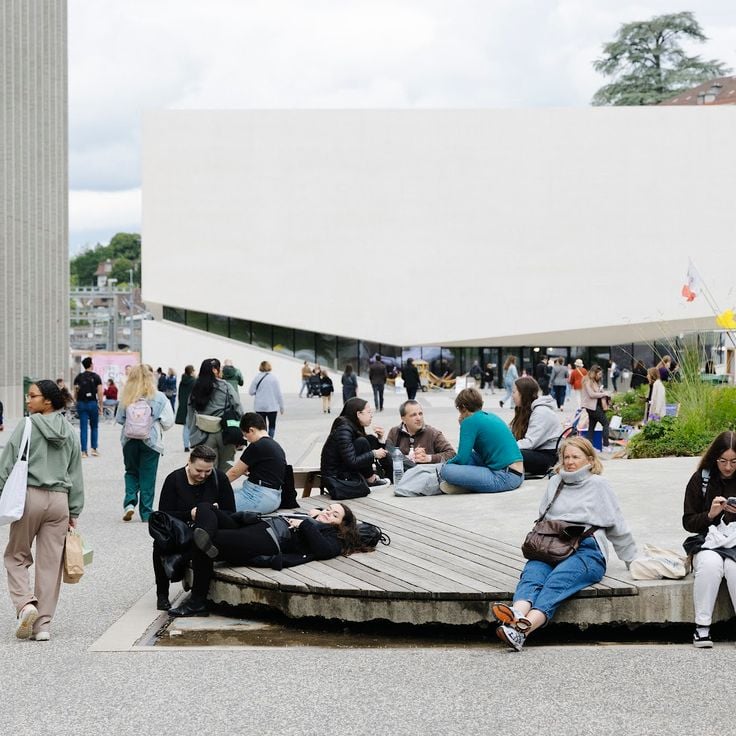
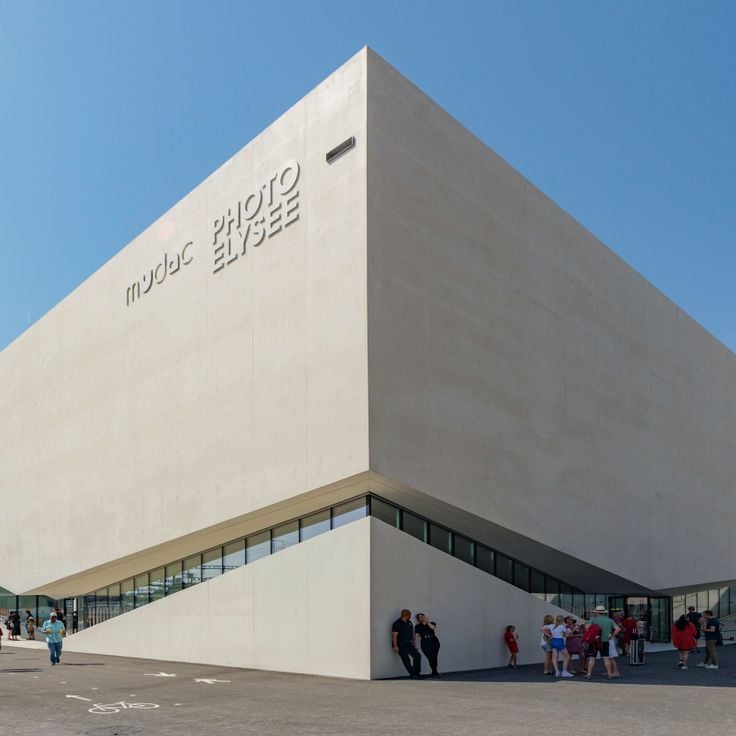
Plateforme 10 is a cultural district in Lausanne, built around the main train station. It brings together three museums: the Musée cantonal des Beaux-Arts, the Musée de l'Elysée dedicated to photography, and the MUDAC focused on design and applied arts. You can walk between all three on foot, stopping at the outdoor spaces and cafés that connect them.
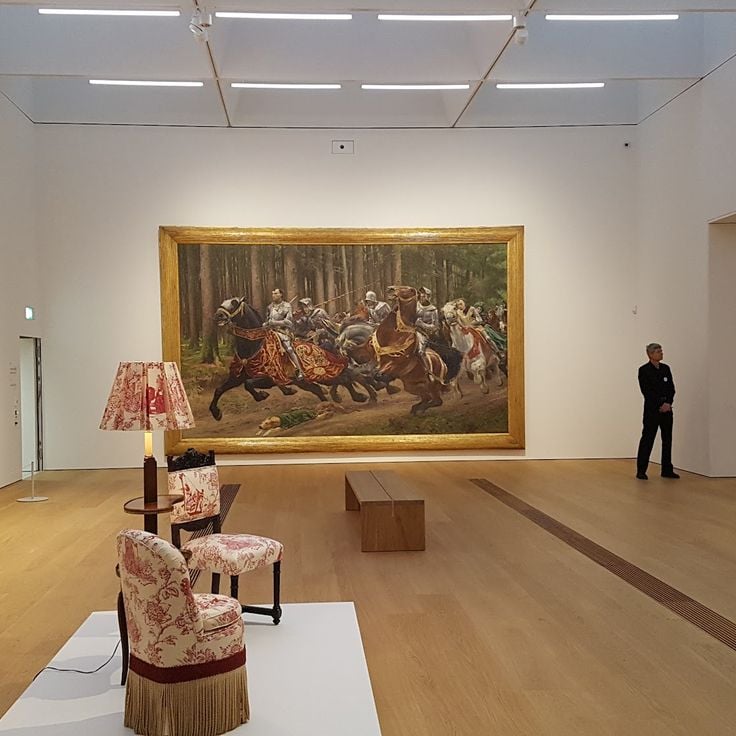
The Musée cantonal des Beaux-Arts sits inside Plateforme 10, an arts district built right next to Lausanne's main train station. The museum brings together paintings, drawings, and works on paper from old masters to living artists, with a strong focus on Western Switzerland and the Alpine world. Walking through the rooms gives a real sense of how art in this region evolved over centuries, from religious scenes to modern abstraction. It is a good place to spend time whether you know much about art or not.
Photo Élysée is a museum in Lausanne dedicated entirely to photography. It sits in the Plateforme 10 arts district, just a short walk from the main train station. The museum's galleries host rotating exhibitions drawn from the full history of the medium, from early prints to contemporary work. It shares its neighborhood with other museums, making this part of the city a natural stop for anyone curious about art and visual culture.
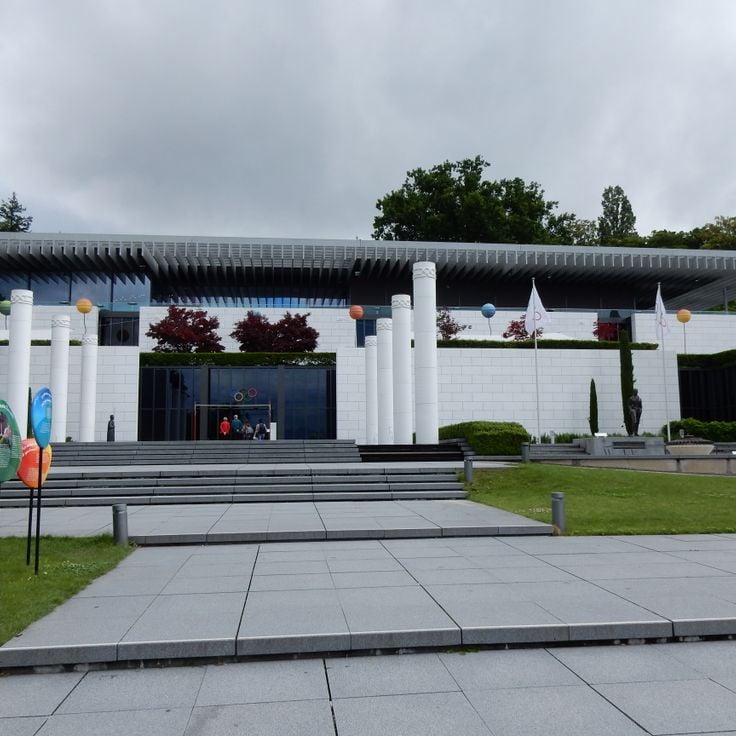
The Olympic Museum in Lausanne tells the story of the Olympic Games from their ancient origins to today. Inside, you will find medals, torches, athletic gear and archival footage that bring the memory of athletes from around the world to life. Outside, a sculpture park surrounds the building and opens onto a wide view over Lake Geneva and the Alps.
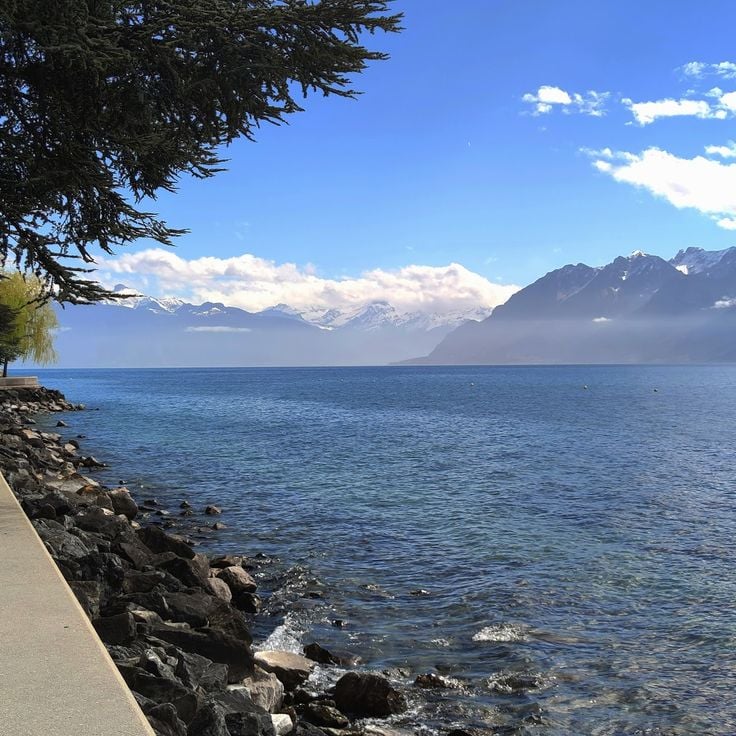
The Quais d'Ouchy run along the shore of Lake Geneva, offering a long and open waterfront walk. You pass gardens, small marinas, and historic hotels, with the Alps visible across the water on clear days. This is where people from Lausanne come to stroll, cycle, or simply sit and watch the lake.
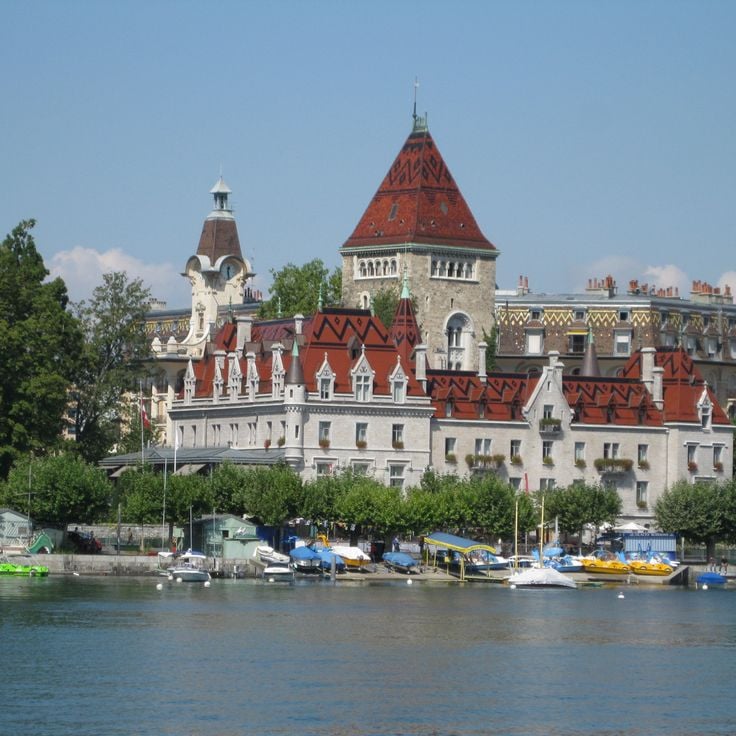
The Château d'Ouchy sits right on the shore of Lake Geneva and is easy to spot thanks to its tall tower. The building dates from the neo-Gothic period and has long been a landmark of the Lausanne waterfront. Today it houses a hotel, but visitors who are not staying there can still walk around it and enjoy the view of the lake and, on clear days, the Alps on the far shore.
Vidy Beach and Park sit on the shore of Lake Geneva, at the western edge of Lausanne. People come here to swim, walk, or simply lie on the grass beside the water. The space feels open and easy to move through, with trees for shade and paths that follow the shoreline. Sports facilities, barbecue areas, and picnic spots make it a gathering place for families and locals, especially on warm days.
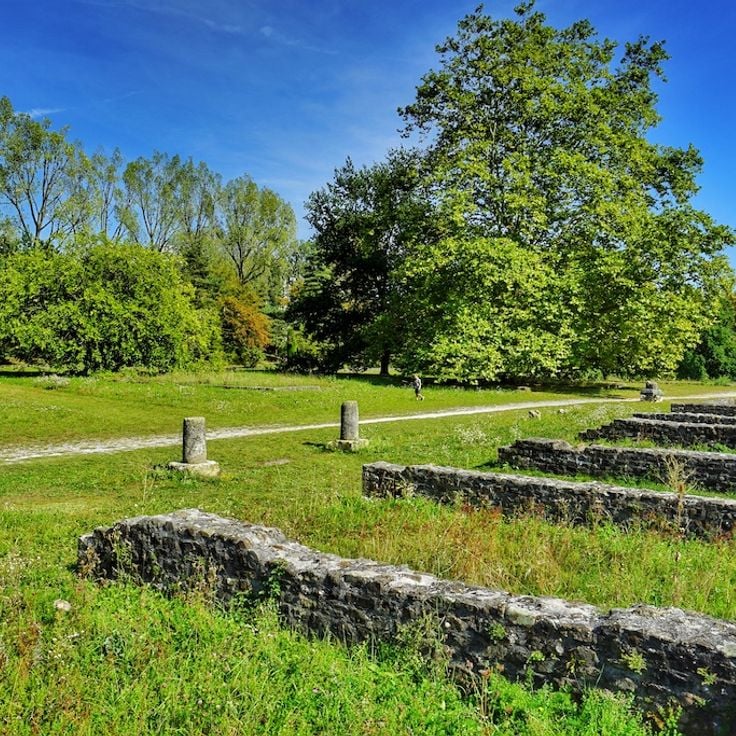
The Roman ruins of Vidy sit along the shore of Lake Geneva and are what remains of the ancient Gallo-Roman city of Lousonna, the settlement that eventually became Lausanne. Walking through the site, you can see the foundations of buildings that people lived and worked in nearly 2,000 years ago. The area feels removed from the city center, tucked between trees and the lake, making the visit feel like a step back in time.
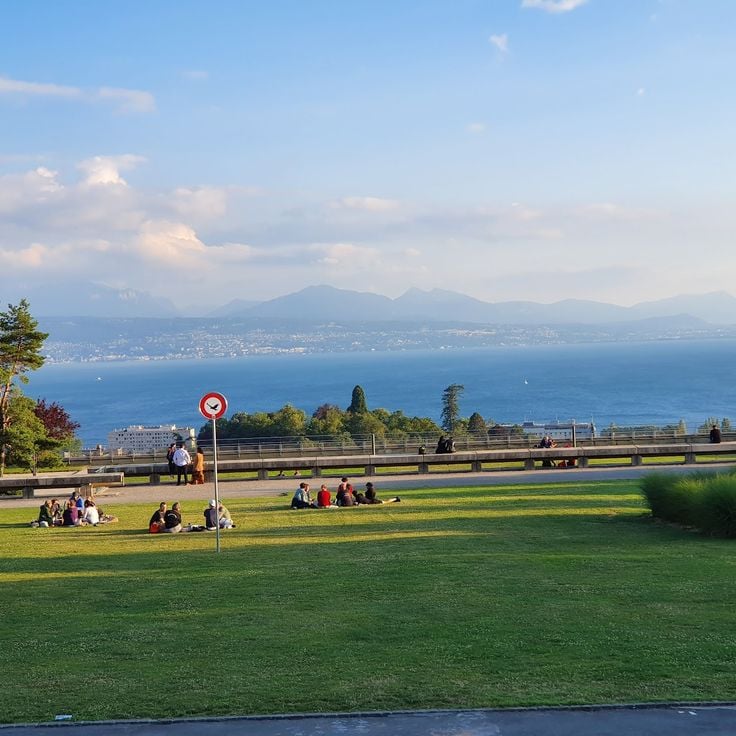
The Esplanade de Montbenon sits on a raised terrace above Lausanne, looking out over Lake Geneva and the peaks of the Alps beyond. The space is wide and open, lined with old trees, and locals come here to walk, sit on a bench or simply take in the view. It has a calm, unhurried feel that sets it apart from the busy streets below. Nearby, a historic casino and a small cinema add to the local character of the area.
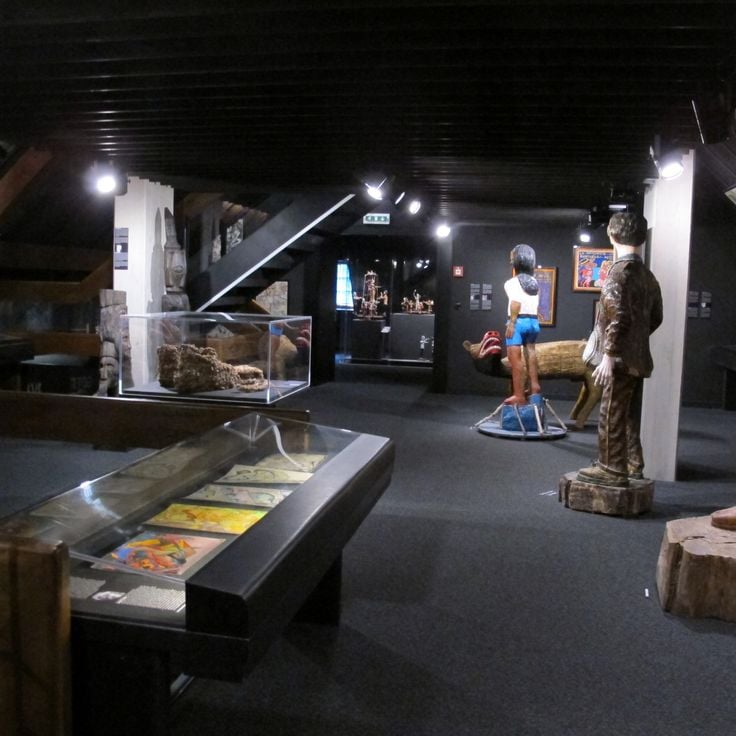
The Collection de l'Art Brut in Lausanne brings together works made by self-taught creators who had no connection to the art world. Many lived on the margins of society, some in psychiatric institutions. Their works follow no schools or trends and carry a raw, personal force. The museum is housed in an old manor in the city and holds one of the largest collections of this kind anywhere.
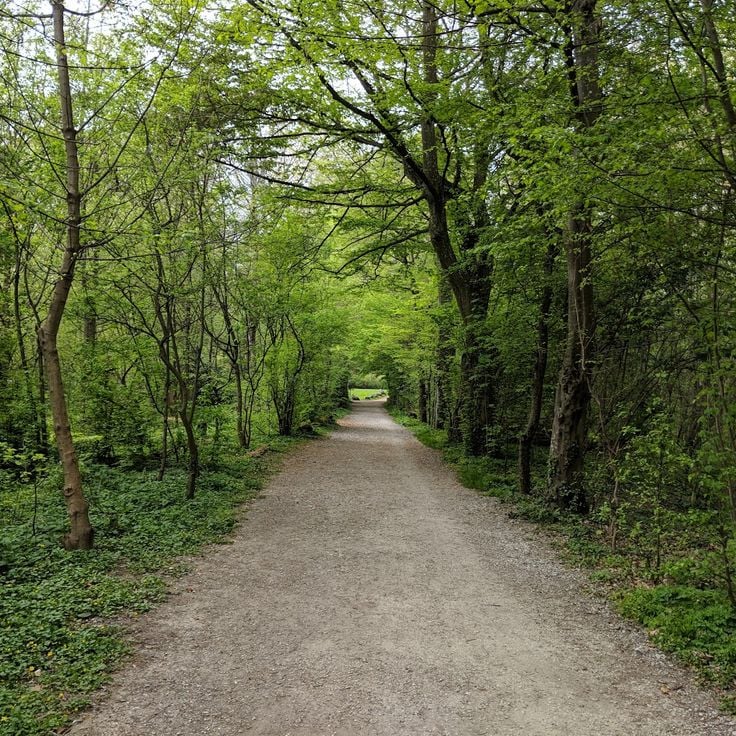
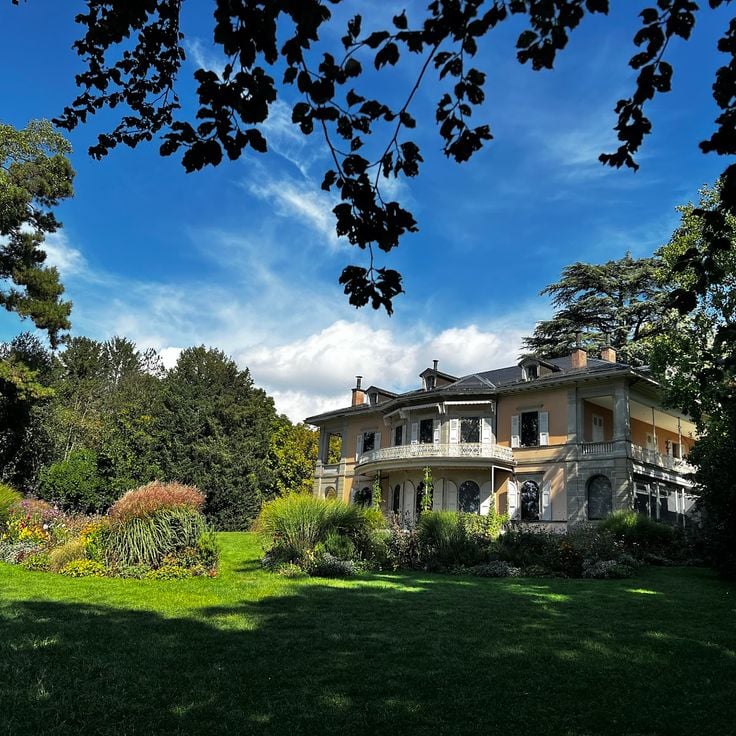
The Parc de l'Hermitage sits at the edge of the Sauvabelin woods, forming a green strip north of central Lausanne. The park invites you to walk among old trees, and the 19th-century manor house holds the Fondation de l'Hermitage, which hosts rotating art exhibitions. From here, you get a wide view over Lake Geneva and the Alps.
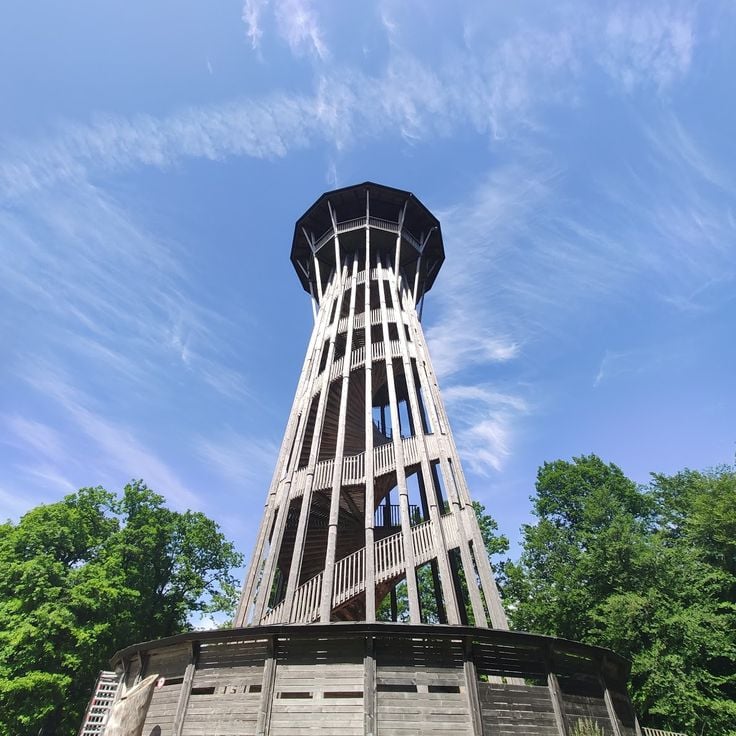
The Sauvabelin Tower stands on a wooded hill at the edge of Lausanne. From its platform, you can see the whole city, Lake Geneva, the Alps, and the Jura mountains. The tower is made of wood and easy to climb. Right next to it is a small lake where people come to walk along the shore or sit for a while. The area is popular with families and walkers, especially on weekends.
The Lausanne Cathedral is a Gothic cathedral from the 13th century, rising on a hill at the heart of the old town. Its towers stand above the rooftops of the city. Inside, stained glass windows draw in the light, while the stone walls give the space a sober tone. From the outer platform, you can see across the rooftops all the way to Lake Geneva and the Alps beyond. It is the oldest and largest Gothic building in Switzerland.
The Escaliers du Marché are a covered wooden stairway that links the Place de la Palud to the cathedral district. The steps climb through a long timber gallery that runs above the old city rooftops. The wood is dark with age, and the passage feels like it belongs to another century. It is one of the most direct walking routes through the medieval heart of Lausanne.
The Place de la Palud sits at the heart of Lausanne's old town and has been a gathering spot for residents for centuries. The square is lined with old facades, cafes, and small shops. At its center stands an old fountain, and the arcaded town hall closes off one side of the square. People come here to shop, have coffee, and simply spend time. On market days, the square fills with stalls, and the daily rhythm of city life plays out naturally around it.
The Lausanne City Hall stands on the Place de la Palud, one of the oldest squares in the city. The building dates back to the 17th century and features a steep, traditional roof and an arcade at street level. The square around it has a fountain and hosts a market twice a week. It sits right in the heart of the old town, and most walks through the medieval center pass by it naturally.
The Musée historique Lausanne sits near the cathedral and traces how the city has changed over the centuries, from its earliest days to the present. The collections walk you through different periods of the city's history and help make sense of the streets and buildings you see outside.
The Flon district in Lausanne was once a warehouse and industrial area. It has since been transformed into a place where people come to eat, shop, and go out at night. The old building structures are still visible, giving the neighborhood a raw, urban feel. It is one of the parts of the city that shows how Lausanne has changed over the past few decades.
Plateforme 10 is a cultural district in Lausanne, built around the main train station. It brings together three museums: the Musée cantonal des Beaux-Arts, the Musée de l'Elysée dedicated to photography, and the MUDAC focused on design and applied arts. You can walk between all three on foot, stopping at the outdoor spaces and cafés that connect them.
The Musée cantonal des Beaux-Arts sits inside Plateforme 10, an arts district built right next to Lausanne's main train station. The museum brings together paintings, drawings, and works on paper from old masters to living artists, with a strong focus on Western Switzerland and the Alpine world. Walking through the rooms gives a real sense of how art in this region evolved over centuries, from religious scenes to modern abstraction. It is a good place to spend time whether you know much about art or not.
Photo Élysée is a museum in Lausanne dedicated entirely to photography. It sits in the Plateforme 10 arts district, just a short walk from the main train station. The museum's galleries host rotating exhibitions drawn from the full history of the medium, from early prints to contemporary work. It shares its neighborhood with other museums, making this part of the city a natural stop for anyone curious about art and visual culture.
The Olympic Museum in Lausanne tells the story of the Olympic Games from their ancient origins to today. Inside, you will find medals, torches, athletic gear and archival footage that bring the memory of athletes from around the world to life. Outside, a sculpture park surrounds the building and opens onto a wide view over Lake Geneva and the Alps.
The Quais d'Ouchy run along the shore of Lake Geneva, offering a long and open waterfront walk. You pass gardens, small marinas, and historic hotels, with the Alps visible across the water on clear days. This is where people from Lausanne come to stroll, cycle, or simply sit and watch the lake.
The Château d'Ouchy sits right on the shore of Lake Geneva and is easy to spot thanks to its tall tower. The building dates from the neo-Gothic period and has long been a landmark of the Lausanne waterfront. Today it houses a hotel, but visitors who are not staying there can still walk around it and enjoy the view of the lake and, on clear days, the Alps on the far shore.
Vidy Beach and Park sit on the shore of Lake Geneva, at the western edge of Lausanne. People come here to swim, walk, or simply lie on the grass beside the water. The space feels open and easy to move through, with trees for shade and paths that follow the shoreline. Sports facilities, barbecue areas, and picnic spots make it a gathering place for families and locals, especially on warm days.
The Roman ruins of Vidy sit along the shore of Lake Geneva and are what remains of the ancient Gallo-Roman city of Lousonna, the settlement that eventually became Lausanne. Walking through the site, you can see the foundations of buildings that people lived and worked in nearly 2,000 years ago. The area feels removed from the city center, tucked between trees and the lake, making the visit feel like a step back in time.
The Esplanade de Montbenon sits on a raised terrace above Lausanne, looking out over Lake Geneva and the peaks of the Alps beyond. The space is wide and open, lined with old trees, and locals come here to walk, sit on a bench or simply take in the view. It has a calm, unhurried feel that sets it apart from the busy streets below. Nearby, a historic casino and a small cinema add to the local character of the area.
The Collection de l'Art Brut in Lausanne brings together works made by self-taught creators who had no connection to the art world. Many lived on the margins of society, some in psychiatric institutions. Their works follow no schools or trends and carry a raw, personal force. The museum is housed in an old manor in the city and holds one of the largest collections of this kind anywhere.
The Parc de l'Hermitage sits at the edge of the Sauvabelin woods, forming a green strip north of central Lausanne. The park invites you to walk among old trees, and the 19th-century manor house holds the Fondation de l'Hermitage, which hosts rotating art exhibitions. From here, you get a wide view over Lake Geneva and the Alps.
The Sauvabelin Tower stands on a wooded hill at the edge of Lausanne. From its platform, you can see the whole city, Lake Geneva, the Alps, and the Jura mountains. The tower is made of wood and easy to climb. Right next to it is a small lake where people come to walk along the shore or sit for a while. The area is popular with families and walkers, especially on weekends.
The Lausanne Cathedral is a Gothic cathedral from the 13th century, rising on a hill at the heart of the old town. Its towers stand above the rooftops of the city. Inside, stained glass windows draw in the light, while the stone walls give the space a sober tone. From the outer platform, you can see across the rooftops all the way to Lake Geneva and the Alps beyond. It is the oldest and largest Gothic building in Switzerland.
The Escaliers du Marché are a covered wooden stairway that links the Place de la Palud to the cathedral district. The steps climb through a long timber gallery that runs above the old city rooftops. The wood is dark with age, and the passage feels like it belongs to another century. It is one of the most direct walking routes through the medieval heart of Lausanne.
The Place de la Palud sits at the heart of Lausanne's old town and has been a gathering spot for residents for centuries. The square is lined with old facades, cafes, and small shops. At its center stands an old fountain, and the arcaded town hall closes off one side of the square. People come here to shop, have coffee, and simply spend time. On market days, the square fills with stalls, and the daily rhythm of city life plays out naturally around it.
The Lausanne City Hall stands on the Place de la Palud, one of the oldest squares in the city. The building dates back to the 17th century and features a steep, traditional roof and an arcade at street level. The square around it has a fountain and hosts a market twice a week. It sits right in the heart of the old town, and most walks through the medieval center pass by it naturally.
The Musée historique Lausanne sits near the cathedral and traces how the city has changed over the centuries, from its earliest days to the present. The collections walk you through different periods of the city's history and help make sense of the streets and buildings you see outside.
The Flon district in Lausanne was once a warehouse and industrial area. It has since been transformed into a place where people come to eat, shop, and go out at night. The old building structures are still visible, giving the neighborhood a raw, urban feel. It is one of the parts of the city that shows how Lausanne has changed over the past few decades.
Plateforme 10 is a cultural district in Lausanne, built around the main train station. It brings together three museums: the Musée cantonal des Beaux-Arts, the Musée de l'Elysée dedicated to photography, and the MUDAC focused on design and applied arts. You can walk between all three on foot, stopping at the outdoor spaces and cafés that connect them.
The Musée cantonal des Beaux-Arts sits inside Plateforme 10, an arts district built right next to Lausanne's main train station. The museum brings together paintings, drawings, and works on paper from old masters to living artists, with a strong focus on Western Switzerland and the Alpine world. Walking through the rooms gives a real sense of how art in this region evolved over centuries, from religious scenes to modern abstraction. It is a good place to spend time whether you know much about art or not.
Photo Élysée is a museum in Lausanne dedicated entirely to photography. It sits in the Plateforme 10 arts district, just a short walk from the main train station. The museum's galleries host rotating exhibitions drawn from the full history of the medium, from early prints to contemporary work. It shares its neighborhood with other museums, making this part of the city a natural stop for anyone curious about art and visual culture.
The Olympic Museum in Lausanne tells the story of the Olympic Games from their ancient origins to today. Inside, you will find medals, torches, athletic gear and archival footage that bring the memory of athletes from around the world to life. Outside, a sculpture park surrounds the building and opens onto a wide view over Lake Geneva and the Alps.
The Quais d'Ouchy run along the shore of Lake Geneva, offering a long and open waterfront walk. You pass gardens, small marinas, and historic hotels, with the Alps visible across the water on clear days. This is where people from Lausanne come to stroll, cycle, or simply sit and watch the lake.
The Château d'Ouchy sits right on the shore of Lake Geneva and is easy to spot thanks to its tall tower. The building dates from the neo-Gothic period and has long been a landmark of the Lausanne waterfront. Today it houses a hotel, but visitors who are not staying there can still walk around it and enjoy the view of the lake and, on clear days, the Alps on the far shore.
Vidy Beach and Park sit on the shore of Lake Geneva, at the western edge of Lausanne. People come here to swim, walk, or simply lie on the grass beside the water. The space feels open and easy to move through, with trees for shade and paths that follow the shoreline. Sports facilities, barbecue areas, and picnic spots make it a gathering place for families and locals, especially on warm days.
The Roman ruins of Vidy sit along the shore of Lake Geneva and are what remains of the ancient Gallo-Roman city of Lousonna, the settlement that eventually became Lausanne. Walking through the site, you can see the foundations of buildings that people lived and worked in nearly 2,000 years ago. The area feels removed from the city center, tucked between trees and the lake, making the visit feel like a step back in time.
The Esplanade de Montbenon sits on a raised terrace above Lausanne, looking out over Lake Geneva and the peaks of the Alps beyond. The space is wide and open, lined with old trees, and locals come here to walk, sit on a bench or simply take in the view. It has a calm, unhurried feel that sets it apart from the busy streets below. Nearby, a historic casino and a small cinema add to the local character of the area.
The Collection de l'Art Brut in Lausanne brings together works made by self-taught creators who had no connection to the art world. Many lived on the margins of society, some in psychiatric institutions. Their works follow no schools or trends and carry a raw, personal force. The museum is housed in an old manor in the city and holds one of the largest collections of this kind anywhere.
The Parc de l'Hermitage sits at the edge of the Sauvabelin woods, forming a green strip north of central Lausanne. The park invites you to walk among old trees, and the 19th-century manor house holds the Fondation de l'Hermitage, which hosts rotating art exhibitions. From here, you get a wide view over Lake Geneva and the Alps.
The Sauvabelin Tower stands on a wooded hill at the edge of Lausanne. From its platform, you can see the whole city, Lake Geneva, the Alps, and the Jura mountains. The tower is made of wood and easy to climb. Right next to it is a small lake where people come to walk along the shore or sit for a while. The area is popular with families and walkers, especially on weekends.
Plan your visit over two days to really experience the city. On the first day, explore the medieval center and the Art Brut museum, which always surprises. On the second day, walk along the lake and go to Plateforme 10. You will see how the city moves from its old roots to its current creative life.