Smedstorp Castle, Medieval castle in Tomelilla Municipality, Sweden
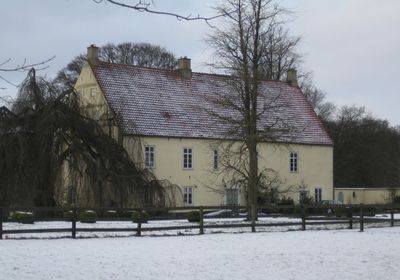
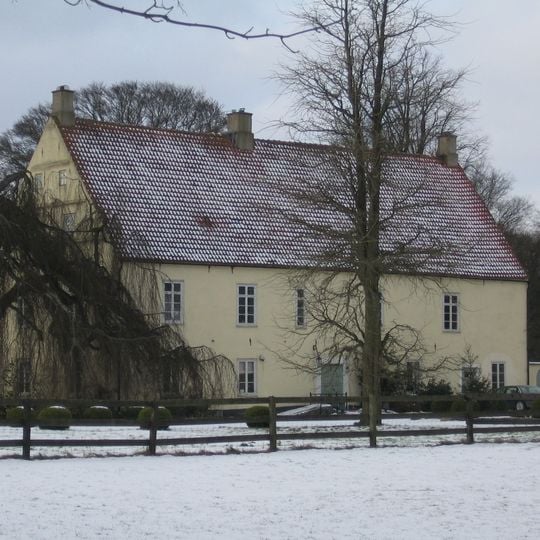
Smedstorp is a long, low building with pale yellow plastered walls and a steeply pitched roof of red and grey tiles laid in a small checkerboard pattern. Tall, narrow windows with white frames are arranged in pairs and singles along the facade, and three chimneys rise from the roofline.
Smedstorp was held by the noble Bing family from 1313 to 1589; Anders Bing, a Danish privy councillor, was its last owner from that family. The estate then passed through the Quitzow, Bülow and Kruus families until 1640, when it belonged to the Danish steward of the realm Jochum Gersdorff. After the 1658 Treaty of Roskilde and the 1660 Treaty of Copenhagen, Smedstorp became one of 18 estates given to the Swedish crown as compensation for Bornholm, known as "Bornholm vederlagsgods". It served Swedish officers until 1713, passed to Peter Monthan, was sold in 1781 to Nils Wilhelm Meck, and in 1820 was bought by banker Jöns Peter Hemberg; the Hemberg family held it until 1895.
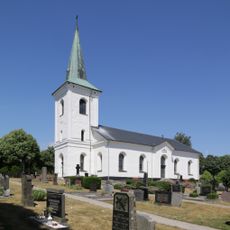
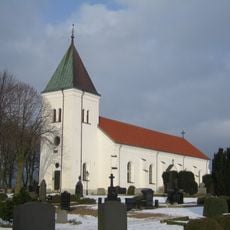
The estate's name survives in the nearby Smedstorp church, where Anders Bing's tombstone carries the poem King James I dedicated to him; the stone is the spot to look for. The estate was later classed as "Bornholm vederlagsgods", one of 18 Scanian estates handed to the Swedish crown in 1660 as compensation for Bornholm.
The castle sits in the flat agricultural landscape of southern Sweden in Scania, surrounded by fields. Visitors should wear sturdy shoes since pathways around the building can be uneven.
The guest who dedicated a poem to Anders Bing was James I, but not of England: the sources name the Scottish king James I, who is said to have visited Smedstorp. The verse can be read on Anders Bing's tombstone in Smedstorp's church.
The community of curious travelers
AroundUs brings together thousands of curated places, local tips, and hidden gems, enriched daily by 94,817 contributors worldwide.