Östanå Castle, Manor house in Österåker Municipality, Sweden
Östanå Castle is a long, pale yellow two-storey building with thirteen window axes, its three-storey central section crowned by a lantern and a small clock tower with a dark cupola. It stands on terraces sloping down to the Furusund shipping channel, behind a low white stone storehouse from 1792. The facade is white-pink Neoclassical, with a columned balcony framing the entrance portal.
The present main building was erected in 1791–1794 for the merchant Simon Bernhard Hebbe, to drawings by castle master mason Johan Daniel Degenaer with the architect Louis Jean Desprez taking part. It replaced a wooden manor house from the 1680s that was destroyed during the Russian raids of 1719. From 1863 to 1907 the estate belonged to Erik Gustaf Boström, prime minister under King Oscar II.
The name Östanå comes from the estate's position east of the Loån stream, the outlet of Lake Losjön. The Boström family, who owned the estate from 1863 to 2006, included Prime Minister Erik Gustaf Boström. Portraits by Per Krafft of the estate's builders hang in the main building.
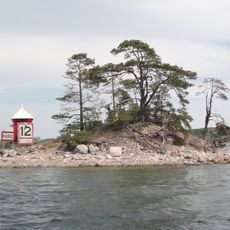
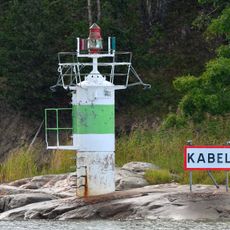
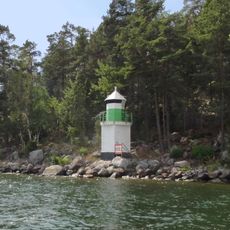
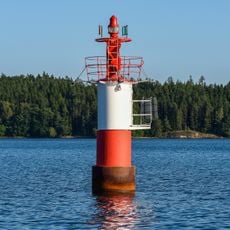
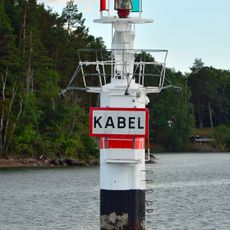
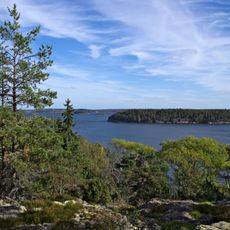
The castle is located northeast of Stockholm and remains privately owned, so visits require advance planning. The best views are available from the water side, where maritime traffic passing nearby is clearly visible.
The 1680s wooden main building, depicted in Erik Dahlbergh's Suecia antiqua et hodierna, was destroyed in the Russian Pillage of 1719. Dahlbergh's copperplate shows a grand Baroque layout with wings and pavilions, and he left drawings of the park and facades, suggesting he may have been involved as architect.
The community of curious travelers
AroundUs brings together thousands of curated places, local tips, and hidden gems, enriched daily by 94,562 contributors worldwide.