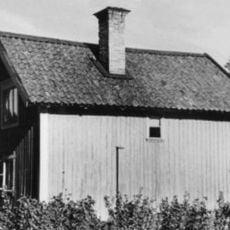
Farsta gård, Manor house in Stockholm Municipality, Sweden
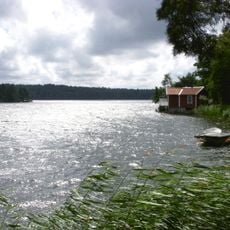
Farsta gård is a former säteri by Lake Magelungen in Farsta Strand, with roots in the 14th century. Its main building in Carolinian style was probably built in the 1680s, flanked by two red-painted wings once used as grain stores. The stable was built in 1744–1745.
Farsta gård is first recorded in a parchment letter from 1384, when Bo Jonsson Grip owned it; its lands then covered what are now Fagersjö, Hökarängen, Larsboda, Farsta, Farstanäset, Farsta Strand and Sköndal. The present main building in Carolinian style was probably raised in the 1680s by a descendant of royal councillor Johan Skytte. In 1897 two wholesalers bought the 2,000-tunnland estate and from 1901 sold villa plots as Södertörns villastad; Stockholm city took over the land in 1912, incorporated it in 1913, and the manor was renovated in the 1970s.
The property carries the Stockholm City Museum's blue classification, marking its status as a preserved site of local historical importance. Visitors can see how such estates once functioned as economic and social centers in the region.
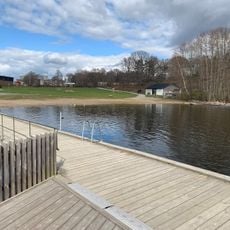
The manor stands by Lake Magelungen in Farsta Strand, in southern Stockholm, and is owned by the city through AB Stadsholmen. Its buildings are blue-marked by the Stockholm City Museum, meaning they are judged to hold very high cultural-historical value. The grounds are also used for functions, so parts may be closed off when something is booked.
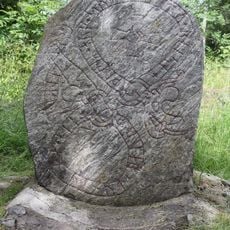
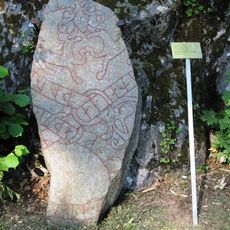
Standing near the manor is an ancient rune stone called Sö 290, carved in the 11th century with names of people such as Tore and Sven. This stone provides a tangible link to the site's occupation and use during the Viking period.
The community of curious travelers
AroundUs brings together thousands of curated places, local tips, and hidden gems, enriched daily by 93,162 contributors worldwide.