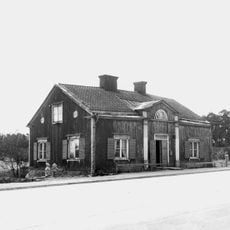
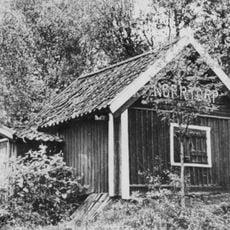
Herrängens gård, Farmhouse in Herrängen, Stockholm, Sweden
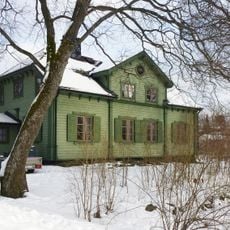
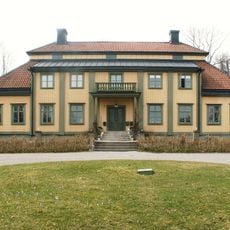
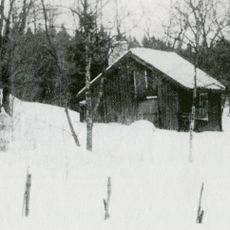
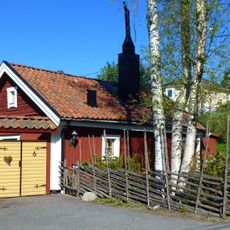
Herrängens gård is a farmhouse at Segeltorpsvägen 49–51 in the Herrängen district, on the northern shore of Lake Långsjön. The complex consists of a main building with two wings; the main house gained a second storey in the late 18th century and holds 18th-century tiled stoves. The south wing is original, while the north wing was rebuilt after a 1960s fire.
The farm began as the Isberga torp under Långbro gård, recorded as Jsberga in 1612 and Issbergatorppet in 1687, slightly north of today's buildings. In 1747 councilman Gustaf Johan Ruth took over the lease, renamed it Herrängen and built a new main house on the meadow bearing that name; the old torp was demolished. In 1788 toll director Mårten Tawelin bought the holding, separating it from Långbro; the date 1788 on the facade facing Långsjön marks this. Stockholm city bought the remaining estate in 1930 and the farm plot itself in 1948.
The property carries a blue marking from Stockholm City Museum, recognizing its exceptional architectural and historical importance to Swedish cultural heritage. This designation reflects how the community values and maintains this site.
The farm lies at Segeltorpsvägen 49-51 on the northern shore of Långsjön in Herrängen, not Älvsjö. The grounds are owned and managed by AB Stadsholmen, so the buildings are viewed from outside; the date 1788 on the facade facing the lake marks the estate's separation from Långbro gård.
The 1958 renovation uncovered hidden original wallpaper; its pattern was reprinted as the Herrängstapeten and now covers the large ground-floor hall. The main building also keeps 18th-century tiled stoves, and the date 1788 on the facade facing Långsjön marks the estate's separation from Långbro gård.
The community of curious travelers
AroundUs brings together thousands of curated places, local tips, and hidden gems, enriched daily by 95,068 contributors worldwide.