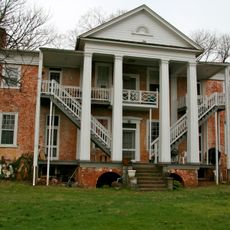
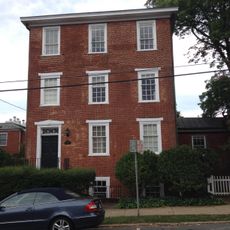
Monticello, Neoclassical plantation in Albemarle County, United States.
Monticello is a neoclassical estate in Albemarle County built on a hilltop with a central dome, symmetrical wings, and underground service rooms. Passages beneath the main floor connect cellars and work areas to the living quarters above.
Thomas Jefferson designed the estate starting in 1768 and spent four decades expanding it, drawing on French architectural ideas. Construction continued until 1809, reflecting his changing views on design and function.
The name Monticello comes from the Italian for "little mountain", fitting the house on its 850-foot summit. Mulberry Row, the lane beside the house, held outbuildings such as a nailery and quarters for enslaved domestic workers, while field workers' cabins stood farther off. Jefferson received the Marquis de Lafayette here in 1825.
The grounds include walking paths through formal gardens, restored quarters where enslaved people lived, and exhibits explaining plantation routines in the early 1800s. Sturdy shoes help on uneven paths that connect different parts of the estate.
Jefferson designed mechanical aids like hidden bed alcoves and a rotating serving shelf to keep servants out of sight during meals and gatherings. These devices concealed the constant presence of people who ran the household.
The community of curious travelers
AroundUs brings together thousands of curated places, local tips, and hidden gems, enriched daily by 92,049 contributors worldwide.