Sleeping Bear Dunes National Lakeshore, National seashore in Michigan, United States.
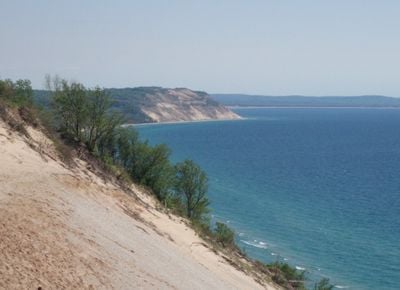
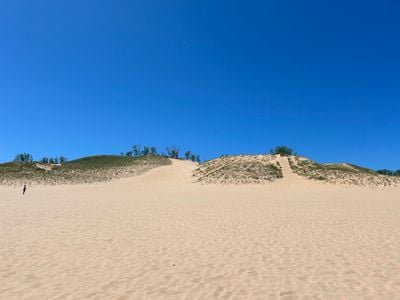
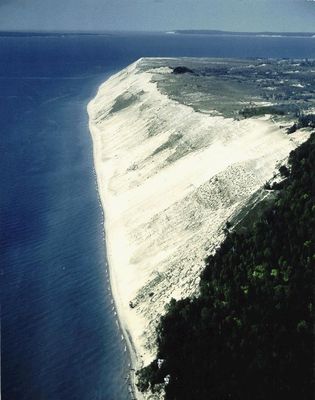
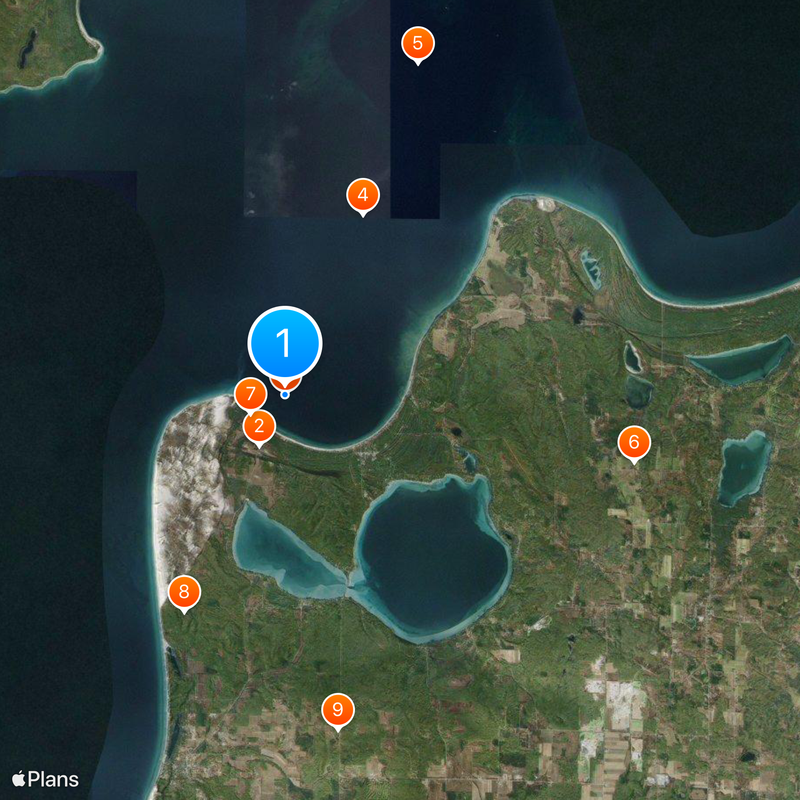
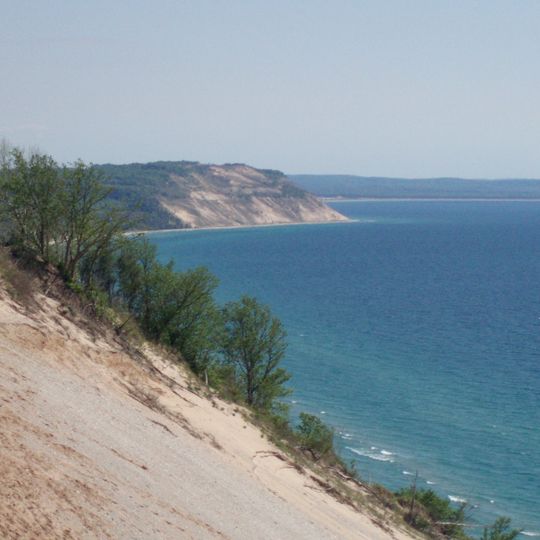
Sleeping Bear Dunes National Lakeshore is a coastal preserve along Lake Michigan's eastern shore with sand dunes rising up to 450 feet (137 m) above water level. The protected zone covers about 35 miles of coastline and includes two forested islands offshore.
The site became a National Lakeshore on October 21, 1970, following federal legislation that transformed private properties into protected public land. This action secured the preservation of the dune landscape and coastal habitats for future generations.
The name comes from an Ojibwe legend about a mother bear and cubs seeking refuge, now represented by a tree-covered knoll that resembles a sleeping bear. Visitors can observe this formation from several viewpoints along the coast and learn about the handed-down story.
The Philip A. Hart Visitor Center in Empire provides maps, permits, and information about camping, hiking trails, and seasonal activities throughout the park. The best time to visit is during summer months, when beaches and trails are easily accessible and weather remains stable.
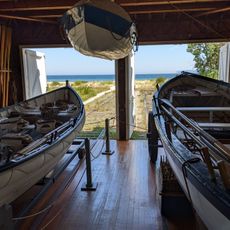
The protected area includes North and South Manitou islands, which host an 1871 lighthouse and former Life-Saving Service stations along the shore. These islands are accessible only by ferry and preserve a portion of the region's maritime history.
The community of curious travelers
AroundUs brings together thousands of curated places, local tips, and hidden gems, enriched daily by 91,370 contributors worldwide.