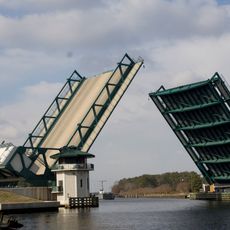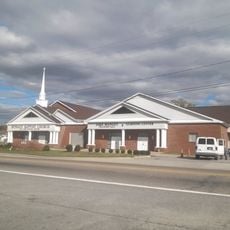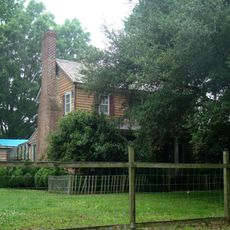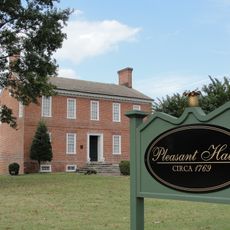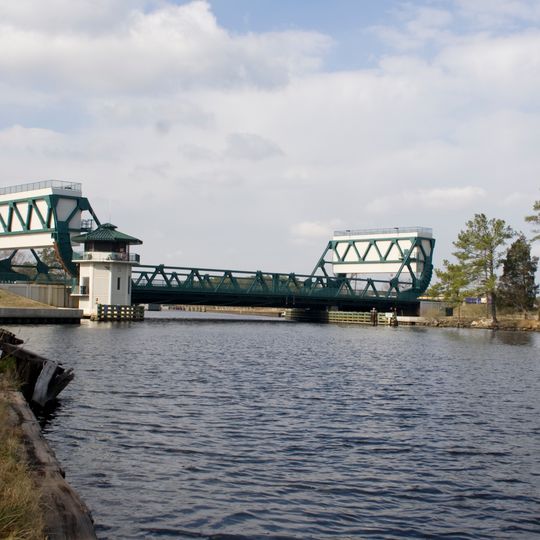
Albemarle and Chesapeake Canal, Historic waterway canal in Chesapeake, United States.
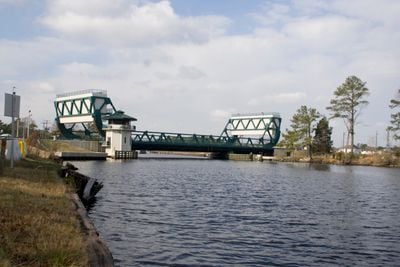
The Albemarle and Chesapeake Canal is a historic waterway in Chesapeake, Virginia, that links the Chesapeake Bay to the Albemarle Sound in North Carolina. It runs partly through natural river channels and partly through sections cut through land, forming a continuous route used today mainly by recreational boats.
Construction began in the 1850s using dredging methods that were new at the time, and the route was completed in stages over the following decades. The canal was built as part of a broader effort to improve coastal trade along the Atlantic seaboard.
The canal has long been a working waterway for fishing communities and small traders moving goods between Virginia and North Carolina. Along the banks, old docking points and loading areas are still visible today, giving a sense of how the route was once used daily.
The canal is open to small and mid-sized boats, and it helps to know the tidal patterns and water depths along the route before setting out. Warmer months tend to offer calmer conditions, making navigation along the full length more comfortable.
Only a short section of the canal was actually dug through solid land, while the rest follows existing rivers and natural channels that were simply widened or deepened. This meant the project required far less excavation than most canals of its era.
The community of curious travelers
AroundUs brings together thousands of curated places, local tips, and hidden gems, enriched daily by 92,050 contributors worldwide.