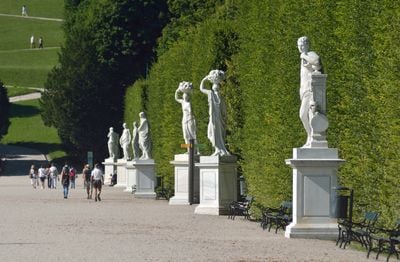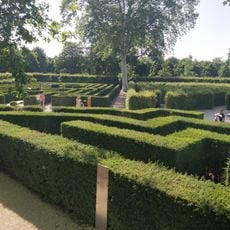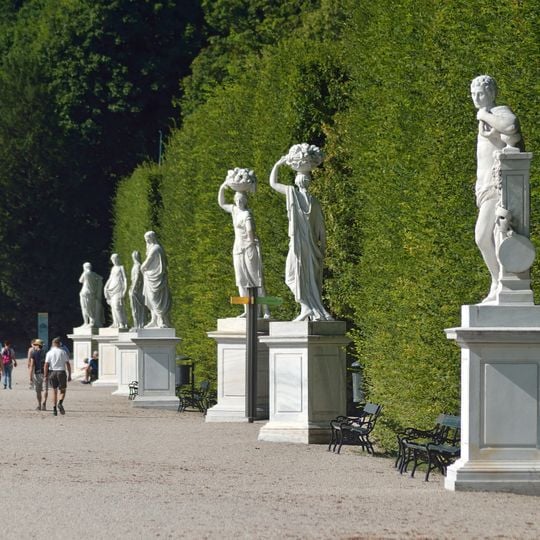
Sculptures in the Schönbrunn Garden, Marble sculptures in palace park of Schönbrunn, Austria.
These marble figures are arranged on both sides of the Great Parterre and depict mythological gods and allegorical virtues set against the palace background. The collection includes the Neptune Fountain at the foot of Gloriette hill, where water deities and river figures form the main focal point.
German sculptor Johann Wilhelm Beyer directed their creation between 1773 and 1780 as part of major garden renovations at the imperial residence. This phase of work responded to changing tastes in garden design and reinforced the power and artistic ambitions of the Habsburg court.
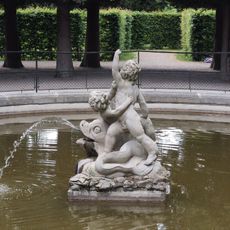
The Neptune Fountain displays water deities and river figures in mythological scenes that visitors encounter while walking the garden paths. These representations reflect beliefs about nature and divine control over water that were important to the people who built this palace.
The sculptures can be viewed throughout the year during park operating hours, and visitors can walk close to examine the marble details and craftsmanship. Early mornings or late afternoons offer the best light for photography and observation, with fewer crowds to navigate around.
One sculpture depicts Artemisia II of Caria and was created by sculptors Schletterer and Hagenauer to commemorate this historical ruler. Her story of marrying her brother Mausolus makes this figure a rare example of personal history immortalized in garden art.
The community of curious travelers
AroundUs brings together thousands of curated places, local tips, and hidden gems, enriched daily by 91,386 contributors worldwide.