German Pavilion, Barcelona, Modernist pavilion in Sants-Montjuïc, Spain
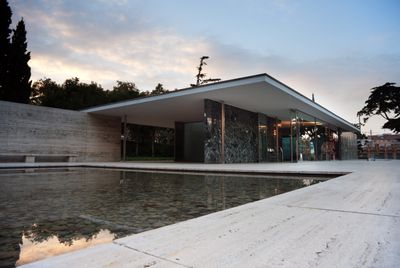
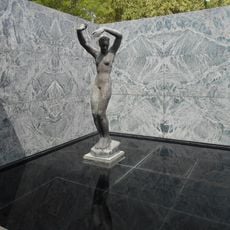
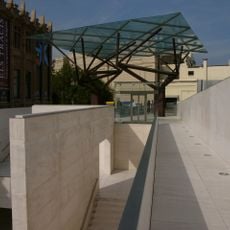
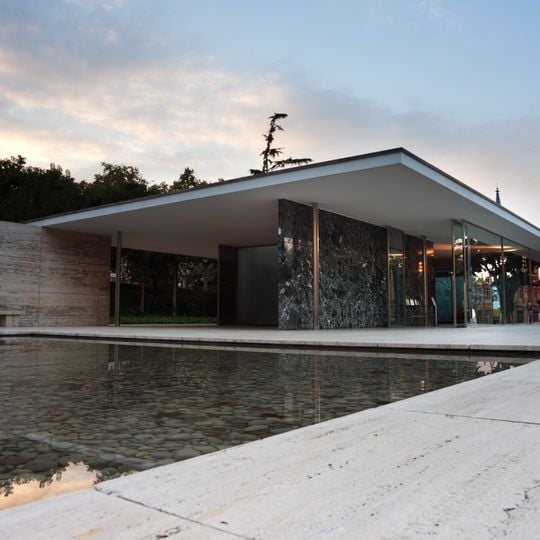
The German Pavilion is an exhibition building in Montjuïc, Spain, made up of an open platform with glass walls, steel columns, and polished stone slabs. The floor plan divides into several areas arranged around two shallow pools of water.
The building was raised for the 1929 World's Fair as a reception hall for the German delegation and was taken down a year later. The city reconstructed it between 1983 and 1986 on the original site.
The structure is often named after its architect, Mies van der Rohe, and demonstrates a new way of joining interior and exterior space. Visitors today see how thin slabs of polished stone and glass catch the light differently than traditional walls.
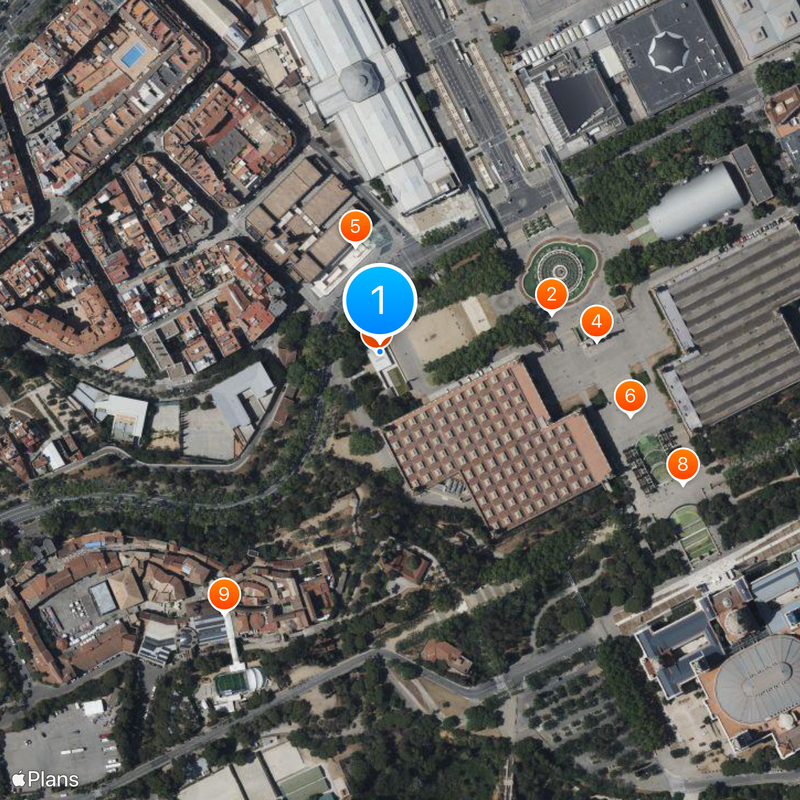
Access is from Avinguda de Francesc Ferrer i Guàrdia near Plaça d'Espanya, and paths inside are level. Visitors who take their time can follow the arrangement of space and material at their own pace.
The green marble surface on one of the central walls comes from the Alps and shows a fine pattern of natural veining. The slab was chosen so the pattern unfolds almost symmetrically when you stand in front of it.
The community of curious travelers
AroundUs brings together thousands of curated places, local tips, and hidden gems, enriched daily by 91,403 contributors worldwide.