See the monuments around you in AROpen chests in the app
Around Us is built for your phone — point your camera at the streets and discover the monuments and places around you in augmented reality.Around Us is built for your phone — chests unlock when you walk, explore and capture nearby places.
Ludwig Mies van der Rohe shaped 20th-century architecture. His buildings stand in European and North American cities and show his approach: clear geometry, steel and glass combined with open floor plans. Each project follows the principle of reducing to the essential and defining space through structure.
In the United States, he designed the Farnsworth House in Illinois, a residence with glass walls set in a wooded area. In Chicago, he created several buildings, including Crown Hall on the Illinois Institute of Technology campus and the residential high-rises on Lake Shore Drive. In New York, he developed the Seagram Building together with Philip Johnson, an office tower made of bronze and glass. Additional projects took him to Washington, Baltimore, Detroit, Montreal, and Toronto.
In Europe, he built villas, museums, and exhibition structures. The Barcelona Pavilion was a temporary structure for the 1929 World's Fair, later reconstructed. Villa Tugendhat in Brno is now a World Heritage site. In Berlin, he built the New National Gallery, a museum with a large glass roof. In Krefeld, he designed Haus Lange and Haus Esters for private clients.
Ludwig Mies van der Rohe shaped 20th-century architecture. His buildings stand in European and North American cities and show his approach: clear geometry, steel and glass combined with open floor plans. Each project follows the principle of reducing to the essential and defining space through structure.
In the United States, he designed the Farnsworth House in Illinois, a residence with glass walls set in a wooded area. In Chicago, he created several buildings, including Crown Hall on the Illinois Institute of Technology campus and the residential high-rises on Lake Shore Drive. In New York, he developed the Seagram Building together with Philip Johnson, an office tower made of bronze and glass. Additional projects took him to Washington, Baltimore, Detroit, Montreal, and Toronto.
In Europe, he built villas, museums, and exhibition structures. The Barcelona Pavilion was a temporary structure for the 1929 World's Fair, later reconstructed. Villa Tugendhat in Brno is now a World Heritage site. In Berlin, he built the New National Gallery, a museum with a large glass roof. In Krefeld, he designed Haus Lange and Haus Esters for private clients.
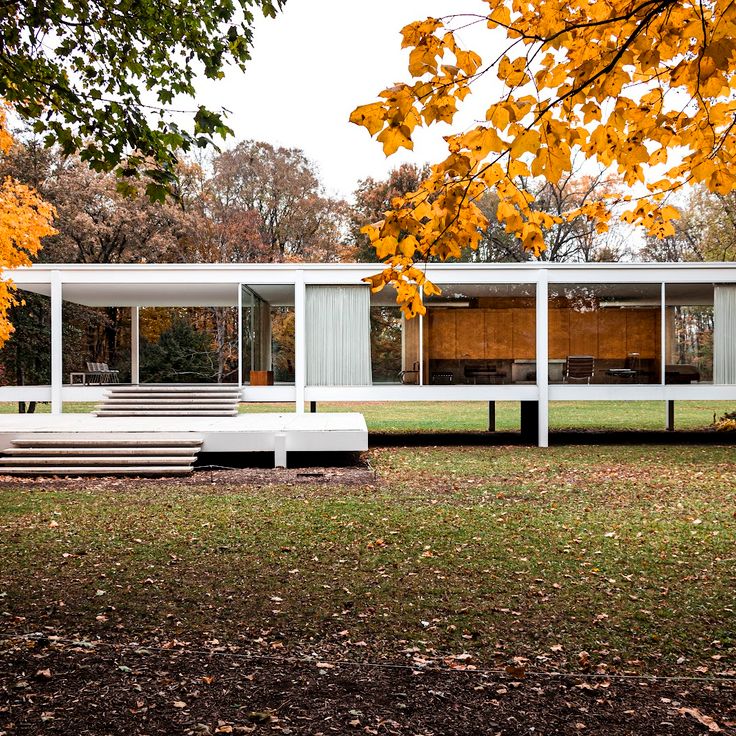
This glass and steel residence stands on a rural site along the Fox River. The rooms are surrounded by transparent walls, giving the sense of floating above the ground. Eight steel columns support the roof and floor, with no interior walls between them. The white steel frame and continuous glazing make the boundaries between inside and outside disappear. The landscape around the building shapes the mood inside. The house was designed for Edith Farnsworth as a weekend retreat and completed in 1951. The reduction to a few materials and the clear geometric form define its appearance.
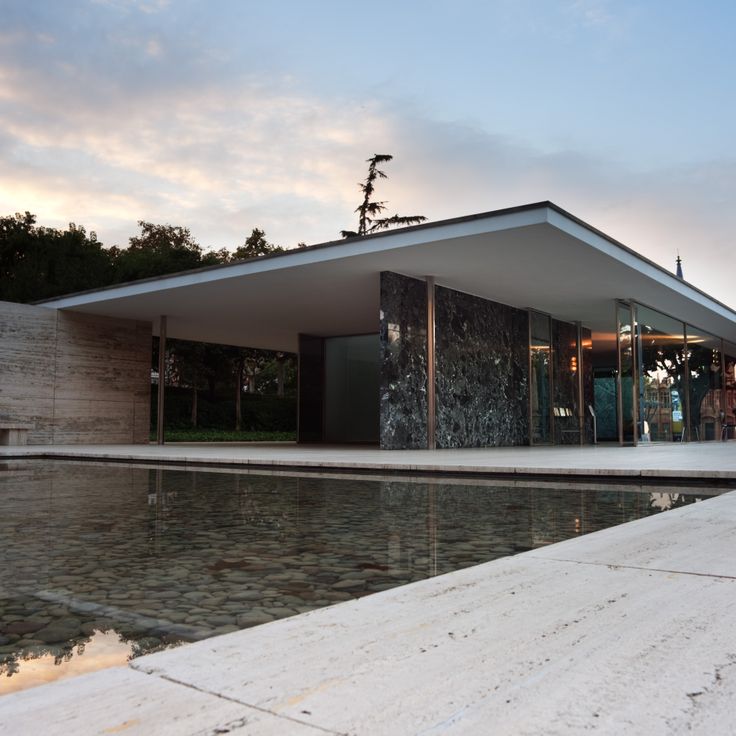
The Barcelona Pavilion was built for the 1929 World's Fair and later reconstructed to match the original design. This structure demonstrates Mies van der Rohe's principles through open spatial planning and the use of glass, steel, and different types of marble. Horizontal planes and vertical walls define the space without fully enclosing it. A flat roof rests on slender steel columns. Inside, a water basin reflects light and the surrounding surfaces. The materials appear in their natural form, without decoration. The pavilion conveys a sense of lightness and clarity.
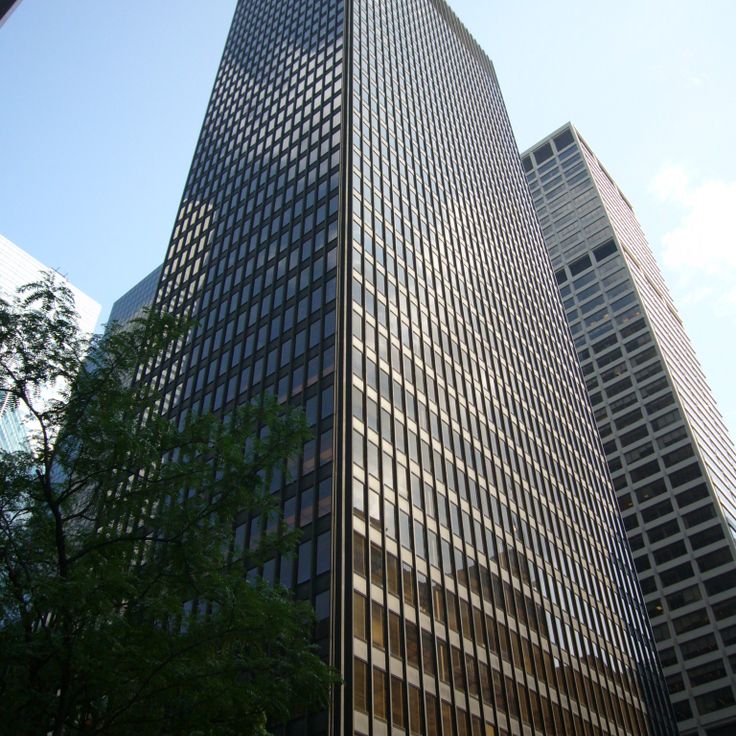
The Seagram Building rises along Park Avenue as a tower of 38 floors completed in 1958. The façade combines bronze-colored metal frames with glass panels that reflect the light of the city. A plaza stretches in front, where people sit during lunch breaks and passersby cross on their way downtown. The design follows the principles Mies van der Rohe developed through decades of practice: reducing form to essentials and showing the structure openly. Inside, a spacious lobby leads to the elevators. The tower stands slightly back from the street, creating a sense of openness in a dense neighborhood. In the evening the glass catches the glow of Manhattan. Architects and visitors come to observe the proportions and the way steel and glass combine with such clarity. This building influenced office towers across North America and remains a reference point for anyone studying modern skyscraper design.
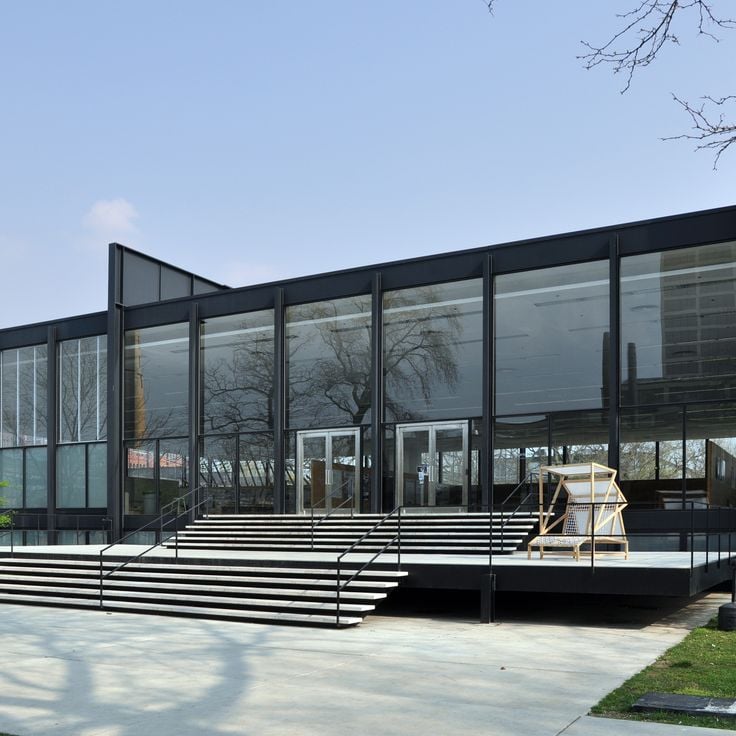
Crown Hall is a building at the Illinois Institute of Technology completed in 1956. The structure features a suspended roof supported by steel beams. All four exterior walls are made of continuous glass, creating an open and light-filled interior. The design follows principles of clear geometry and reduction to essential structural elements and transparent surfaces. The steel frame remains visible and defines the appearance of the building. Inside, a large open space was originally used for architectural education and studios.
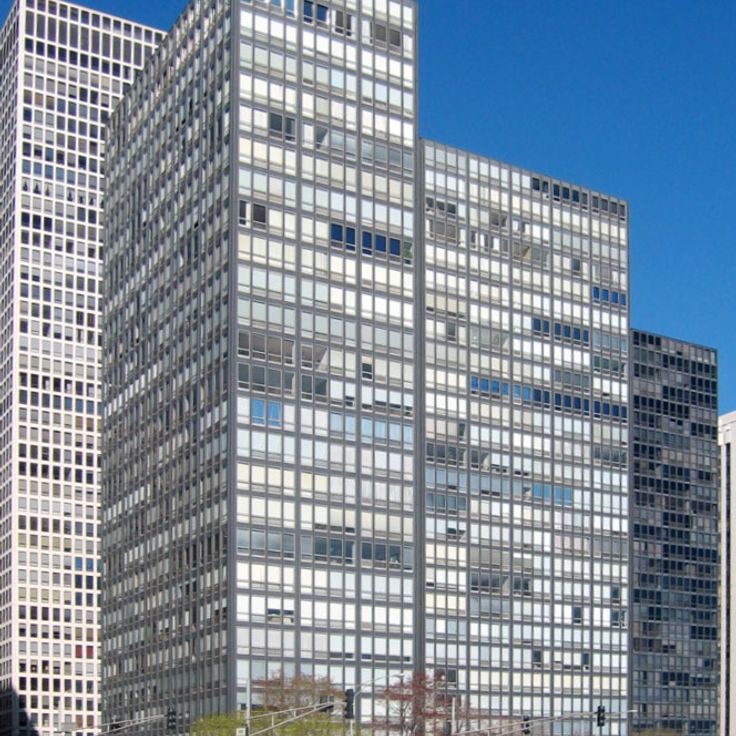
These two steel and glass towers stand on the shore of Lake Michigan in Chicago. Mies van der Rohe designed them around 1951 as parallel structures with rectangular floor plans. Each facade displays black steel I-beams that run vertically in front of floor-to-ceiling windows, forming a regular grid. The ground floor lobbies use travertine and marble. Both towers rise 26 stories and contain apartments with open floor plans. The construction relies on load-bearing steel frames while the exterior walls carry no weight. This project became a reference point for many office towers built later in North America following similar principles. From the public areas along the lakefront, the clear geometry of the towers is easy to see.
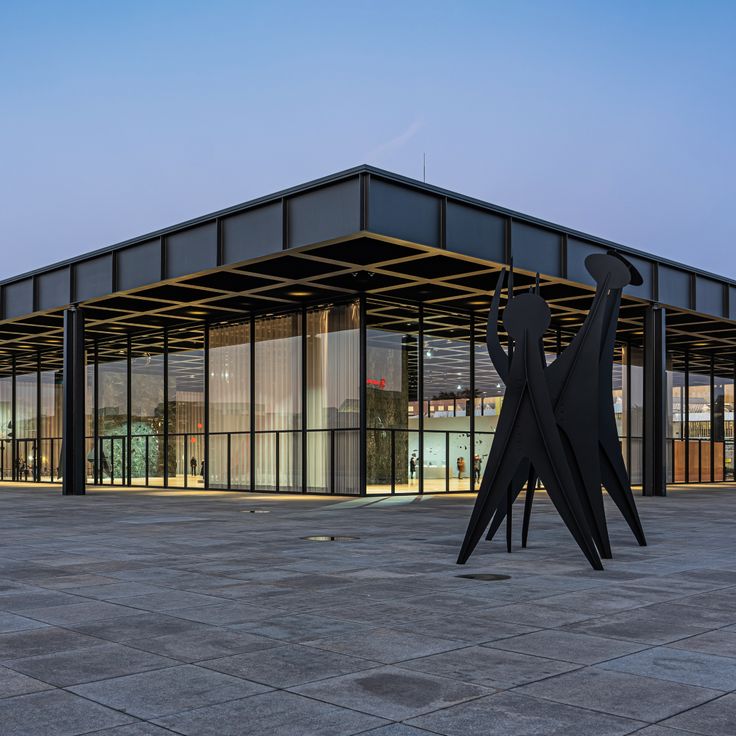
The Neue Nationalgalerie sits on a raised platform and features a square steel frame that supports a flat roof over an open space with glass walls. Completed in 1968, the museum allows unobstructed views outward through the transparent facades and admits natural light throughout the main floor. The primary exhibition hall occupies this ground level beneath the canopy, while additional galleries occupy the lower level. The clear geometry and use of steel and glass demonstrate the principles of modern architecture. The gallery stands at the Kulturforum near Potsdamer Platz.
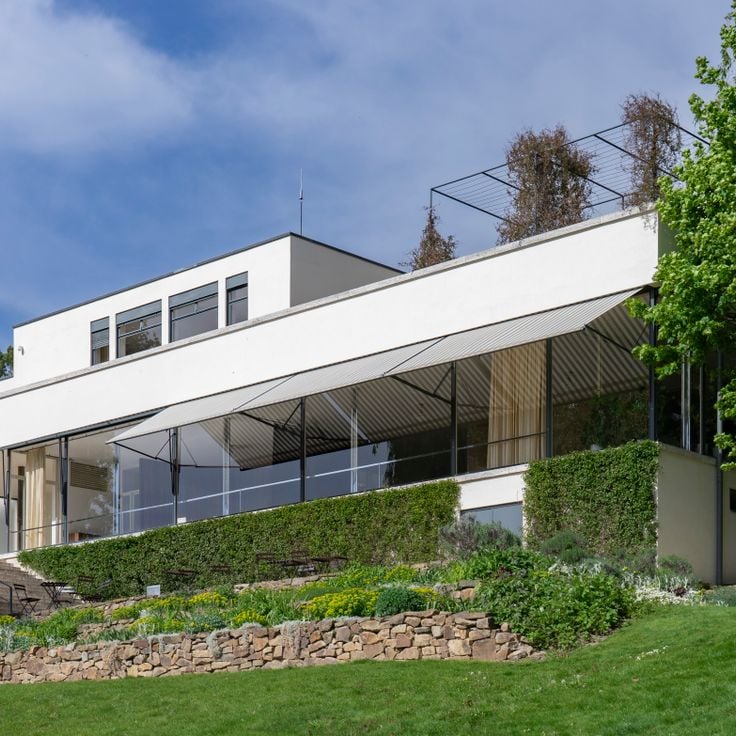
Villa Tugendhat embodies Mies van der Rohe's vision of modern living, combining industrial materials with an open floor plan. Completed in 1930, the house sits on a hillside and opens toward the landscape through large glass walls. Chrome-plated columns support the ceilings and create a flowing transition between living areas. The floors of travertine and onyx marble, the walls of fine wood, and the movable partitions show attention to detail. The villa was designed for the Tugendhat couple and reflects their way of life.
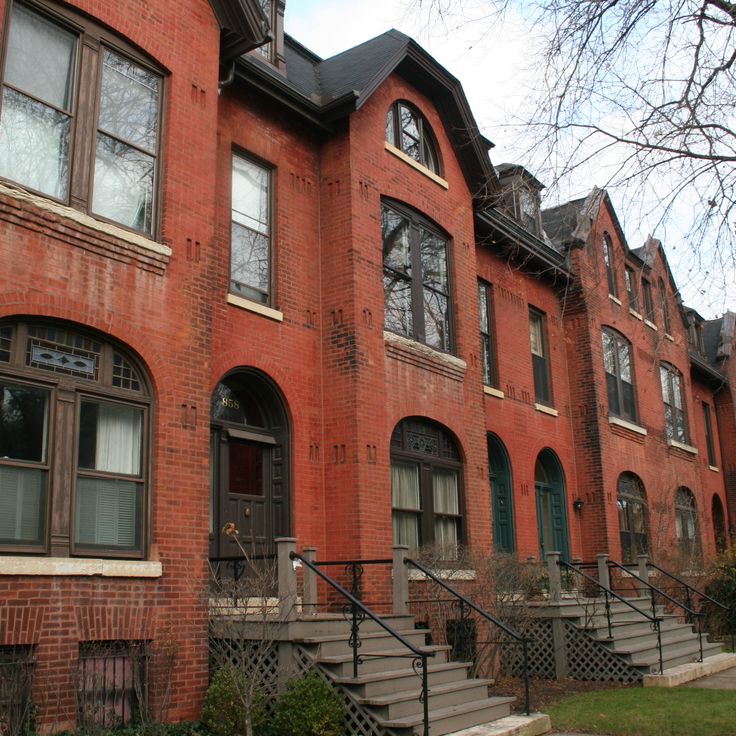
The McCormick House was built in 1952 as a private residence, using steel frames and glass walls to create open spaces. The structure avoids added decoration and lets the materials speak for themselves. Inside, rooms flow together, while the transparent walls bring the garden into view. This design reduces form and structure to their basic elements.
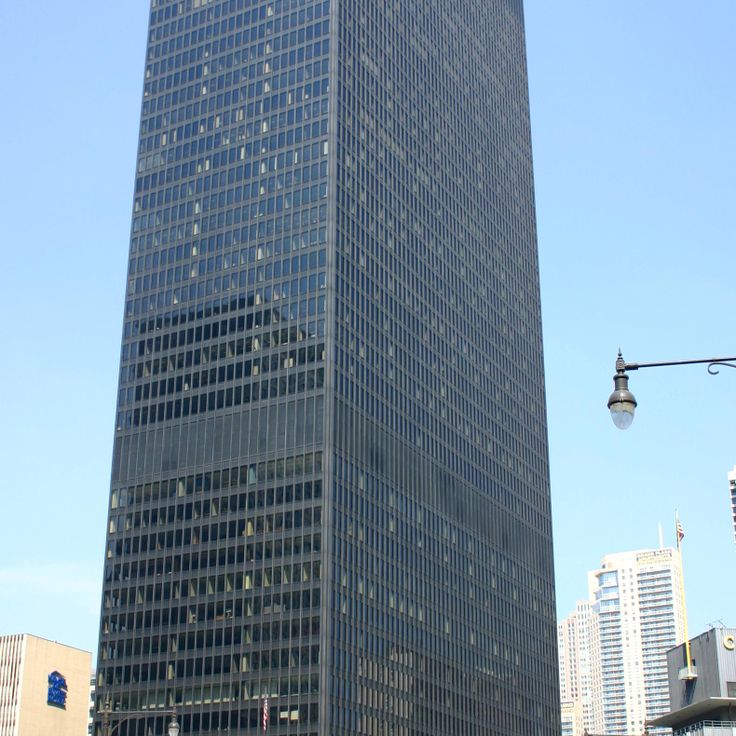
This tower in downtown Chicago expresses the ideas of Mies van der Rohe through its rectangular form, facade of black steel and tinted glass, and clean lines. The building was completed in 1972 and stands among other tall structures along the Chicago River. The 52 floors rise in a regular grid, with the steel frame visible and the glass surfaces reflecting the sky and surroundings. From the street, you see the dark facade standing out clearly from the lighter neighboring buildings.
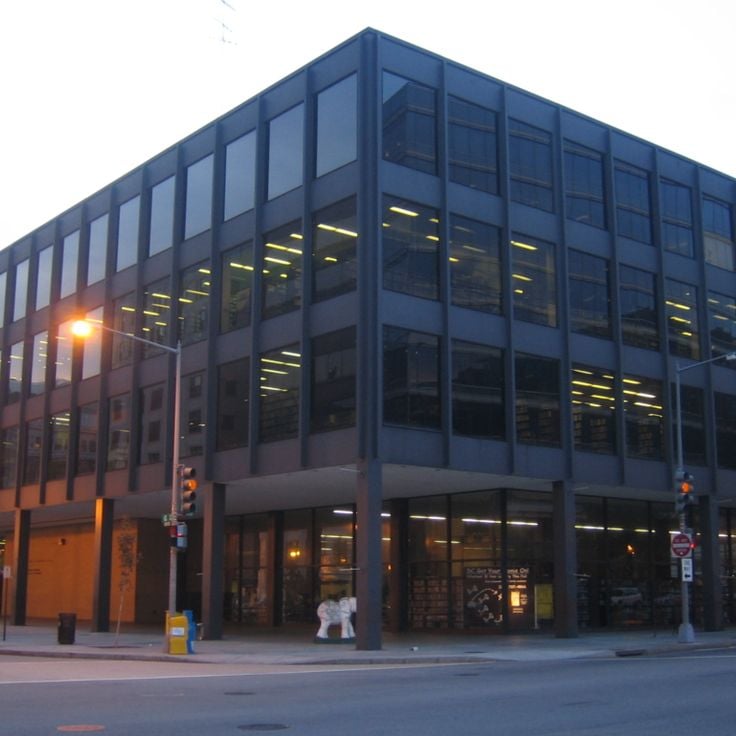
This library was completed in 1972 following the plans of Ludwig Mies van der Rohe and reflects his characteristic approach to design. The building rises four stories and opens outward through large glass surfaces. The facade follows a symmetrical arrangement in which black steel beams make the structure visible and organize the composition. Inside, open spaces accommodate reading areas, shelves, and work stations. Light enters through the continuous windows and shifts throughout the day. The clear lines and the use of steel and glass connect this building to other works by the architect. The library stands in a part of Washington where government buildings and institutions shape the urban setting. It serves the public as a place for study and research.
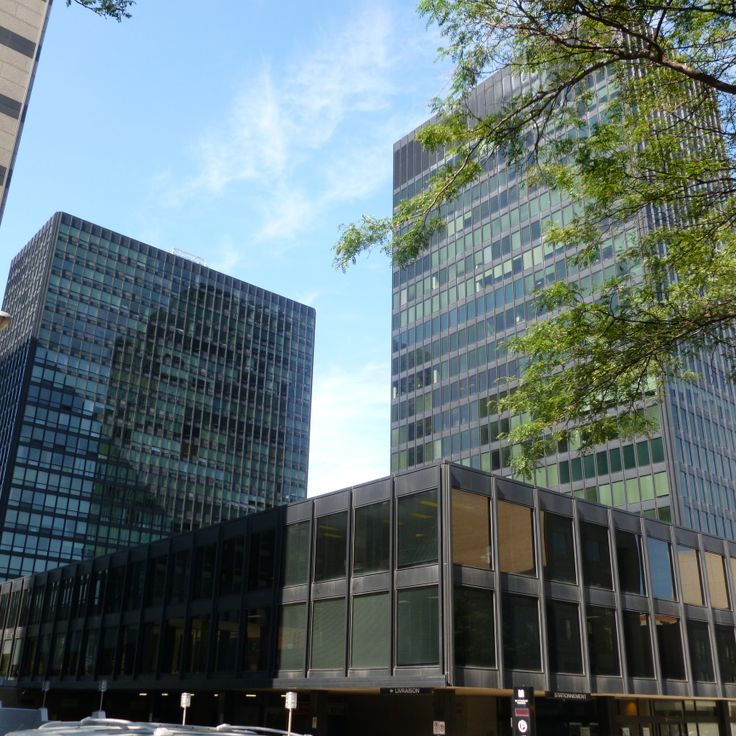
This complex from 1967 consists of four towers combining apartments, offices and shops above an underground commercial level. The development reflects the principles of modern architecture through rectangular forms and clean vertical lines. Steel and glass define the facades, creating a functional connection between living, working and shopping in one location.
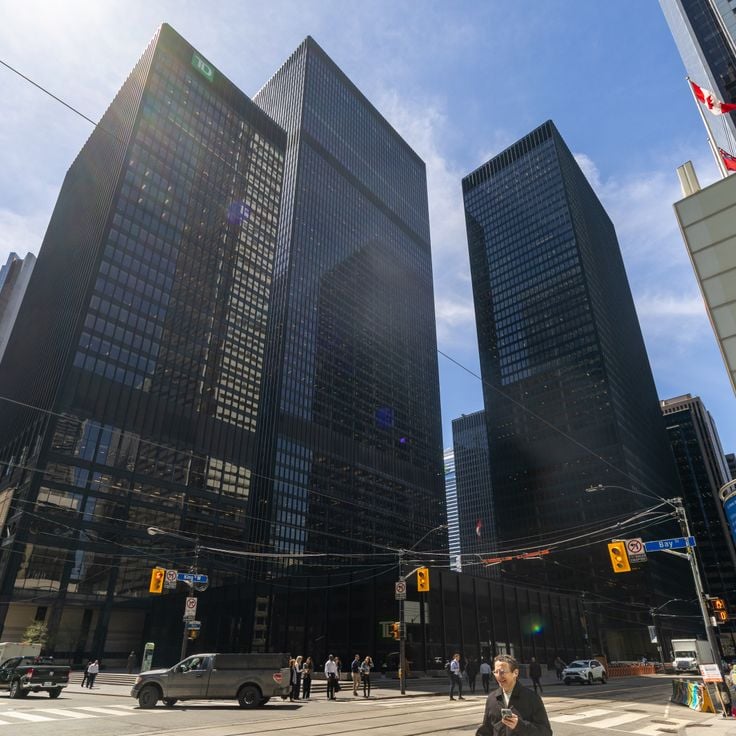
The Dominion Centre is a group of six towers in Toronto. Mies van der Rohe designed the first three in the late sixties, and the others followed through the early nineties. The buildings show black steel frames and bronze-tinted glass. The complex covers several blocks and combines offices with a shopping concourse below grade. The towers stand slightly offset from one another. The open plaza between the buildings offers space for passing through and pausing. On warm days people sit on the steps or under the canopy. Inside, steel and glass continue, with clean lines and little decoration. The Dominion Centre belongs to the works that brought Mies's design language to North America, and it still shapes the skyline of Toronto.
This residential area was designed following the principles of Mies van der Rohe in the 1950s, combining high-rise towers with low apartment blocks in a planned urban concept. The development follows the clean geometric lines and functional style of the German architect. Green spaces between the buildings provide room for walking and relaxation. The structure demonstrates how modern living can be integrated with nature and communal areas. The steel and glass architecture continues to define the appearance of the park today.
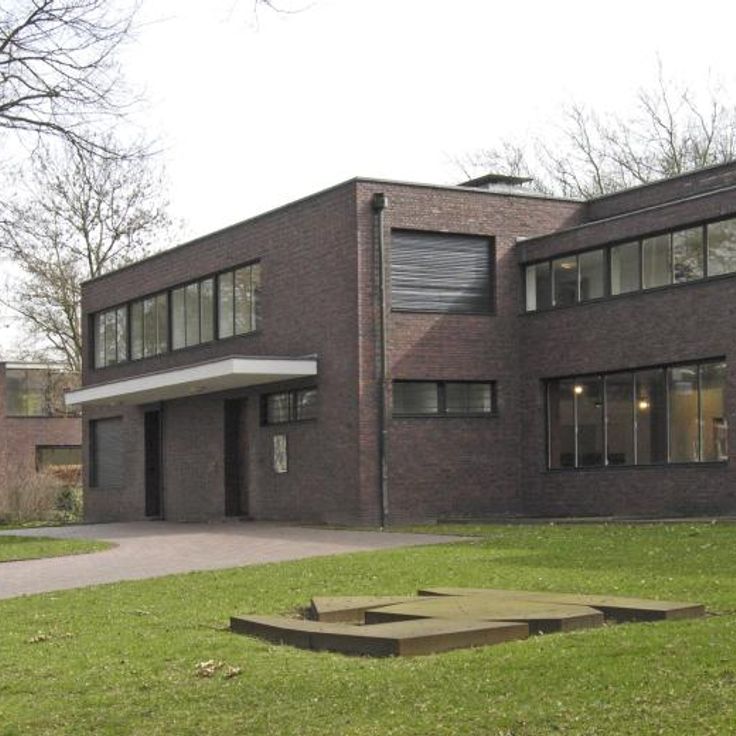
These two houses were completed in 1930 as private residences for two industrialist families. Mies van der Rohe used red brick for the exterior walls and integrated large glass surfaces that connect the interior spaces with the gardens. The rooms flow into each other and can be arranged differently according to need. Today both houses serve as exhibition spaces for contemporary art, showing how Mies van der Rohe combined living and representation.
This 15-story residential tower combines steel, glass and concrete. The structure follows the geometric principles of Ludwig Mies van der Rohe, reducing architectural elements to their essential form. Completed in 1964, the building shows clean lines and open spaces that bring natural light into the apartments.
These two towers, completed in 1960, show van der Rohe's approach to residential buildings. The structures combine steel and glass following a standardized plan. The facades follow the principle of reduction: load-bearing structures remain visible, large windows open the interior spaces to light. The arrangement of apartments repeats vertically, each floor follows the same scheme. You see here the core ideas of his later high-rises on a smaller scale. The towers stand as a pair, the architecture focuses on clarity and repeatable elements. For van der Rohe, standardization did not mean monotony, but the search for a universal solution for modern living.
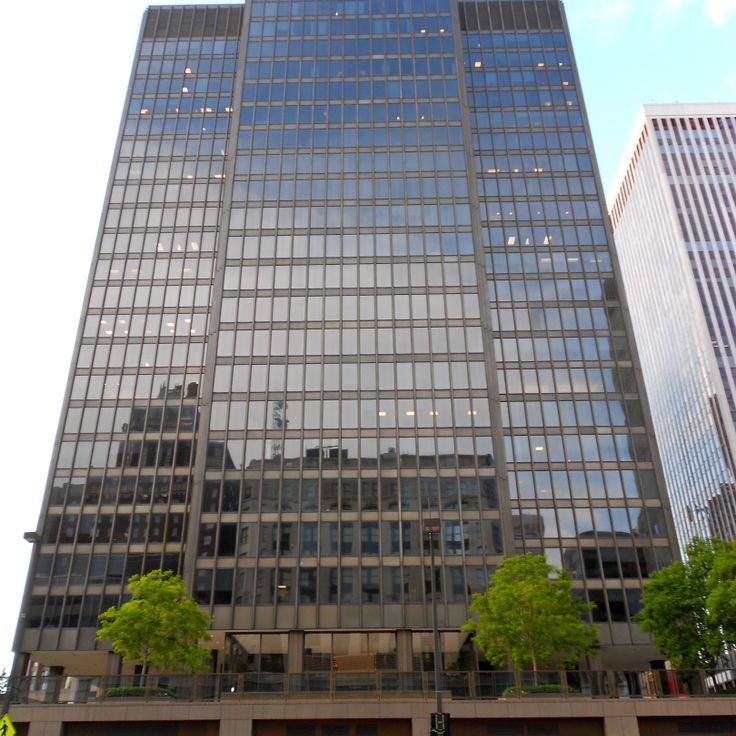
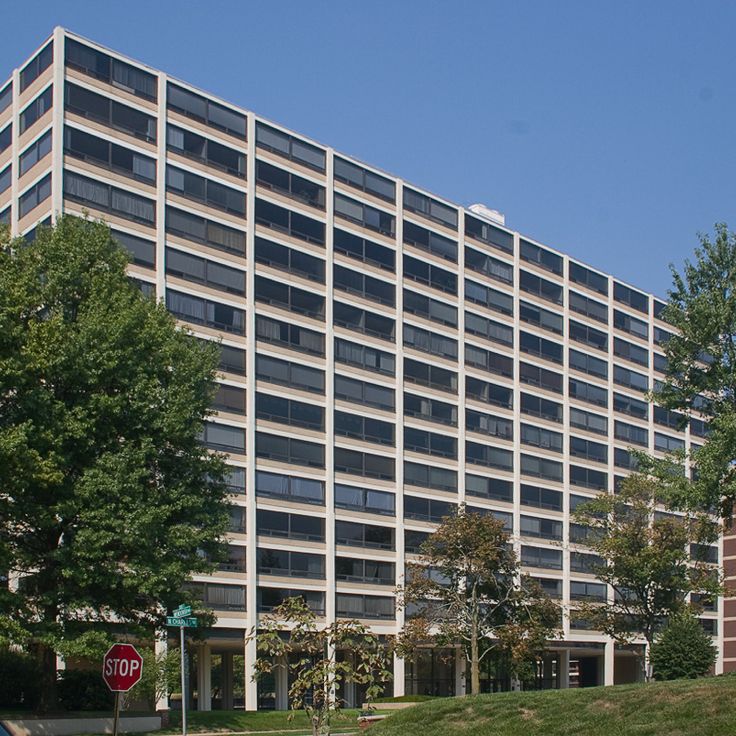
This 23-story tower rose in 1963 and brought new forms of building to Baltimore's business district through its aluminum and glass construction. One Charles Center stands as a clear example of how American downtowns changed in the postwar years. The facade shows grid frames and continuous rows of windows. The building altered the city's skyline and introduced materials that were still uncommon for office towers in this region at the time. The lobby and entrance areas follow a functional design without unnecessary decoration. From street level, the building appears slender, with a clear vertical composition.
This glass and steel residence stands on a rural site along the Fox River. The rooms are surrounded by transparent walls, giving the sense of floating above the ground. Eight steel columns support the roof and floor, with no interior walls between them. The white steel frame and continuous glazing make the boundaries between inside and outside disappear. The landscape around the building shapes the mood inside. The house was designed for Edith Farnsworth as a weekend retreat and completed in 1951. The reduction to a few materials and the clear geometric form define its appearance.
The Barcelona Pavilion was built for the 1929 World's Fair and later reconstructed to match the original design. This structure demonstrates Mies van der Rohe's principles through open spatial planning and the use of glass, steel, and different types of marble. Horizontal planes and vertical walls define the space without fully enclosing it. A flat roof rests on slender steel columns. Inside, a water basin reflects light and the surrounding surfaces. The materials appear in their natural form, without decoration. The pavilion conveys a sense of lightness and clarity.
The Seagram Building rises along Park Avenue as a tower of 38 floors completed in 1958. The façade combines bronze-colored metal frames with glass panels that reflect the light of the city. A plaza stretches in front, where people sit during lunch breaks and passersby cross on their way downtown. The design follows the principles Mies van der Rohe developed through decades of practice: reducing form to essentials and showing the structure openly. Inside, a spacious lobby leads to the elevators. The tower stands slightly back from the street, creating a sense of openness in a dense neighborhood. In the evening the glass catches the glow of Manhattan. Architects and visitors come to observe the proportions and the way steel and glass combine with such clarity. This building influenced office towers across North America and remains a reference point for anyone studying modern skyscraper design.
Crown Hall is a building at the Illinois Institute of Technology completed in 1956. The structure features a suspended roof supported by steel beams. All four exterior walls are made of continuous glass, creating an open and light-filled interior. The design follows principles of clear geometry and reduction to essential structural elements and transparent surfaces. The steel frame remains visible and defines the appearance of the building. Inside, a large open space was originally used for architectural education and studios.
These two steel and glass towers stand on the shore of Lake Michigan in Chicago. Mies van der Rohe designed them around 1951 as parallel structures with rectangular floor plans. Each facade displays black steel I-beams that run vertically in front of floor-to-ceiling windows, forming a regular grid. The ground floor lobbies use travertine and marble. Both towers rise 26 stories and contain apartments with open floor plans. The construction relies on load-bearing steel frames while the exterior walls carry no weight. This project became a reference point for many office towers built later in North America following similar principles. From the public areas along the lakefront, the clear geometry of the towers is easy to see.
The Neue Nationalgalerie sits on a raised platform and features a square steel frame that supports a flat roof over an open space with glass walls. Completed in 1968, the museum allows unobstructed views outward through the transparent facades and admits natural light throughout the main floor. The primary exhibition hall occupies this ground level beneath the canopy, while additional galleries occupy the lower level. The clear geometry and use of steel and glass demonstrate the principles of modern architecture. The gallery stands at the Kulturforum near Potsdamer Platz.
Villa Tugendhat embodies Mies van der Rohe's vision of modern living, combining industrial materials with an open floor plan. Completed in 1930, the house sits on a hillside and opens toward the landscape through large glass walls. Chrome-plated columns support the ceilings and create a flowing transition between living areas. The floors of travertine and onyx marble, the walls of fine wood, and the movable partitions show attention to detail. The villa was designed for the Tugendhat couple and reflects their way of life.
The McCormick House was built in 1952 as a private residence, using steel frames and glass walls to create open spaces. The structure avoids added decoration and lets the materials speak for themselves. Inside, rooms flow together, while the transparent walls bring the garden into view. This design reduces form and structure to their basic elements.
This tower in downtown Chicago expresses the ideas of Mies van der Rohe through its rectangular form, facade of black steel and tinted glass, and clean lines. The building was completed in 1972 and stands among other tall structures along the Chicago River. The 52 floors rise in a regular grid, with the steel frame visible and the glass surfaces reflecting the sky and surroundings. From the street, you see the dark facade standing out clearly from the lighter neighboring buildings.
This library was completed in 1972 following the plans of Ludwig Mies van der Rohe and reflects his characteristic approach to design. The building rises four stories and opens outward through large glass surfaces. The facade follows a symmetrical arrangement in which black steel beams make the structure visible and organize the composition. Inside, open spaces accommodate reading areas, shelves, and work stations. Light enters through the continuous windows and shifts throughout the day. The clear lines and the use of steel and glass connect this building to other works by the architect. The library stands in a part of Washington where government buildings and institutions shape the urban setting. It serves the public as a place for study and research.
This complex from 1967 consists of four towers combining apartments, offices and shops above an underground commercial level. The development reflects the principles of modern architecture through rectangular forms and clean vertical lines. Steel and glass define the facades, creating a functional connection between living, working and shopping in one location.
The Dominion Centre is a group of six towers in Toronto. Mies van der Rohe designed the first three in the late sixties, and the others followed through the early nineties. The buildings show black steel frames and bronze-tinted glass. The complex covers several blocks and combines offices with a shopping concourse below grade. The towers stand slightly offset from one another. The open plaza between the buildings offers space for passing through and pausing. On warm days people sit on the steps or under the canopy. Inside, steel and glass continue, with clean lines and little decoration. The Dominion Centre belongs to the works that brought Mies's design language to North America, and it still shapes the skyline of Toronto.
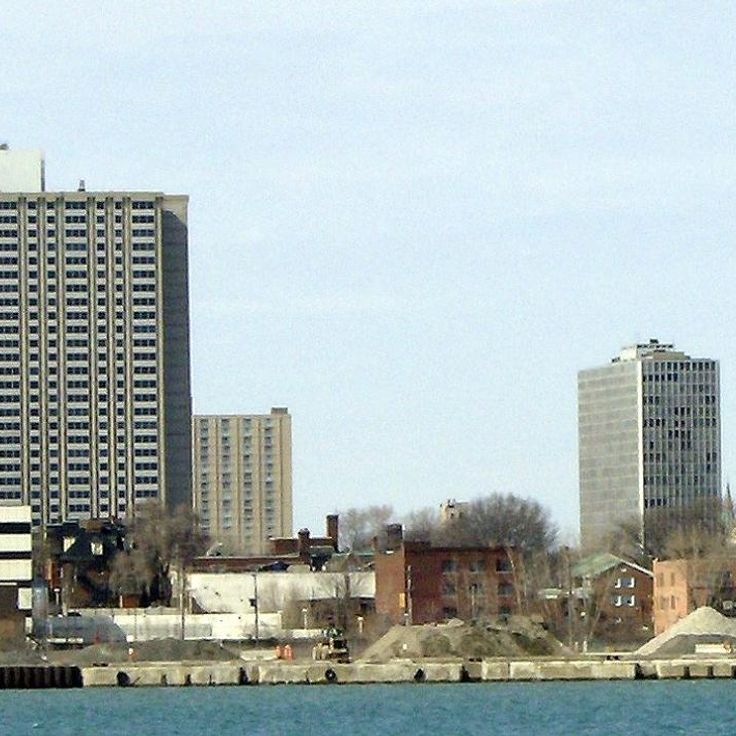
This residential area was designed following the principles of Mies van der Rohe in the 1950s, combining high-rise towers with low apartment blocks in a planned urban concept. The development follows the clean geometric lines and functional style of the German architect. Green spaces between the buildings provide room for walking and relaxation. The structure demonstrates how modern living can be integrated with nature and communal areas. The steel and glass architecture continues to define the appearance of the park today.
These two houses were completed in 1930 as private residences for two industrialist families. Mies van der Rohe used red brick for the exterior walls and integrated large glass surfaces that connect the interior spaces with the gardens. The rooms flow into each other and can be arranged differently according to need. Today both houses serve as exhibition spaces for contemporary art, showing how Mies van der Rohe combined living and representation.
This 15-story residential tower combines steel, glass and concrete. The structure follows the geometric principles of Ludwig Mies van der Rohe, reducing architectural elements to their essential form. Completed in 1964, the building shows clean lines and open spaces that bring natural light into the apartments.
These two towers, completed in 1960, show van der Rohe's approach to residential buildings. The structures combine steel and glass following a standardized plan. The facades follow the principle of reduction: load-bearing structures remain visible, large windows open the interior spaces to light. The arrangement of apartments repeats vertically, each floor follows the same scheme. You see here the core ideas of his later high-rises on a smaller scale. The towers stand as a pair, the architecture focuses on clarity and repeatable elements. For van der Rohe, standardization did not mean monotony, but the search for a universal solution for modern living.
This 23-story tower rose in 1963 and brought new forms of building to Baltimore's business district through its aluminum and glass construction. One Charles Center stands as a clear example of how American downtowns changed in the postwar years. The facade shows grid frames and continuous rows of windows. The building altered the city's skyline and introduced materials that were still uncommon for office towers in this region at the time. The lobby and entrance areas follow a functional design without unnecessary decoration. From street level, the building appears slender, with a clear vertical composition.
This glass and steel residence stands on a rural site along the Fox River. The rooms are surrounded by transparent walls, giving the sense of floating above the ground. Eight steel columns support the roof and floor, with no interior walls between them. The white steel frame and continuous glazing make the boundaries between inside and outside disappear. The landscape around the building shapes the mood inside. The house was designed for Edith Farnsworth as a weekend retreat and completed in 1951. The reduction to a few materials and the clear geometric form define its appearance.
The Barcelona Pavilion was built for the 1929 World's Fair and later reconstructed to match the original design. This structure demonstrates Mies van der Rohe's principles through open spatial planning and the use of glass, steel, and different types of marble. Horizontal planes and vertical walls define the space without fully enclosing it. A flat roof rests on slender steel columns. Inside, a water basin reflects light and the surrounding surfaces. The materials appear in their natural form, without decoration. The pavilion conveys a sense of lightness and clarity.
The Seagram Building rises along Park Avenue as a tower of 38 floors completed in 1958. The façade combines bronze-colored metal frames with glass panels that reflect the light of the city. A plaza stretches in front, where people sit during lunch breaks and passersby cross on their way downtown. The design follows the principles Mies van der Rohe developed through decades of practice: reducing form to essentials and showing the structure openly. Inside, a spacious lobby leads to the elevators. The tower stands slightly back from the street, creating a sense of openness in a dense neighborhood. In the evening the glass catches the glow of Manhattan. Architects and visitors come to observe the proportions and the way steel and glass combine with such clarity. This building influenced office towers across North America and remains a reference point for anyone studying modern skyscraper design.
Crown Hall is a building at the Illinois Institute of Technology completed in 1956. The structure features a suspended roof supported by steel beams. All four exterior walls are made of continuous glass, creating an open and light-filled interior. The design follows principles of clear geometry and reduction to essential structural elements and transparent surfaces. The steel frame remains visible and defines the appearance of the building. Inside, a large open space was originally used for architectural education and studios.
These two steel and glass towers stand on the shore of Lake Michigan in Chicago. Mies van der Rohe designed them around 1951 as parallel structures with rectangular floor plans. Each facade displays black steel I-beams that run vertically in front of floor-to-ceiling windows, forming a regular grid. The ground floor lobbies use travertine and marble. Both towers rise 26 stories and contain apartments with open floor plans. The construction relies on load-bearing steel frames while the exterior walls carry no weight. This project became a reference point for many office towers built later in North America following similar principles. From the public areas along the lakefront, the clear geometry of the towers is easy to see.
The Neue Nationalgalerie sits on a raised platform and features a square steel frame that supports a flat roof over an open space with glass walls. Completed in 1968, the museum allows unobstructed views outward through the transparent facades and admits natural light throughout the main floor. The primary exhibition hall occupies this ground level beneath the canopy, while additional galleries occupy the lower level. The clear geometry and use of steel and glass demonstrate the principles of modern architecture. The gallery stands at the Kulturforum near Potsdamer Platz.
Villa Tugendhat embodies Mies van der Rohe's vision of modern living, combining industrial materials with an open floor plan. Completed in 1930, the house sits on a hillside and opens toward the landscape through large glass walls. Chrome-plated columns support the ceilings and create a flowing transition between living areas. The floors of travertine and onyx marble, the walls of fine wood, and the movable partitions show attention to detail. The villa was designed for the Tugendhat couple and reflects their way of life.
The McCormick House was built in 1952 as a private residence, using steel frames and glass walls to create open spaces. The structure avoids added decoration and lets the materials speak for themselves. Inside, rooms flow together, while the transparent walls bring the garden into view. This design reduces form and structure to their basic elements.
This tower in downtown Chicago expresses the ideas of Mies van der Rohe through its rectangular form, facade of black steel and tinted glass, and clean lines. The building was completed in 1972 and stands among other tall structures along the Chicago River. The 52 floors rise in a regular grid, with the steel frame visible and the glass surfaces reflecting the sky and surroundings. From the street, you see the dark facade standing out clearly from the lighter neighboring buildings.
This library was completed in 1972 following the plans of Ludwig Mies van der Rohe and reflects his characteristic approach to design. The building rises four stories and opens outward through large glass surfaces. The facade follows a symmetrical arrangement in which black steel beams make the structure visible and organize the composition. Inside, open spaces accommodate reading areas, shelves, and work stations. Light enters through the continuous windows and shifts throughout the day. The clear lines and the use of steel and glass connect this building to other works by the architect. The library stands in a part of Washington where government buildings and institutions shape the urban setting. It serves the public as a place for study and research.
This complex from 1967 consists of four towers combining apartments, offices and shops above an underground commercial level. The development reflects the principles of modern architecture through rectangular forms and clean vertical lines. Steel and glass define the facades, creating a functional connection between living, working and shopping in one location.
The Dominion Centre is a group of six towers in Toronto. Mies van der Rohe designed the first three in the late sixties, and the others followed through the early nineties. The buildings show black steel frames and bronze-tinted glass. The complex covers several blocks and combines offices with a shopping concourse below grade. The towers stand slightly offset from one another. The open plaza between the buildings offers space for passing through and pausing. On warm days people sit on the steps or under the canopy. Inside, steel and glass continue, with clean lines and little decoration. The Dominion Centre belongs to the works that brought Mies's design language to North America, and it still shapes the skyline of Toronto.
This residential area was designed following the principles of Mies van der Rohe in the 1950s, combining high-rise towers with low apartment blocks in a planned urban concept. The development follows the clean geometric lines and functional style of the German architect. Green spaces between the buildings provide room for walking and relaxation. The structure demonstrates how modern living can be integrated with nature and communal areas. The steel and glass architecture continues to define the appearance of the park today.
These two houses were completed in 1930 as private residences for two industrialist families. Mies van der Rohe used red brick for the exterior walls and integrated large glass surfaces that connect the interior spaces with the gardens. The rooms flow into each other and can be arranged differently according to need. Today both houses serve as exhibition spaces for contemporary art, showing how Mies van der Rohe combined living and representation.
This 15-story residential tower combines steel, glass and concrete. The structure follows the geometric principles of Ludwig Mies van der Rohe, reducing architectural elements to their essential form. Completed in 1964, the building shows clean lines and open spaces that bring natural light into the apartments.
These two towers, completed in 1960, show van der Rohe's approach to residential buildings. The structures combine steel and glass following a standardized plan. The facades follow the principle of reduction: load-bearing structures remain visible, large windows open the interior spaces to light. The arrangement of apartments repeats vertically, each floor follows the same scheme. You see here the core ideas of his later high-rises on a smaller scale. The towers stand as a pair, the architecture focuses on clarity and repeatable elements. For van der Rohe, standardization did not mean monotony, but the search for a universal solution for modern living.
This 23-story tower rose in 1963 and brought new forms of building to Baltimore's business district through its aluminum and glass construction. One Charles Center stands as a clear example of how American downtowns changed in the postwar years. The facade shows grid frames and continuous rows of windows. The building altered the city's skyline and introduced materials that were still uncommon for office towers in this region at the time. The lobby and entrance areas follow a functional design without unnecessary decoration. From street level, the building appears slender, with a clear vertical composition.