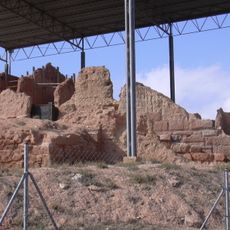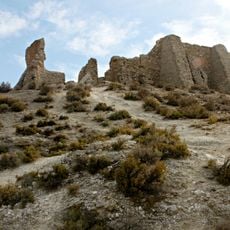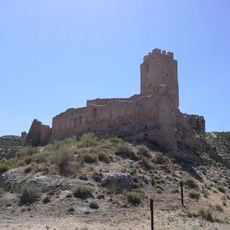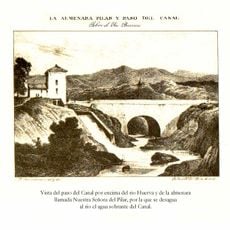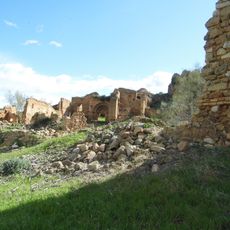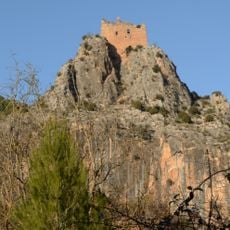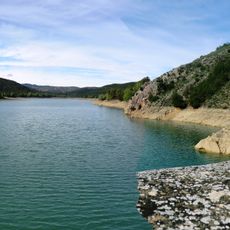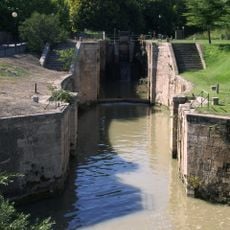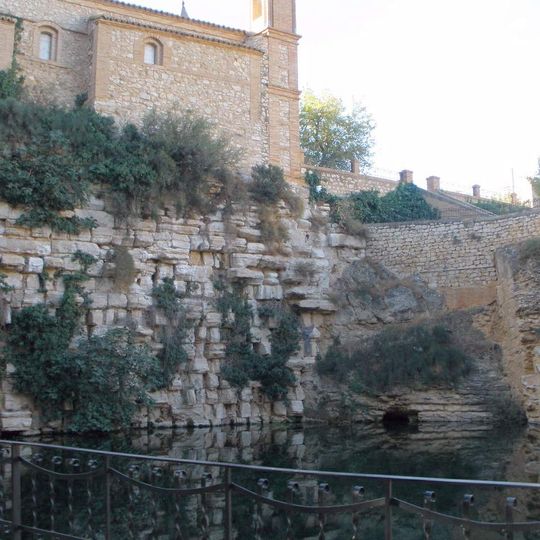
Muel Dam, Roman hydraulic structure in Muel, Spain.
Muel Dam is a Roman hydraulic work built with limestone blocks that rises approximately 10 meters and spans across the landscape. The construction demonstrates the techniques Romans used to store large quantities of water for urban supply.
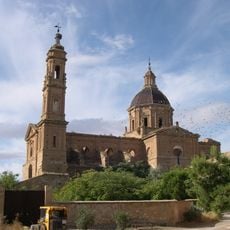
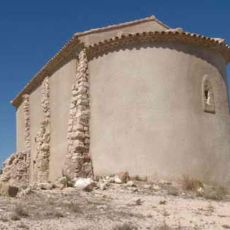
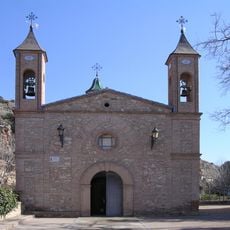
The work was built in early Roman times under Augustus to supply a major city in the region with water. In the 18th century, stones from the dam were reused to construct a chapel directly above it.
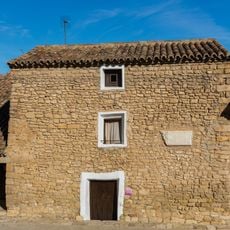
The chapel built above the structure shows how this location served people across centuries, first as a water source and later as a place of worship. Both buildings stand together as a testament to how communities reused and valued this site.
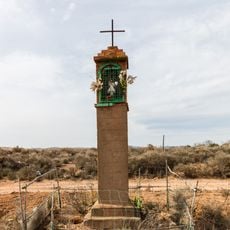
The site lies in open countryside and is accessible on foot, with approach paths starting directly from nearby roads. It is advisable to wear sturdy footwear and be prepared for uneven terrain, as the surroundings are natural and not paved.
The chapel built in 1770 above the dam features frescoes by a celebrated Spanish artist, showing how this ancient structure attracted later religious artworks. This combination makes the place a rare example of how Roman heritage and colonial-era religious art met directly at one location.
The community of curious travelers
AroundUs brings together thousands of curated places, local tips, and hidden gems, enriched daily by 92,262 contributors worldwide.