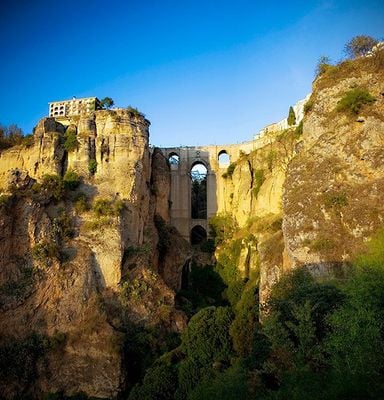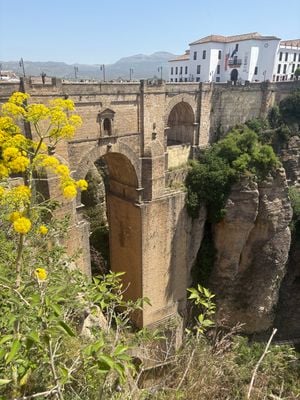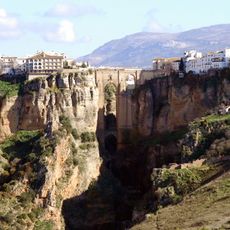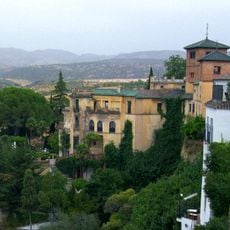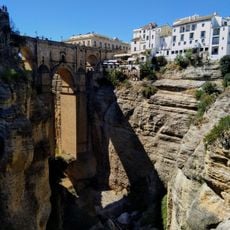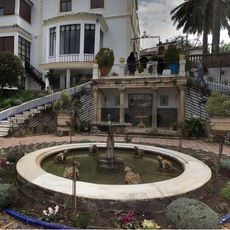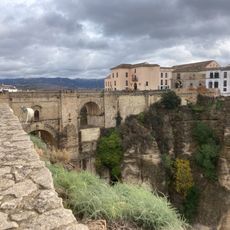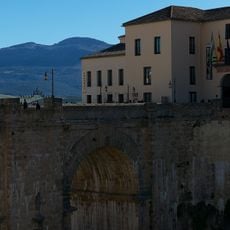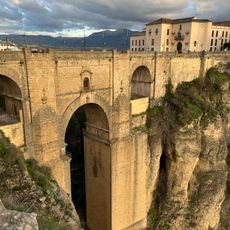
Puente Nuevo, Stone bridge in Ronda, Spain.
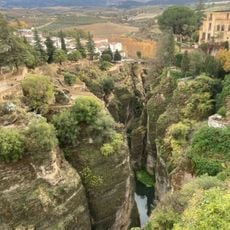
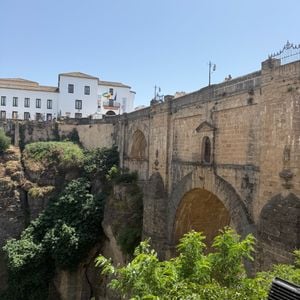
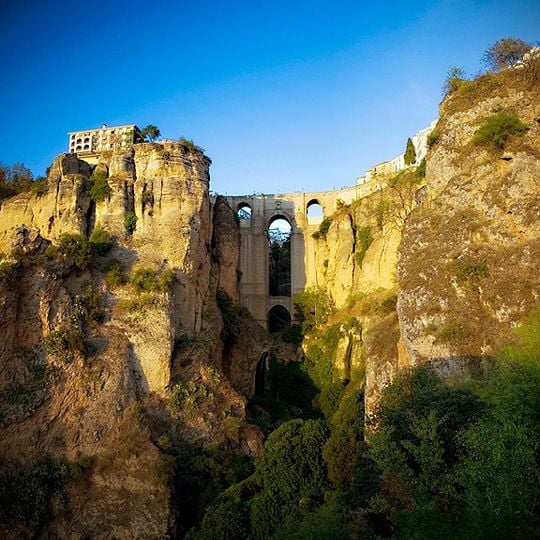
Puente Nuevo is a stone crossing over the El Tajo gorge in Ronda, Spain, rising 98 meters above the Guadalevín River and featuring three arches built from carved blocks. It measures 66 meters in length, with the central arch having the widest span and supported by massive piers anchored deep into the rock.
Work began in 1759 after the collapse of an earlier bridge in 1741 that killed over fifty people. Construction continued until 1793, permanently connecting the two halves of Ronda.
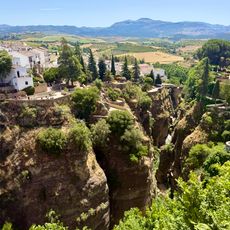
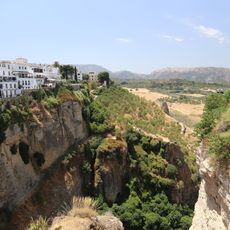
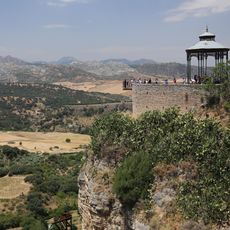
The name of the structure refers to its period of construction and distinguishes it from older crossings, though it has itself stood for centuries. Visitors today see balconies and viewpoints along both sides that offer views down into the gorge and the water flowing below.
Pedestrians and vehicles use the crossing daily, with walkways on both sides inviting views of the surroundings. Visitors seeking the viewpoints should expect narrow passages and occasional gusts of wind at the heights.
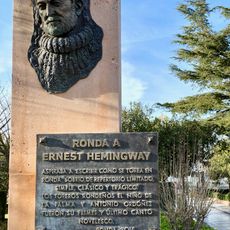
Ernest Hemingway mentioned the site in his novel 'For Whom the Bell Tolls' in connection with events that took place here during the conflict of the 1930s. The writer drew on local memory to shape scenes that brought international attention to this corner of southern Spain.
Location: Ronda
Architects: Martín de Aldehuela
Height: 98 m
Length: 66 m
Made from material: rock, stone
GPS coordinates: 36.74063,-5.16585
Latest update: December 5, 2025 16:37
Bridges are a part of our daily lives. They have connected banks, valleys, and communities for centuries. This collection presents structures from various periods and regions. From medieval stone arches to modern steel constructions, these works demonstrate the evolution of engineering. The Rialto Bridge from the 16th century in Venice spans the Grand Canal with a single stone arch. The Golden Gate in San Francisco stretches over 1.7 miles (2.7 km), linking the city to northern California. In Singapore, the Helix Bridge forms a pedestrian link in Marina Bay with its double-helix structure. These structures serve practical purposes in urban transportation while shaping city skylines. They provide technical solutions to geographical barriers and reflect different approaches to bridge construction through the ages.
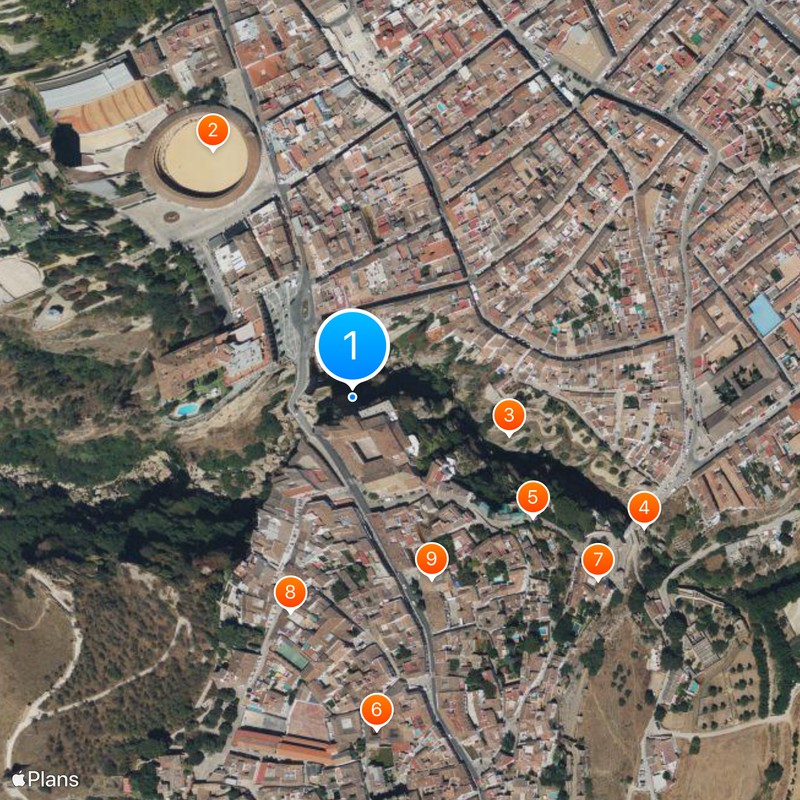
Plaza de Toros de Ronda
221 m
Tajo de Ronda
126 m
Puente Viejo
249 m
Casa del Rey Moro
169 m
Casa del Gigante
259 m
Palacio del Marqués de Salvatierra
238 m
Casa Don Bosco
174 m
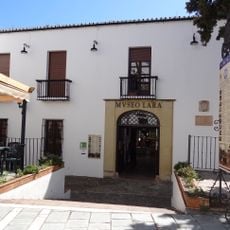
Museo Lara
154 m
Casa del Gigante
243 m
Monumento al Toro de Lidia
197 m
Statue of Blas Infante, Ronda
192 m
Monumento de Ronda a Espinel
248 m
Monument to the Spanish Fighting Bull
197 m
Monument to Ríos Rosas, Ronda
78 m
Statue of Antonio Ordóñez, Ronda
265 m
Statue of Cayetano Ordóñez, Ronda
251 m
Convento de Santo Domingo
51 m
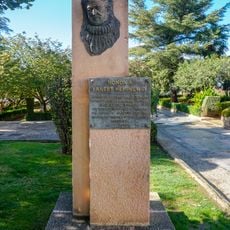
Monument to Ernest Hemingway
183 m
Monumento a Orson Welles, Ronda
191 m
Santuario de Nuestra Señora de la Paz
193 m
Fuente de Hércules, Ronda
260 m
Garden of the Moorish King's House
183 m
Casa Ysidoro Montero de Siena
76 m
Escultura de Ronda a Ernest Hemingway
180 m
Mirador de Ronda
200 m
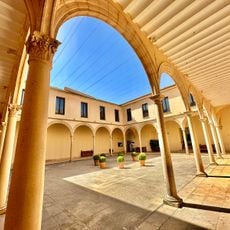
Patio de Santa Ana
269 m
Escultura de Ronda a Orson Welles
190 m
Jardines de Cuenca, Ronda
163 mDiscover hidden gems everywhere you go!
From secret cafés to breathtaking viewpoints, skip the crowded tourist spots and find places that match your style. Our app makes it easy with voice search, smart filtering, route optimization, and insider tips from travelers worldwide. Download now for the complete mobile experience.

A unique approach to discovering new places❞
— Le Figaro
All the places worth exploring❞
— France Info
A tailor-made excursion in just a few clicks❞
— 20 Minutes