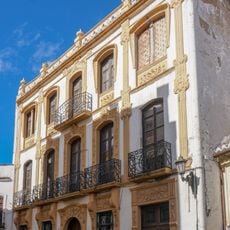
Casa del Gigante, 14th-century Nasrid palace in Ronda, Spain
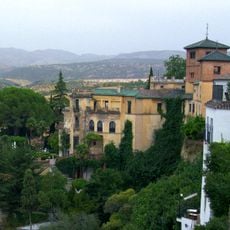
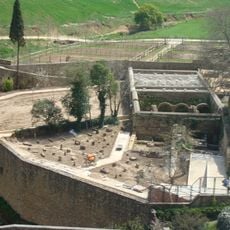
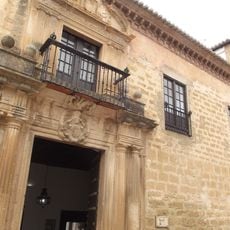
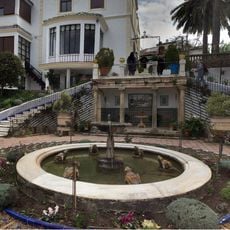
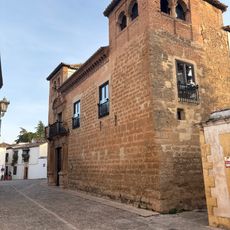
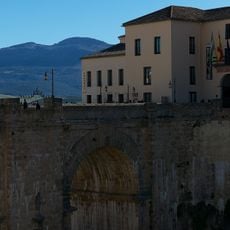
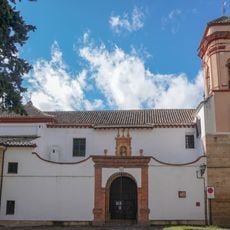
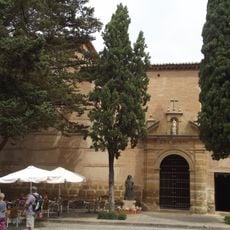
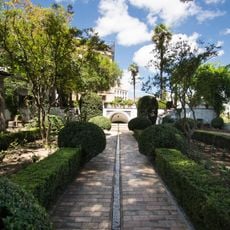
The Casa del Gigante is a Nasrid house built between the late 13th and early 14th centuries in Ronda's La Ciudad quarter. Its rooms are arranged around a single central courtyard with a pool. The entrance leading to the portico and north room is decorated with ataurique and cursive inscriptions, and 14th-century plasterwork and traces of polychromy survive.
Built at the end of the 13th century for a nobleman of the Marinid dynasty, the house passed after the Christian conquest of Ronda to the corregidor Ruy Gutiérrez de Escalante, later to Rodrigo de Ovalle and in the mid-17th century to Fernando Reynoso. In 1656 Roman tombs and cinerary urns were found inside. It served as a foundling hospital in the 19th century, returned to private ownership in the 20th, and opened to the public in December 2004.
The name comes from two large stone reliefs, perhaps Phoenician or Punic, that once decorated the corners; only one remains, barely distinguishable. The entrance leading to the portico and north room is decorated with ataurique and cursive inscriptions, and traces of polychromy and plasterwork similar to the Peinador Gate at the Alhambra survive. Since 2015 the house has served as an interpretation centre of daily life in Muslim Spain.
The house stands in the La Ciudad quarter, the old Muslim medina, near the former Mezquita Mayor. It opened to the public in December 2004 and has served since 2015 as an interpretation centre on daily life in Muslim Spain. Rooms are arranged around a central courtyard with a pool, so you pass through the patio to reach the portico and north room.
The house takes its name from two large anthropomorphic stone reliefs, possibly of Phoenician or Punic origin, that once decorated its corners. Only one survives, and its shape is barely distinguishable today.
The community of curious travelers
AroundUs brings together thousands of curated places, local tips, and hidden gems, enriched daily by 93,473 contributors worldwide.