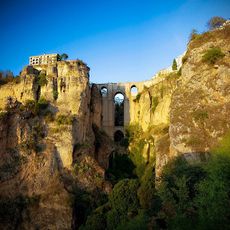
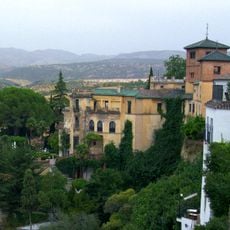
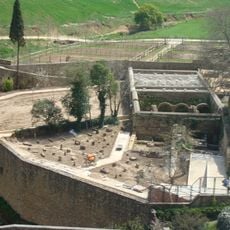
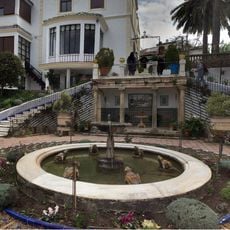
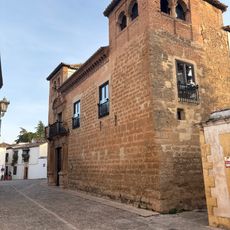
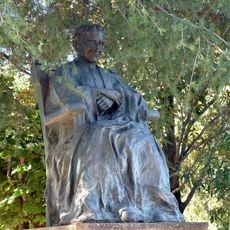
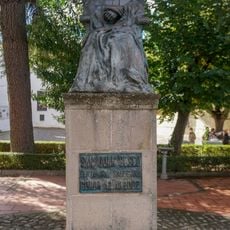
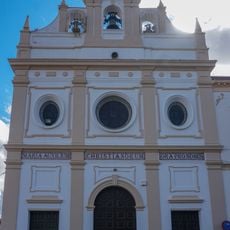
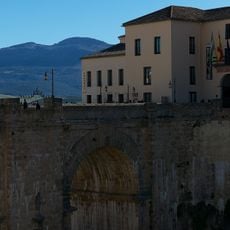
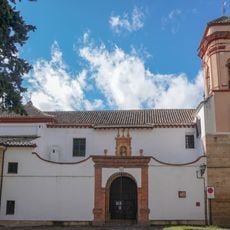
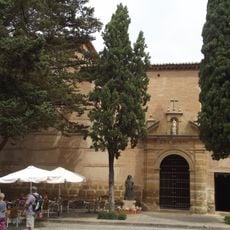
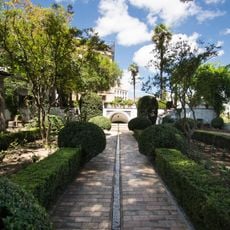
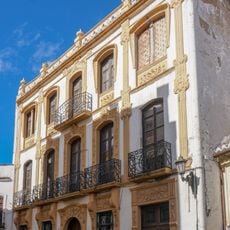
Palacio de Mondragón, Renaissance palace in Ronda, Spain.
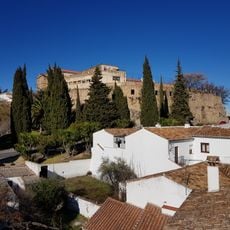
The Palacio de Mondragón is a Renaissance palace in Ronda with medieval origins. The building contains three interior courtyards, including a Mudejar patio showing Gothic and Renaissance elements alongside a stone well from the 18th century.
The palace has Andalusi origins; in the 14th century it was the residence of the Benimerin king Abd al Malik, son of the Sultan of Morocco Abu al-Hasan 'Ali. After his death, Ronda came under the Kingdom of Granada and the palace became the seat of the Nasrid governor, the last being Hamed el Zegrí. On 24 May 1485 the Catholic Monarchs took Ronda and stayed here; the building then passed to Captain Melchor de Mondragón, whose coat of arms is on the facade and gives the palace its name. It later belonged to Fernando de Valenzuela, Marquis of Villasierra.
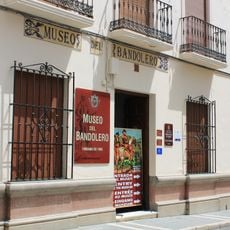
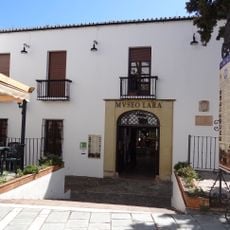
The name comes from Captain Melchor de Mondragón, whose coat of arms is carved on the façade; the palace later passed to Fernando de Valenzuela, Marquis of Villasierra. Since 1975 it has housed Ronda's municipal museum, and the visitable rooms opened in 2006 after restoration by the Escuela Taller. Look for the horseshoe arch with its Mudejar door opening onto the garden.
Access on foot is straightforward from the town center since the building sits near the old town core. Visitors should wear sturdy shoes as flooring in the courtyards and older sections can be uneven.
Of the Muslim palace only the floor plan, the foundations and some underground passages linking the garden to the former alcázar survive; the rest was rebuilt after 1485. The building also carries the name of Melchor de Mondragón, the captain whose coat of arms is carved on the doorway.
The community of curious travelers
AroundUs brings together thousands of curated places, local tips, and hidden gems, enriched daily by 93,598 contributors worldwide.