Acueducto de los Milagros, Roman aqueduct in Mérida, Spain
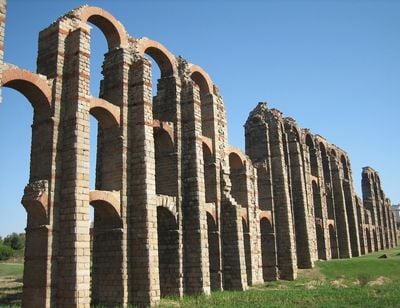
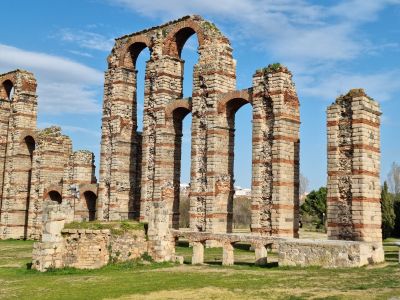
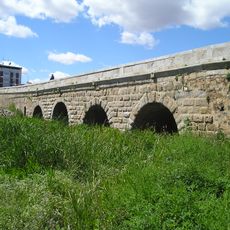
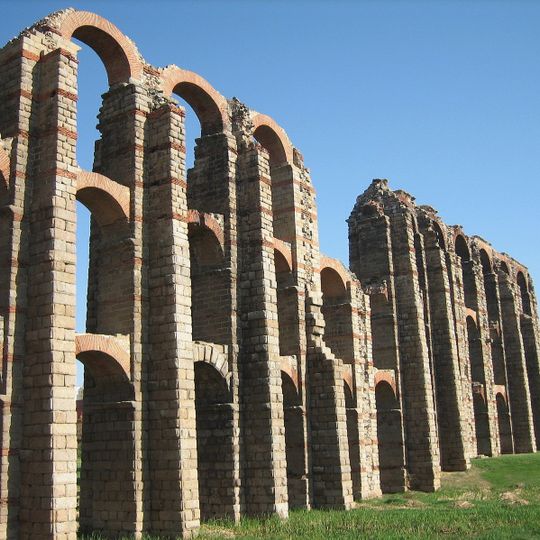
The Acueducto de los Milagros is a Roman aqueduct in Mérida extending approximately 827 meters with arches made of stone and brick. The construction features multiple tiers of arcades, with certain sections rising to about 70 meters in height.
The aqueduct was built in the 1st century BCE by wealthy families to supply water to the colony of Emerita Augusta. The system operated successfully for over three centuries and represents Roman engineering skill from that early era.
The structure gained heritage protection status in 1912 and later joined the Archaeological Ensemble UNESCO recognition in 1993. Its design reflects Roman engineering expertise and how essential water infrastructure was for the ancient settlement.
Walk along different sections to understand the construction methods and observe how the building techniques varied across the structure. Focusing on areas with multiple arch layers helps you see how the engineering evolved over time.
Storks have established nests atop the arches of this ancient structure and return regularly to nest there. These birds bring modern life to a site where ancient engineering skill was first displayed.
The community of curious travelers
AroundUs brings together thousands of curated places, local tips, and hidden gems, enriched daily by 60,000 contributors worldwide.