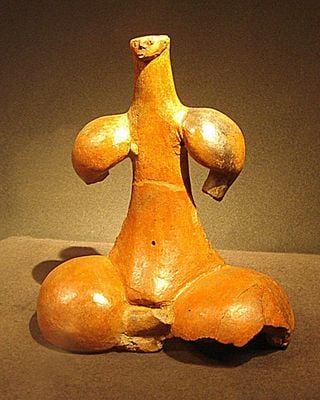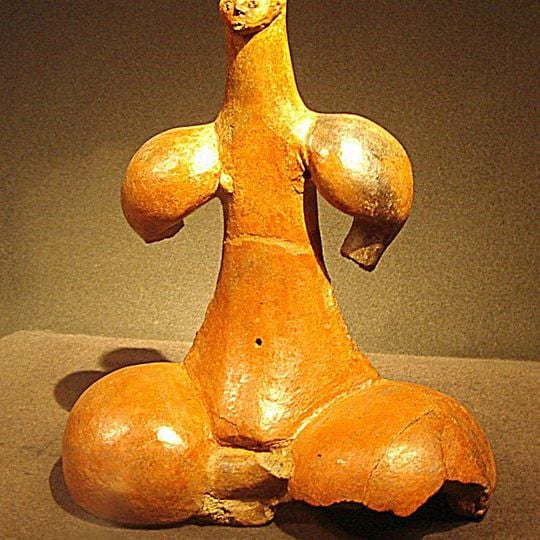
Idolo de Tara, Terracotta fertility figure at Museum of the Canary Islands, Las Palmas de Gran Canaria, Spain
The Idolo de Tara is a small clay figure from the aboriginal period of the Canary Islands, depicting a female form with crossed legs and pronounced upper body features. The roughly 26-centimeter-tall object has pot-shaped arms at the waist and distinctly modeled thighs.
The object comes from the Guanche period, when aboriginal people lived on the Canary Islands before Spanish arrival in the 15th century. An archaeologist named Gregorio Chil presented it at the 1878 Paris World's Fair, bringing it to international attention.
The figure displays carefully carved markings for the face and body, with traces of red pigment still visible on its surface today. These details reveal what mattered spiritually to the people who created it thousands of years ago.
The piece is on display at the Museo Canario in Las Palmas de Gran Canaria, where you can examine it in person. Take time to look closely at the details and the red coloring that remains on the surface.
The figure was made hollow inside, especially in the head, arms, and thighs, rather than as a solid block of clay. This technique shows that the artists understood how to manage weight and used clever construction methods.
The community of curious travelers
AroundUs brings together thousands of curated places, local tips, and hidden gems, enriched daily by 90,747 contributors worldwide.