Caños de Carmona, Roman aqueduct in Seville, Spain
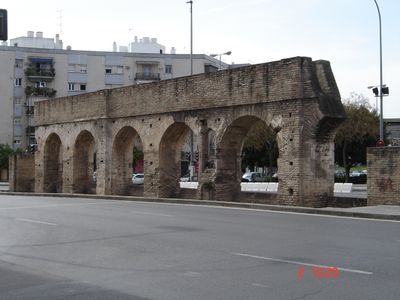
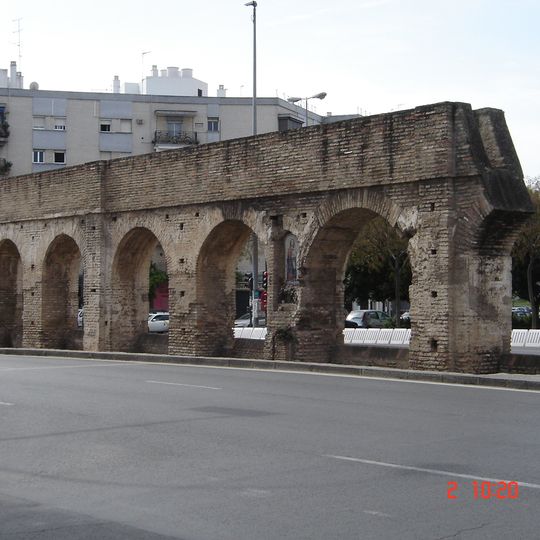
Caños de Carmona is a Roman aqueduct extending about 17.5 kilometers from Alcalá de Guadaira to Seville, supported by approximately 400 arches resting on brick pillars. The structure consists of stone and brick sections of varying heights distributed across different parts of the city.
The aqueduct was built between 68 and 65 BCE during Julius Caesar's term as quaestor and served as the main water supply system for ancient Hispalis. It channeled water from surrounding springs to serve the population, religious institutions, public fountains, and elite households.
Three preserved sections remain visible today, including a double arcade on Calle Luis Montoto and segments on Calle Cigueña. These remnants show how Romans wove their engineering into the city's fabric.
The preserved sections are spread across different areas of the city and can be explored on foot, particularly the double arcade on Calle Luis Montoto. It is advisable to visit during daylight hours when architectural details and surrounding locations are more visible.
A religious niche containing a Virgin Mary statue was built into the structure, but it was destroyed during the Spanish Civil War. This small shrine showed how local people maintained faith in the ancient structure even after centuries had passed since its construction.
The community of curious travelers
AroundUs brings together thousands of curated places, local tips, and hidden gems, enriched daily by 91,610 contributors worldwide.