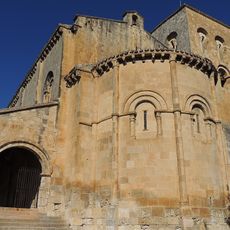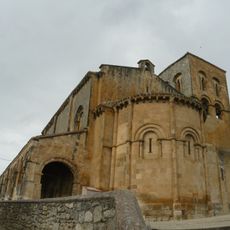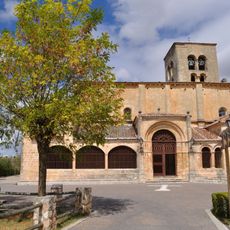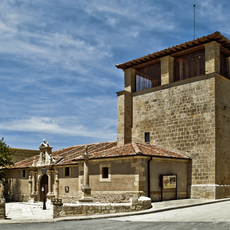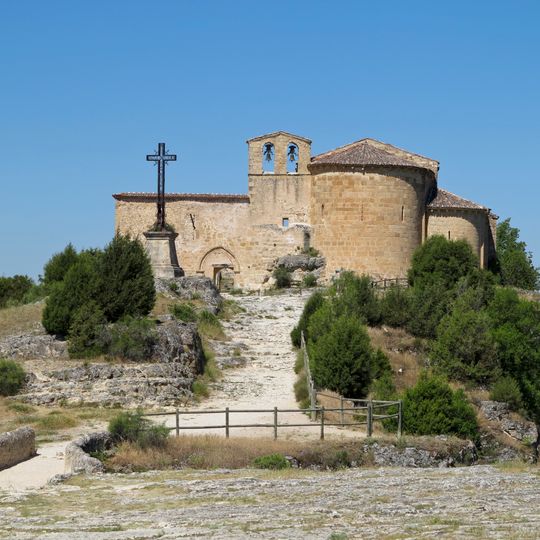
Chapel of Saint Fructus, Romanesque hermitage in Carrascal del Río, Spain
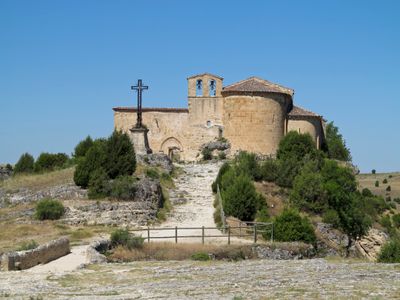
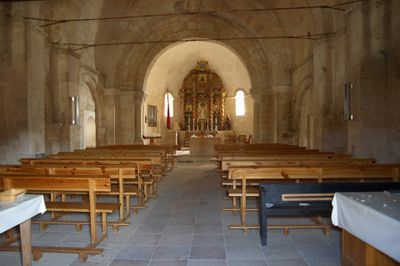
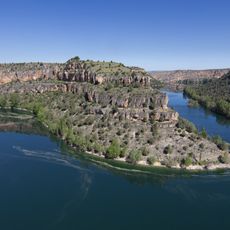
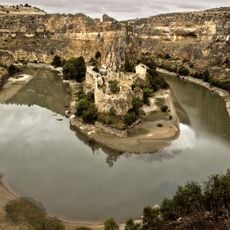
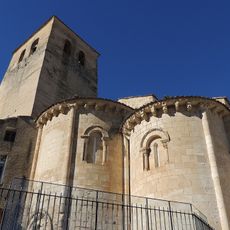
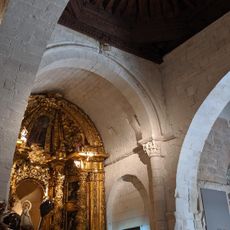
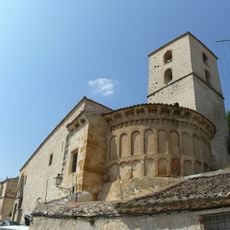
The Chapel of Saint Fructus is a Romanesque church perched on a rocky outcrop above the Duratón River gorge. It features a single nave with round arches set into the stone walls and a compact design typical of rural worship spaces from the medieval period.
A sacred site first established in the 7th century during Visigothic rule, the chapel was rebuilt in its current Romanesque form during the 12th century. It later came under the authority of the Santo Domingo de Silos monastery around 1076, which regulated its use as a religious center.
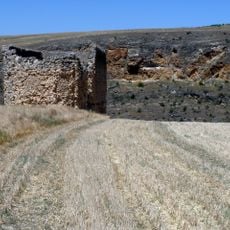
The chapel occupies a place where pilgrims have gathered for centuries, and you can still see burial sites from the medieval period scattered across the grounds. These tombs reveal how people honored their dead during the era of Christian expansion in the region.
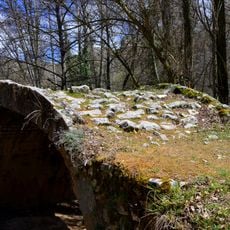
Access to the chapel requires crossing a stone bridge built in 1757 that spans a deep natural fissure in the landscape. Visitors should wear sturdy shoes as the terrain around the site is uneven and rocky, and the location is remote from villages.
This chapel marks the endpoint of a pilgrimage route that begins in Segovia city and travels over 80 kilometers through natural landscapes. The trail connects multiple historical sites and offers travelers a journey where spiritual intention meets exploration of the countryside.
The community of curious travelers
AroundUs brings together thousands of curated places, local tips, and hidden gems, enriched daily by 60,000 contributors worldwide.