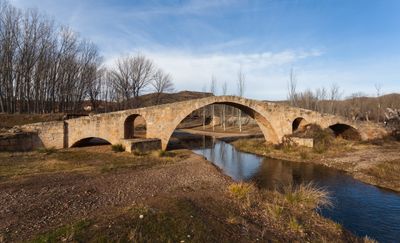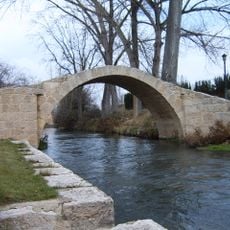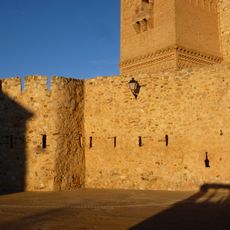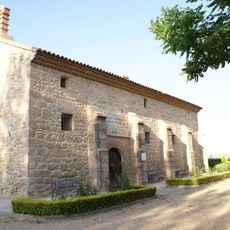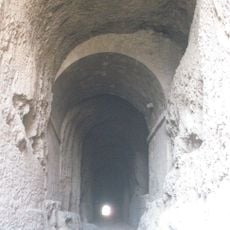
Roman bridge of Luco de Jiloca, cultural property in Calamocha, Spain
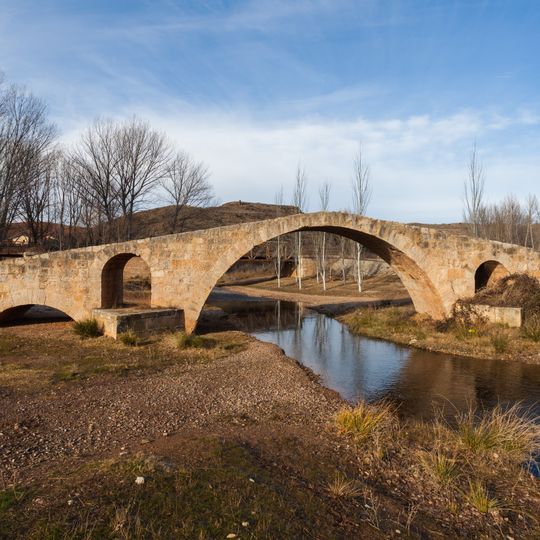
The Roman bridge of Luco de Jiloca is a stone structure with three arches that crosses the Jiloca River, measuring about 35 meters long and just over 3 meters wide. The arches are carefully built from large, tightly fitted stones and show both Roman and medieval construction techniques.
The bridge likely dates from Roman times, possibly between the 1st century BC and 2nd century AD, but was possibly redesigned in the 1400s by Cristobal de Adonz for the people of Daroca. Over the centuries it has been repaired and reinforced many times, yet the original core structure remains intact.
The name Luco de Jiloca connects the bridge to the river valley and its landscape. The structure remains part of daily rural life here, where the bridge stands quietly as a witness to centuries of passage and local tradition.
Access to the bridge is straightforward, with a small parking area and paths leading to the structure. The walk from the parking area to the bridge is short, and the surrounding countryside is easy to explore on foot, especially along the dirt roads that run beside the river.
The exact origin of the bridge remains a mystery, with experts debating whether it has Roman or medieval roots, adding a layer of historical intrigue to the site. Nearby stands an older railway bridge from the 1800s that marks a tragic train accident in 1904, complementing the historic scene.
The community of curious travelers
AroundUs brings together thousands of curated places, local tips, and hidden gems, enriched daily by 60,000 contributors worldwide.