Postigo del Aceite, Medieval city gate in Puerto de Indias district, Seville, Spain
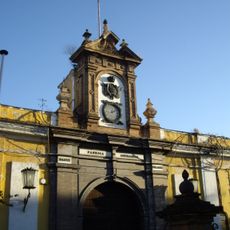
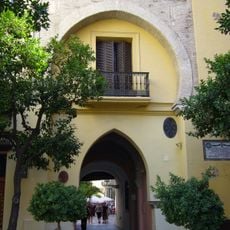
Postigo del Aceite is one of the three preserved gates of Seville's former city walls, alongside the Puerta de la Macarena and the Puerta de Córdoba. It stands between Calle Dos de Mayo and Calle Almirantazgo in the Arenal district, next to the Reales Atarazanas. The stone arch, also called Arco del Postigo, carries a carved Saint Ferdinand with the bishops Isidore and Leander, and below it a tombstone records the 1572-1573 reform by Benvenuto Tortello.
The gate was built in the medieval period as part of the city walls that ran along the Guadalquivir riverbank. It was heavily reworked in the 16th century, which gave it the carved decoration and general form it has today.
The gate's name comes from the oil that entered the city through it; in Almohad times it was called bad al-Qatay, the gate of the boats, for the nearby royal dockyards. On Holy Monday 1999, the costalero Juan Carlos Montes died beneath the arch, a moment remembered in Seville. Its narrow setting makes it a favoured spot for watching Holy Week processions.
The gate sits in the old part of Seville, close to the riverbank, and is easy to reach on foot from the city center. The archway is narrow and not wheelchair accessible, but the carved facade can be seen clearly from the street on both sides.
The gate has metal rails set into its base that were designed to hold wooden boards in place and block floodwater from the Guadalquivir from entering the city. These rails are still visible today and give a concrete idea of how often the river threatened the streets behind the wall.
The community of curious travelers
AroundUs brings together thousands of curated places, local tips, and hidden gems, enriched daily by 95,118 contributors worldwide.