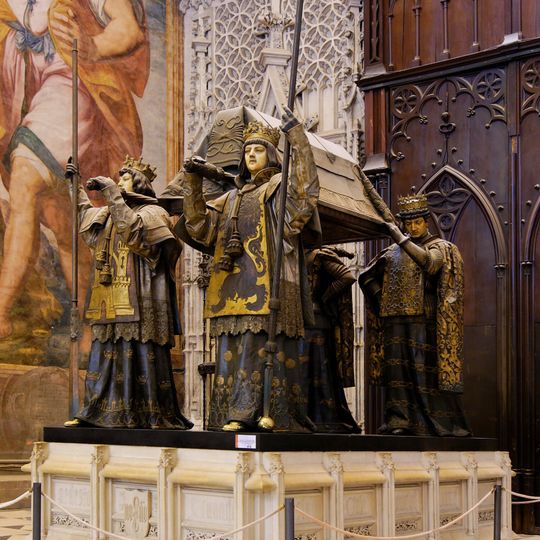
Tomb of Christopher Columbus, Memorial tomb in Seville Cathedral, Spain
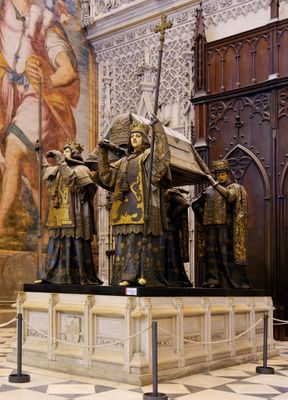
The Tomb of Christopher Columbus stands as a large sarcophagus inside the cathedral, supported by four figures in ceremonial dress who represent historical crowns once united under Spanish rule. The bronze casket rests on the shoulders of these stone bearers, each stepping forward as if in slow procession through the nave.
The navigator died in 1506 in Valladolid, after which his remains traveled across Spanish territories in the Caribbean for several centuries before returning to Spain near the end of the 19th century. The present monument was erected after the final transfer to Seville and aimed to bring the long journey of his bones to a close.
Spanish sculptor Arturo Mélida y Alinari designed this elaborate monument in 1891, incorporating maritime elements and heraldic symbols that reflect the Spanish exploration period.
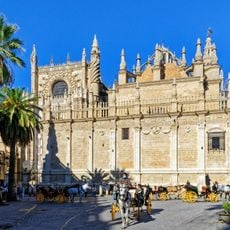
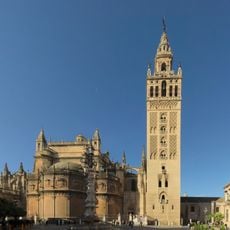
The monument sits inside the cathedral and can be viewed during regular visits, though its height means visitors observe it from a few steps away. Audio guides in several languages offer context about the work and its elements as part of the tour through the building.
Scientific examination of the bones in 2006 confirmed a genetic link to the navigator through comparison with relatives, though not all remains could be fully accounted for. The analysis also addressed a portion of bones still held in the Dominican Republic, leading to discussion about their exact distribution.
The community of curious travelers
AroundUs brings together thousands of curated places, local tips, and hidden gems, enriched daily by 91,817 contributors worldwide.