Peñalosa, Bronze Age archaeological site in Baños de la Encina, Spain
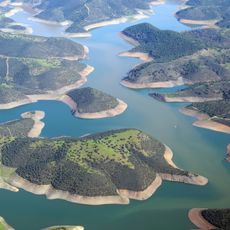
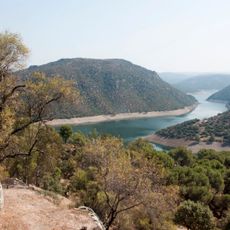
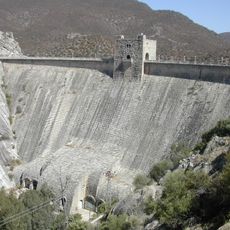
Peñalosa is an Argaric archaeological site on a hill above the Rumblar valley, partly flooded by the reservoir of the same name, in Baños de la Encina. Its rectangular houses are built entirely of slate masonry, with flat roofs of clay covered by slate slabs, arranged on three artificial terraces linked by narrow, sometimes paved streets.
Peñalosa was excavated systematically from 1985, revealing three Argaric phases (IIIC to IIIA). The best-preserved remains date to about 1750 cal BC, and the site was abandoned around 1600 BC. It was a copper-working settlement exploiting azurite and malachite from Sierra Morena, with barley as the main crop.
The site's name, Peñalosa, comes from the Spanish word for a rocky or stony height, fitting its position on a hill above the Rumblar valley. Excavations since 1985 have uncovered clay loom weights, slate spindles and at least five sickles, showing that weaving and harvesting took place in separate, dedicated spaces within the settlement.
Access to the excavation area is controlled and typically requires advance coordination with local authorities. Visitors should confirm whether the site is open for viewing at their intended time of visit.
The settlement was a copper-production centre: azurite and malachite from Sierra Morena were worked there, and tools such as punches, chisels and daggers were produced. Most buildings show traces of both cereal processing and mineral handling, so metal and grain work shared the same domestic spaces.
The community of curious travelers
AroundUs brings together thousands of curated places, local tips, and hidden gems, enriched daily by 93,781 contributors worldwide.