Museo de León, Provincial museum in León, Spain
The Museo de León displays collections from prehistoric tools to contemporary artworks organized across seven chronologically arranged exhibition sections distributed throughout multiple floors. These objects tell the story of the region from its earliest inhabitants to modern times.
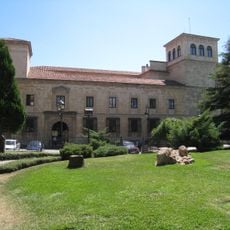
The museum opened to the public in 1869 in the Convento de San Marcos, born from the work of the Comisión Provincial de Monumentos de León during the 19th-century Desamortización. In 1987 its management passed to the Junta de Castilla y León. Since 2007 its main seat has been the Edificio Pallarés in the city centre, while San Marcos remains its historic seat and monumental annex. It was declared a monument in 1962.
The medieval section holds pieces from the Mozarabic churches of Palat del Rey, San Miguel de Escalada and Santiago de Peñalba, including the votive cross of the last. The Cristo de Carrizo represents the Romanesque art that grew along the Camino de Santiago, and Gothic works such as retables and Flemish panels followed the building of the cathedral.
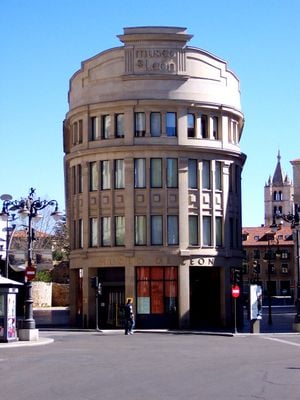
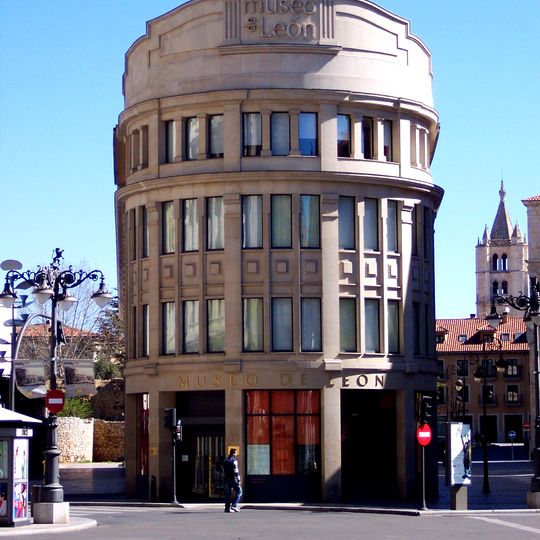
The museum occupies the Edificio Pallarés on the Plaza de Santo Domingo, in the city centre. The main facade curves around the corner, with "MUSEO DE LEÓN" lettered in gold above the street-level entrance; a narrow doorway to its left sits behind a dark metal gate. The permanent route runs through seven chronological sections, ending in a separate room with a view over León's historic skyline.
The museum operates two additional sites: the Roman villa of Navatejera in Villaquilambre and exhibition sections within the historical San Marcos Convent. This distributed structure allows visitors to explore archaeological remains and cultural spaces at different locations.
The community of curious travelers
AroundUs brings together thousands of curated places, local tips, and hidden gems, enriched daily by 94,109 contributors worldwide.