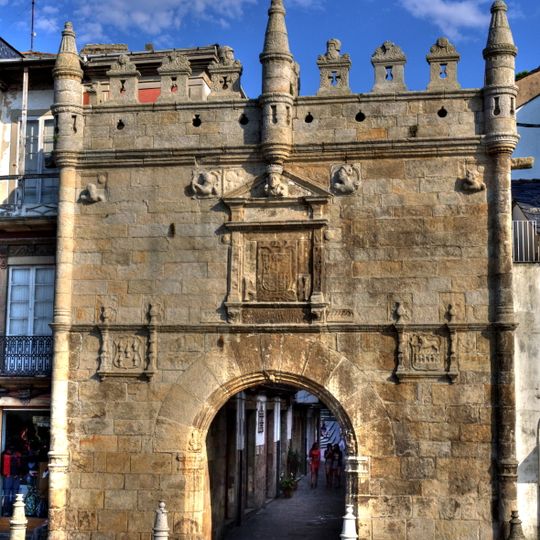
Gate of Carlos V, Viveiro, Plateresque city gate in Viveiro, Spain
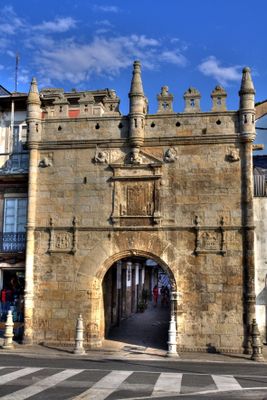
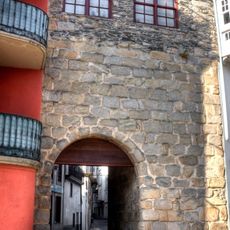
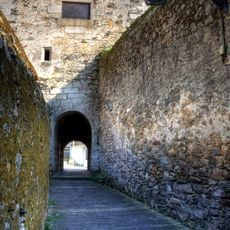
The Gate of Carlos V, also called Puerta del Castillo del Puente, is a Plateresque gate built in 1548 by Pedro Pedroso. It has a semicircular arch with cylindrical moldings, three bodies, and a triangular pediment. On the right is Viveiro's coat of arms with a crowned lion on a bridge; on the left, five copones. Above the arch is a worn inscription and a bust of Charles V.
Construction began in 1548 under architect Pedro Pedroso after Emperor Charles I granted Viveiro a three-year tax exemption to recover from a devastating urban fire. The gate's construction was part of a broader rebuilding effort that supported the city's economic recovery.
On the inner face of the gate is a Plateresque niche with two coats of arms and an 18th-century image of Saint Roch. It replaced an image of the Virgin of the Forsaken because Saint Roch was credited with freeing Viveiro from the bubonic plague. The statue stood on the façade of the corregidor's house until 1867.
The gate stands within Viveiro's old town, a short walk from the Praza Maior, and can be viewed from the street at any hour. Look for the worn inscription above the arch naming Corregidor Canosa de Tordesillas, and the bust of Charles V beneath the triangular pediment on the outer face.
During the Spanish War of Independence in 1809, the gate served as a defensive position against Napoleon's troops during their assault on the city. This military episode left its mark on the structure and remains part of Viveiro's wartime heritage.
The community of curious travelers
AroundUs brings together thousands of curated places, local tips, and hidden gems, enriched daily by 94,705 contributors worldwide.