Barranco del Río Dulce Natural Park, Natural park in the province of Guadalajara, Castile-La Mancha, Spain
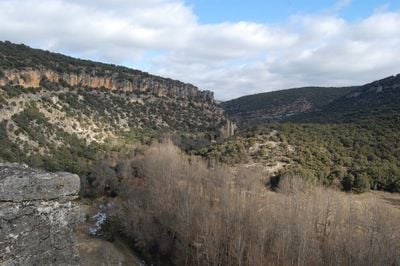
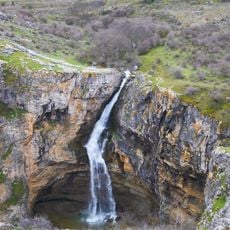
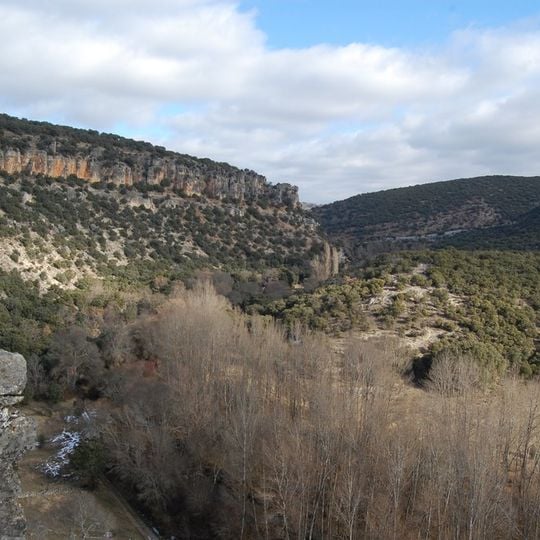
Barranco del Río Dulce Natural Park is a protected area of 8,347.95 hectares in the province of Guadalajara, Castile-La Mancha. The Dulce River has cut a canyon through Mesozoic limestone and dolomite, with cliffs, lapiaces, caves and travertine formations. The park spans the municipalities of Algora, Mandayona, Mirabueno, Saúca, Sigüenza and Torremocha del Campo, between 888 and 1,174 metres above sea level.
The canyon was cut by the Dulce River dissolving the Mesozoic limestones and dolomites of the high Alcarria plateau, with karst forms such as lapiaces, caves and travertine buildings. Between La Cabrera and Aragosa stand the ruins of the Los Heros paper mill, the first paper-money factory used in Spain, which in 1868 supplied the Banco de España with paper for 100-escudo notes and ran until the 1960s.
The former Los Heros paper mill, between La Cabrera and Aragosa, is industrial archaeology: it was the first paper-money factory used in Spain, and in 1868 the Banco de España commissioned it to make the paper for 100-escudo banknotes. A small chapel dedicated to San Rafael, patron of papermakers, stands among the factory buildings, which operated until the 1960s.
Two visitor centers located in Mandayona and Pelegrina offer information and guidance throughout the park. Special facilities and equipment are available on weekends between Easter and November to help visitors with mobility needs.
The Hoz de Pelegrina route descends about 70 m from the village to the river; roughly 1.5 km along it stands the hut where Félix Rodríguez de la Fuente stored his filming equipment. He filmed several documentaries in this gorge, one of his favourite spots.
The community of curious travelers
AroundUs brings together thousands of curated places, local tips, and hidden gems, enriched daily by 94,658 contributors worldwide.