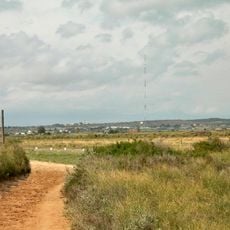
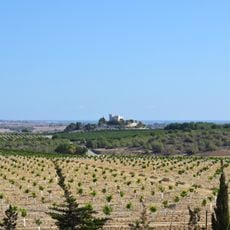
Site archéologique de Cabezo Lucero, Archaeological site in Guardamar del Segura and Rojales, Spain.
Cabezo Lucero is an Iberian archaeological site with two parts: a fortified settlement of about 15,000 m² on a spur above the right bank of the Segura, and a necropolis on a hill about 160 m south. The settlement's walls are heavily eroded; excavations in the 1980s identified the remains of a square tower. In the necropolis, tumulus structures and stone-built tombs cover more than 4,200 m².
The settlement flourished between the 6th and 3rd centuries BC and featured a square defensive tower. This period showed the fortification of the site during the Iberian era.
The necropolis, about 160 m south of the village on a small hill, preserves remains of tumular structures and stone-built tombs. Excavations yielded Attic low-footed cups, Orientalizing and Iberian ceramics, goldwork, falcatas and daggers, and fragments of Iberian sculpture including animal heads. Imported pieces are mainly 4th century BC, and imports decline from 350–330 BC.
Access is via the road connecting Guardamar del Segura and Rojales, and it is helpful to check with local tourism offices about available tours beforehand. The best time to visit is outside the hottest summer months when temperatures are more comfortable.
Excavations uncovered the Lady of Cabezo Lucero statue, reconstructed from fragments, which shows similarities to the renowned Lady of Elche statue. This discovery reveals artistic connections among Iberian cultural sites.
The community of curious travelers
AroundUs brings together thousands of curated places, local tips, and hidden gems, enriched daily by 94,815 contributors worldwide.