Vixía Herbeira, Coastal cliff range in Cedeira, Spain
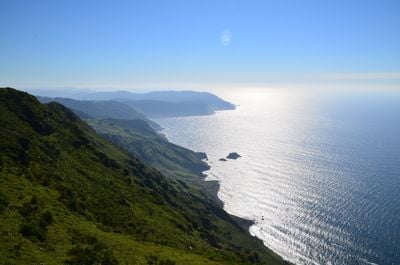
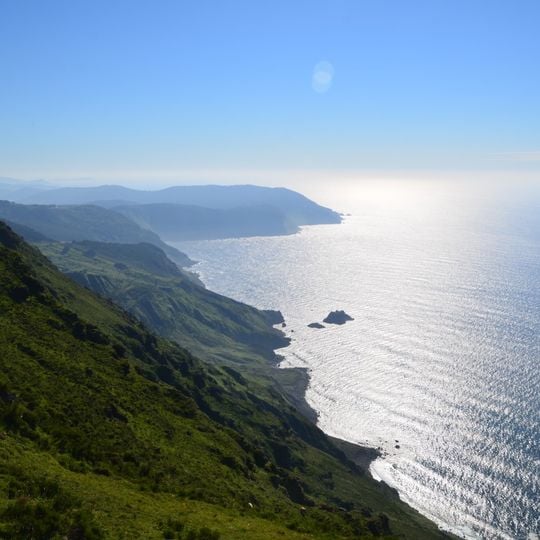
Vixía Herbeira is a sea-cliff ridge in the Capelada range between Cariño and Cedeira, A Coruña, reaching 613 m above the Atlantic, the highest cliffs on continental Europe. A steep slope of low grass, heather and gorse drops diagonally to a ragged shoreline of small inlets, with rocky outcrops and exposed stone along the upper edge and a single isolated rock just offshore.
The cliff system has long been watched and monitored by humans, as shown by a military outpost constructed in the early 1800s. This structure served to control and secure maritime activity along the Spanish coast.
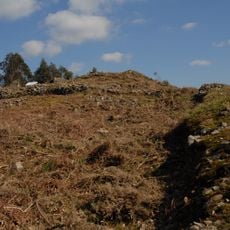
The cliffs lie within the Costa Ártabra Site of Community Importance and the Natura 2000 network under the Habitats Directive. Herders still graze cattle and horses semi-freely on the heath of heather and gorse, a practice that keeps the low scrub open. The Garita de Herbeira, a stone watch post, was restored with its surroundings in 2003.
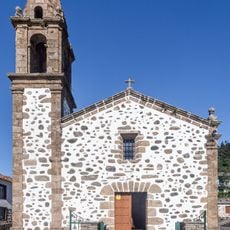
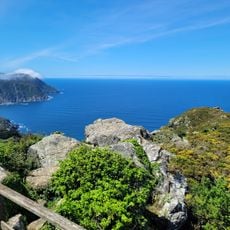
The DP-2205 road linking Cariño and Cedeira, and the village of San Andrés de Teixido, runs along the cliffs at their highest stretch, so the edge can be reached by car. The ground is low scrub of heather and gorse on an exposed slope above the ocean, with strong winds; the Garita de Herbeira stands at the top, right at the cliff edge.
In one of the abandoned nickel quarries near the cliffs, zaratite was discovered in 1849, one of the few minerals first described in Spain. The mines were worked in the 19th and early 20th centuries and later left. Cape Ortegal, close by, holds some of the oldest rocks of the Iberian Peninsula.
The community of curious travelers
AroundUs brings together thousands of curated places, local tips, and hidden gems, enriched daily by 94,467 contributors worldwide.